Showing posts with label change. Show all posts

Friday, September 14, 2018

Why Me???

The purpose of this blog is to trigger even deeper thought at the Shabbat table. Please print and share.

exasperatedL'shana tova.

For the past couple weeks, we've been encouraging everyone to try the new 40 Meditations for the High Holidays.


And last week we gave you a puzzler for your table that I'm wondering if anyone figured out (?)

This week, two emotional encounters that occurred on Wednesday and Thursday of this week which may shed a little extra light on Rosh Hashana and Yom Kippur.

Encounter 1, Wednesday:

On Wednesday, I received the following email from a rabbi I know:

I was leading a great discussion on Rosh Hashana.
Then one woman began to speak. She said 'I'm not religious but I'm a good person. But I'm appalled at these Orthodox families, who go through red lights, yak on their cell while driving, act rude, etc. They're ruining the neighborhood, etc."

Clearly, she was tanking the whole discussion. Other people raised their hands, and I was hoping the subject would get changed. Wrong - they started piling on. I did what I thought was right to get things back on a positive note without shutting her down and/or hurting her feelings. I'm not sure I had the most elegant solution. I really want to know what others would have done.


Question for your table: What should the rabbi have done?

My instinct:


“I feel the same way! Nothing burns me more than seeing someone wearing one of these [points to yarmulke] doing something obviously wrong. And while I would personally guess that the average Orthodox person is more careful about following the law, not speaking gossip, etc., it just goes to show you – nobody’s perfect. The question is – for you and for me and for the Orthodox person who ran the red light – what can you honestly improve about yourself this year??


Encounter 2, Thursday:

This was a call from someone who only calls me when his marriage is on the rocks.

It took us over an hour to get to the heart of what was bothering him, but we got there.

It was this:

Why is God doing this to me? Why would he want me to be married to a woman who is selfish and unable to sympathize with me?

So I guess the first question for your table is, What would you say to such a guy?

In case you're interested, here's what I told him.

Our tradtion teaches us that, while each of us has a different mission, we all have the same purpose.

That purpose is to become "perfect" - or Godly, or holy.

Therefore, everything that happens to us is custom designed to help us achieve our purpose.

For example, that person who tries your patience was put in your life in order to teach you patience.

Some challenges can teach us perseverance, others faithfulness, others gratitude, others calmness.

The only way to learn the lesson is to think about it. That's what these 10 Days of Awe are for.

It also really helps to try to work on changing only one habit at a time (see the 40 Meditations sheet).

Question 2 for your table: Whom do we expect and want to be an egotist?

The answer of course is a baby ("feed me, change me!").

But for adults, that latent egotism is the root of most of our imperfections. It was very healthy when we were babies, but....

Now you can understand why one of the three main customs during these 10 Days of Awe is to give extra tzeddaka.

If life is made of time, and time is money, then giving some of your hard-earned money to others is giving a part of yourself.

Hard to do? That may be a sign of how good it is for you. No pain, no gain.


Shabbat Shalom

and

G'mar ketiva tova — may you have a good inscription (i.e., in the Book of Life)!


PS - Once or twice a year we ask you, our subscribers, to support this email along with the rest of JSL's mission. To send this weekly message actually costs something. There is server time, hardware maintenance, and general overhead. If you enjoy this weekly or even on occasion, please consider a tax-deductible tzeddaka contribution of any amount.  If everyone who reads this were to contribute 25¢/week ($12/year), it would cover all the costs.

Here's the link: http://jsli.org/donate

 
Enjoyed this Table Talk? Vote with your fingers!  Like it, ,tweet it, forward it....


Friday, September 15, 2017

The Dreaded Question

The purpose of this blog is to bring some color to the Shabbat table. Please print and share, or forward or...

wavelengtbs 
Last week's hurricane post (if you got past the dad-jokes) made a surprise connection between hurricanes and Rosh Hashana.

This week begins with a question that our 11-year-old daughter asked me last night.
 
She asked the Dreaded Question.

It's that question that parents know is coming sooner or later and hope that it will be later rather than sooner.

Some parents are pro-active and don't wait until they're asked.

But many parents put it off as long as possible.

On any other subject, we're the experts we have all the answers.

But when this one comes up - especially when we're not expecting it - it catches us tongue-tied.

The question I'm referring to of course is:

"Abba, why is the sky blue?"

Try asking that one at your table. How many people can answer it?

How many think they can answer it, but when you press them on it, they clearly don't understand?

How many are willing to admit, they really have no idea?

So to save you from any further awkwardness, here's your "blue sky for dummies" crib notes:

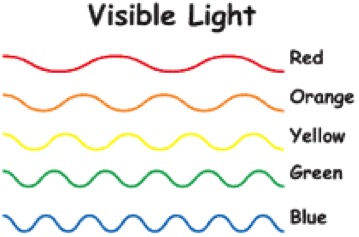
Sunlight looks white, but it is actually made from a mixture of colors (like a rainbow). See (picture above) how each color has a different wavelength?

This white sunlight travels super fast — it leaves the sun at 186,000 miles per second, racing towards us across 93 million miles of space.

But just before it reaches us it crashes into something — can you guess what? The atmosphere! When it hits those tiny molecules of air, the shortest wavelengths don’t make it through – they bounce off those air molecules and scatter, like rain splashing off your windshield. Look at the diagram: What color has the shortest wavelength? Blue! The air is just dense enough to scatter some of the blue, causing the sky to look blue.


Did you get it?

Let's see: If you were on the moon, where there is no air, what color would the sky be?

Here's a trickier one - How does this knowledge explain why sunsets are so beautiful?

(As the sun gets lower and lower, that sunlight has to pass through more and more atmosphere; so more wavelengths get filtered: first green, making the sun look more yellow; then yellow, making it look more orange; then finally the orange, leaving only the red. Sunrise is the opposite – it’s getting higher and higher, red to orange to yellow.)

Last question for your table: What does this topic have to do with Rosh Hashana?

The best way that I know to experience Rosh Hashana is to hear the shofar and concentrate on the end of the year - not concrete resolutions but a bigger picture vision of what kind of person you want to become - you know you can become - in the next 12 months.

If you'd like this year's edition of our "Questions to think about from Rosh Hashana to Yom Kippur", shoot me an email. Or our "Significant Omens for Rosh Hashana". Or anything else.

As the year ends, I know that I haven't pleased all the people all the time, but I hope that I've pleased all the people some of the time. If any of my missives fell short for you, please forgive me.


Wishing you and yours a healthy and happy, connected and uplifting 5778!


Shabbat Shalom

L'Shana Tova — May you be written and sealed in the Book of Life!


Enjoyed this Table Talk? Vote with your fingers! Like it, tweet it, forward it.

Friday, February 20, 2015

For a Change

The purpose of this blog is to add something happy to your Shabbat table. Please print and share.

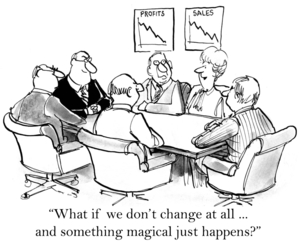
change-cartoonThis week: a question, followed by a story, followed by a question, followed by a really good piece of wisdom.
The first question for your table: Are you 100 percent happy with yourself, or is there something that you'd like to change?

I don't know about you, but I pay lip-service all the time to wanting to change — like changing a bad habit to good or to improving a skill — but I don't necessarily do anything about it, for months, for years.

But we weren't always like that.

Here's this week's story: On Sunday, our son Yoseph (5th grade) had a special event at school. The entire grade had a celebratory brunch with parents to receive their first Gamara - i.e., volume of the Talmud.

They were so excited! Everyone was dressed up for the occasion.

A few days before, Yoseph asked me to take him to the store to find a bow tie.

He was inspired by stories about my father - the grandfather he never knew - wearing a bow tie.

When you learn Talmud, you are swimming in a stream of tradition that comes from your ancestors to you, and that will hopefully continue to your children and grandchildren. Yoseph seems to intuit that connection.... that even though his grandfather never learned Talmud, certainly his great-great-(great?)-grandfathers did.

Go far enough back and we all descend from Torah scholars.
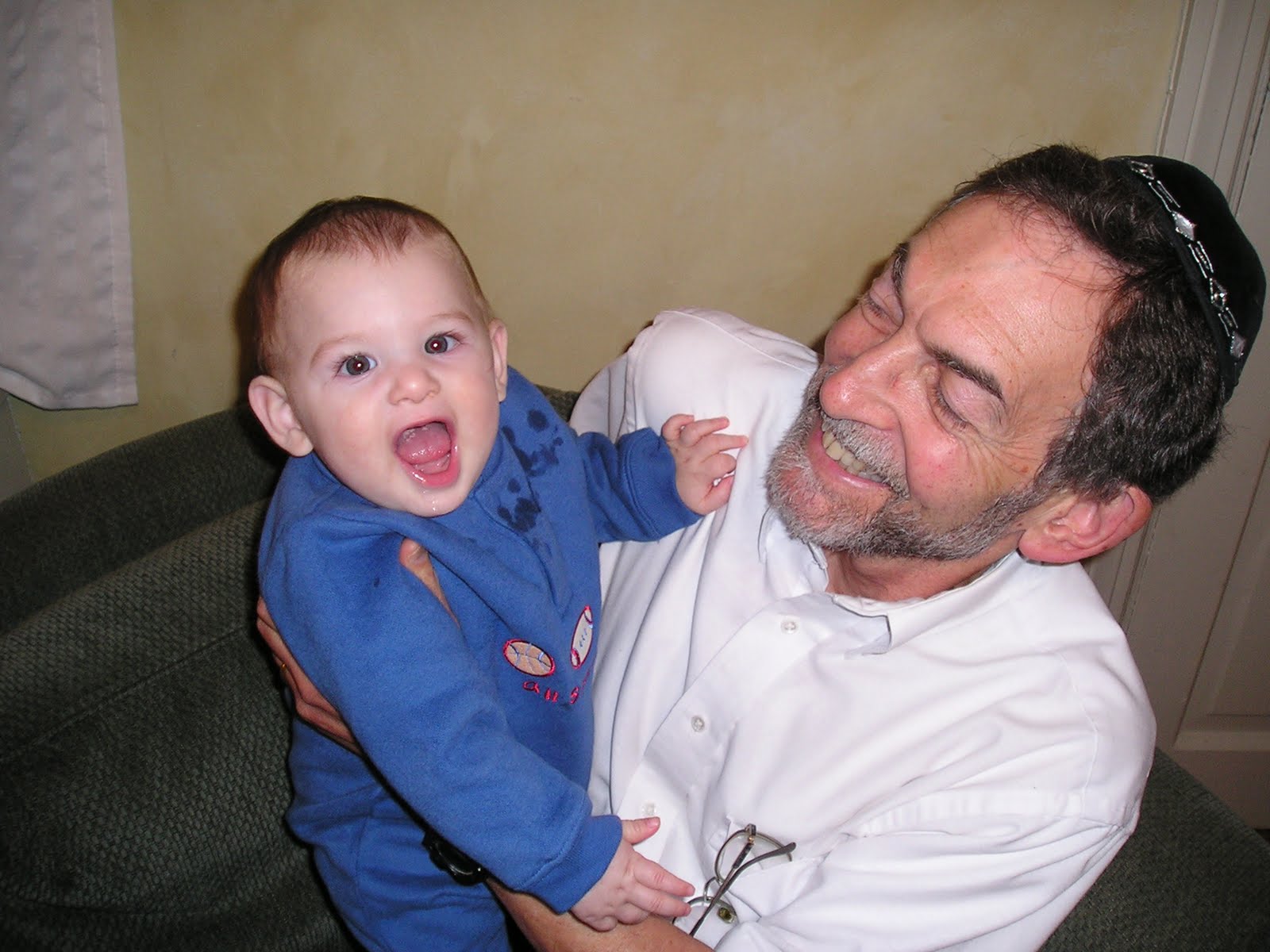
My Dad and Yoseph
But learning Talmud is hard - why would anyone want to put themselves through that?

Kids seem to love to learn (i.e., to change) in a way that many adults have lost.

We all know people who are struggling with losing weight, with quitting smoking, with controlling their anger, with even getting out of bed on time.

The obvious Question #2 for your table: Why do you think it's so hard?

(My answer: they haven't listened to this.)


Shabbat Shalom

PS: Speaking of the Talmud, today is the first day of the month of Adar. The Talmud says: "When Adar begins, we increase simcha (joy)." We have Purim and Pesach ideas at bestjewishkidsbooks.com
.
 
PPS: The Happiest Video on Youtube

Friday, October 03, 2014

Yom Kppur (no, that's no typo)

The goal of this blog is to foster a meeting-of-the minds at your pre- and post-Yom Kippur meals.

In case you missed last week's post, I would like to wish
you and yours a healthy, happy and sweet new year.


extinguish_ego_gurus
Cartoon Source
Q: Why the intentional misspelling of Yom Kippur in today's title?

A: To give you a question for your pre-Yom Kippur dinner table, of course.

The first question for your table is:

Today Rabbi Seinfeld intentionally spelled Yom Kippur K-P-P-U-R. Why do you think he spelled it that way?

Let them guess, then tell them:

Obviously, he spelled it without the "i" to remind us that ego is the root of all evil.


Think about it:

This is not going the way I want it, therefore I'm getting angry.
I want that object, therefore I'm stealing it.
I don't understand God, therefore God cannot exist.

I don't feel like smiling, so I'm not going to smile.

And so on.

Two weeks ago I asked, For you, what's a good life?


Last week, I mentioned the Talmudic warning that news about knife-violence (think ISIS, think White House) and plagues (don't be scared but do be informed) (and this) is a wake up call to increase Torah and giving tzedaka (see PS on this below).

The problem with that message is that it's far too easy to pass the buck — "Let someone else learn Torah, let someone else give tzedaka! I'm too busy!"

This week, the message is less dodgeable: How are you going to change for the better this year?

Rosh Hashana is about dreams. Yom Kippur is about reality: Where are you falling short? What are you going to do about it? Actually do?

For instance, practically everyone says, "I'm going to try to get more exercise."

Don't fall into this trap.


Rather say, "I'm going to take a 10 minute walk every day for a month."


It's got to be real, concrete and realistic. It has to be measurable.

And obviously, it should be a change that will make you a better person.


Use my Yom Kippur Prep Worksheet and narrow your resolutions down to one or two. Then, at the end of the big fast, right at sunset, when you're beyond the pain of hunger make that specific commitment.

cartoon - spiritually empty 


May you and your family be sealed in the Book of Life, health, happiness and peace in 5775. 

Have a sweet and successful year.

Happy Yom Kippur


PS - Thanks to all those who sent contributions last week of all sizes to help keep this Table Talk and other JSL projects going.

For those who would like to get on this particularly meaningful bandwagon, this week we are offering two great downloads to thank you for your one-time or monthly donation to support JSL's teaching of Torah wisdom:

 
1. 25 Questions to Think About From Rosh Hashana to Yom Kippur (2014 edition) (sample)
2. Yom Kippur Prep Worksheet (2014 edition) (sample)

Here's the link to learn more about JSL: jsli.org.
Here's the donation link: jsli.org/donate.

Please create or renew your partnership now so we can get you these materials in time for Yom Kippur.


Like this message? How about putting your mouse where your mouth is: Like it, tweet it, or just sent it to someone who might enjoy it.

Tuesday, September 23, 2014

Overwhelmed? Here's what to do.

The goal of this blog is to inspire a new year of engaging dinner table discussions with the whole family. 
Dedicated in honor of Kyle and Shelli's anniversary - mazal tov! You are true roll models for how to create an amazing family.

I would especially like to wish
you and yours a healthy, happy and sweet new year. As many have noted, 5774 was a challenging year for the Jewish People and the world. May 5775 be a year of true peace.


bigstock-The-word-Everything-on-a-To-Do-45656401Last Friday, I asked, For you, what's a good life?
 

By now, I assume you've had deep meaningful discussions around that question. Therefore the goal today is to create some action points for Rosh Hashana, to turn theory into practice.
  
Let's make it global in perspective, local in action.
Globally, there's some highly disturbing news. So much so that it can be overwhelming.


First, there's global warming. It's happening too fast and is alarming. 

Second, the incredible rise in violence by the anti-idolatry group in Syria and Iraq (who named themselves after an ancient Egyptian goddess by the way).

Third, let's add the ebola tragedy. Some of the world's experts in infectious diseases are quite worried about this one. It is becoming an historic pandemic of biblical proportions.


To call the suffering heart-wrenching seems like an insultingly huge understatement. Is this what it takes to get Americans to wake up?


Fourth, let's not forget about the new reality of Big Brother. He appears here to stay.
( : -  ( >

 
What does all this have to do with Rosh Hashana?


More important what does it have to do with you and me?

Most important, what does it have to do with me?

The connection is through a little tidbit of rabbinic wisdom.

The rabbis tell us that in order to live a meaningful life, don't just absorb the news passively. Don't just react as if it's happening somewhere "over there".


Instead, react as if you are living in a Matrix-like virtual reality where everything that happens is custom-designed for you.

For example, take the ISIS stuff. A historian will react with detached historical question, a sociologist with a detached sociological question.

A Jew entering Rosh Hashana will ask a very attached question: What is the message here for me personally?

It is interesting that the ancient Pirkei Avot - the Jewish book of ethics, deals with these very two issues - an increase of knife violence and an increase of infectuous disease. The rabbis who wrote Pirkei Avot transmitted two very specific, very attached interpretations of these two news events.
The sword comes to the world for the procrastination of justice, the corruption of justice, and because of those who misinterpret the Torah.

Plagues increase....in the fourth year [of the seven-year cycle], because of [the neglect of] the tithe to the poor that must be given on the third year; in the seventh, because of the tithe to the poor that must be given on the sixth; on the year after the seventh, because of the produce of the sabbatical year; and following each festival, because of the robbing of the poor of the gifts due to them.
In other words, to use the current news as a call to action should mean increasing the learning and teaching of Torah, and increasing tithing (giving 1/10 of your income to charity).

What's the connection to Rosh Hashana?

Rosh Hashana is our annual chance to recalibrate. Where are you going? What kind of person do you want to be? Patient or impatient? Giving or selfish? Warm or cold? Energetic or lazy?

And why?

Rosh Hashana is an amazing day for revisiting yourself. My handy one-page sheet may be a useful guide (see below).

That said, Rambam (Maimonides) says that one of the best ways to change your personality is to start by changing a habit.

For example, a person who wants to become more friendly but doesn't feel like it could start by trying to smile more. That smiling will lead to a greater inner sense of friendliness.

I have a worksheet to help you think about these big questions on Rosh Hashana. I'd like to send it to you.

But the news is telling us - screaming at us - to do more: to increase Torah and increase tzedakah (charity).

Hey, great timing! There happens to be an ancient Jewish tradition of increasing Torah and tzedakah at this time of year. Giving tzedakah is the action Rambam was talking about - its a selfless action. Most of my shortcomings are rooted in selfishness! What a smart tradition!

In fact, there is a present need. As long-term subscribers know, I rarely ask for anything. Although there are expenses involved in creating this weekly email, it comes to you every week like public radio, free of charge. Once or twice a year I ask for your support. For the above reasons, this is the best time of year for you to become a partner, or to renew your partnership.

To thank you for your one-time or monthly donation to support JSL's teaching of Torah wisdom, we'll send you these new 2014 materials:

1. 25 Questions to Think About From Rosh Hashana to Yom Kippur (2014 edition)
2. Traditional Simanim-Omens for Rosh Hashana Dinner.
Here's a sample.

3. My Rosh Hashana prep class (audio) from last week

Here's the organization website: jsli.org.
Here's the donation link: jsli.org/donate.


Finally, I'd like to end with an update on our friend Harmon, in San Francisco.

Harmon loves to sail. So much so that when given the opportunity to put his life on hold and jump on a world-class sailboat in Alaska as a voluntary crew member, Harmon signed up. It was to be a month or more at sea.

Think of all the preparations you'd have to make to leave your family and business for a month. Not to mention the sailing-specific prep.

Think of the disappointment when the trip has to be cancelled due to weather etc. Docking for the winter. Yada yada yada.

The reason that Harmon's story is an inspirational Rosh Hashana story is because he dared to dream big. BIG. It didn't work out this time, but the dream is still there. The prep work, that's all the hard work, but it has to start with a dream, a vision.

That's Rosh Hashana - a day to clarify your dreams. What kind of person do you want to be? What kind of life do you want to live? Get my 25 Questions sheet and start to work it out, and use Rosh Hashana to set sail to a great year.


  Positive thinking can only get you shofar 
L'Shana Tova!

May you and your family be inscribed and sealed for life, health, happiness and peace in 5775. 

Have a sweet year.


PS - If you search youtube you may find my experimental RH/YK videos from a few years ago.

PPS – To find High Holiday books and activities for kids, or gifts for teachers (and other thoughtful adults), please use bestjewishkidsbooks.com.

Like this email? How about putting your mouse where your mouth is: Like it, tweet it, or just forward it to someone who might enjoy it.


Friday, December 27, 2013

When Is It Too Late?

The purpose of this blog is to help foster some great talk at your Shabbat table. Please print and share.

Rabbi Akiva's TombThe main question for this week is: When is it too late?

A little story to set the scene:

The year: Around 90 CE, a decade after the destruction of Jerusalem.


The location: Lod, Israel.

There is this man named Mr. Kalva-Savua. He's a wealthy businessman.

Much of his wealth is in livestock.

He has a daughter named Rachel. She comes of age and it's time to find her a husband.

But she rejects every match suggested to her (no, Judaism never allowed parents to coerce their children into a marriage).

"What's wrong with these men you keep rejecting?" we can imagine her mother saying. "They are scholars. They come from good families!"

Rachel isn't impressed by breeding. She has something entirely different in mind.

"I want to marry Akiva."

"Akiva who?"

"Akiva the shepherd."

"Akiva the shepherd? On our staff? Are you out of your mind? If you married someone with learning but no breeding, that we'd understand. If you married someone with breeding but no learning, that we'd understand. But he has neither learning nor breeding! How could you even consider an illiterate shepherd who comes from a poor, illiterate family? What are you thinking?"

"I see something in him. I see greatness in him. He just needs the right woman to help him bring it out."

"You are out of your mind. Do not think about it any more. And should you go and marry him behind our backs, you will be disinherited. Keep that in mind!"

But she does.

And so do they.

And Rachel and Akiva live in poverty.

They sleep on straw.

But they are happy.

Once, someone comes to the door asking for charity.

Akiva looks at him and thinks, "He has even less than we do," and gives the beggar their straw.

That's the kind of man he is.

After some time, Rachel says to him, "I want to remind you that I only married you on condition that you go study. Now it's time to go. By my estimate, it's going to take you twelve years, so I don't want you to return for twelve years. Got that?"

So off he goes....to kindergarten.

There he is sitting with the five-year-olds. Feeling out of place.

"What am I doing here in kindergarten? I'm a forty-year-old man! I feel like such a chump!"

He goes outside for some fresh air. "I can't take it in there! I'm a big oaf. But I can't go home, Rachel will clobber me, and besides, I promised. Oy!"

He sits down by a stream, watching the water trickle, listening to it gurgle.

At a certain spot the water has carved out a niche in a rock.

"How could that happen? Water is soft, the rock is hard...."

Suddenly inspiration hits him like a splash of water. "If soft water could make a dent in a hard rock, surely the Torah, which is like fire, could make a dent in my hard heart!"

So he gets himself up and goes back to kindergarten.

Flash forward twelve years. Akiva returns home. Before he opens the door, he overhears Rachel in the garden talking to a neighbor.

The neighbor says, "You're living like a widow! Your husband has been gone for twelve years!"

"If he'd listen to me, he'd go for another twelve years!"

"Aha!" he decides on the spot, "She's giving me permission!" He about-faces and returns to the yeshiva.

Twelve years later he returns a second time.

This time he has 24 thousand students with him. He has become the greatest sage in Israel.

When he arrives to town, everyone turns out to see the great Rebbe Akiva.

Rachel pushes her way through the crowd to find her husband.

She is in rags and his students try to shield him from her.

"Leave her be! Every one of you owes all of your Torah to her!"
Questions for your table:

When is it too late to study?
When is it too late to change careers?
When is it too late to change your life?


Shabbat Shalom

PS - Read more about Rabbi Akiva - including what his father-in-law did when he found out whom he'd become, click here or here.

PPS - If you were thinking of making a tax-deductible contribution before the end of 2013, please click here.

PPPS -  Like it, tweet it, or just forward it to someone who might enjoy it.

PPPPS - the photo above is Rabbi Akiva's tomb in Tiberius.


Wednesday, September 18, 2013

Can You Be Sorry But Happy?

The purpose of this blog is to make sure your Rosh Hashana and Yom Kippur don't go to waste. Please print and share.

Can You Be Sorry But Happy?

Full mailboxSomeone read last week's Fiat email and wondered, "why did he write 'Happy Yom Kippur' - was that an error?"

Now that Yom K ippur is in the rearview mirror, and we've been cleansed of all our sins...

I have a big apology to make. I did make a big error (and many small ones).

But writing "Happy Yom Kippur" was not one of them.

The big one was that last week, some people received this message on Saturday morning instead of Friday.

Oy.

For those who enjoy reading it on Friday, please forgive me.

And maybe this is a good reminder that the cleansing of Yom Kippur is only temporary.

If we're not saying "I'm sorry" at least once a day, we're probably not being honest.

(As I tell some of the men who study with me, "An apology a day keeps the rabbi away.")

I called this email "Happy Apologies" because a sincere apology is a happy moment. It's cleansing.

Isn't it?

No error, I meant it.

So...if you read the story about the Fiat, did you enjoy it?

Did you make a commitment for change this year? (You could ask this question at your table...)

Some people like to keep their commitments private, but telling others can sometimes help you keep them.

So I'd like to share with you my four commiments.

I figure the more people who know, the more focused I'll be on keeping them. All of these are a 6-week commitment:

Physical - Going to bed on time (so much to do, so hard to shut down).
Relationships - Phoning my sister once a week (the time difference makes it challenging).
Society - 10 fundraising meetings for JSL's amazing new project (I hate asking people for money).
Spiritual - 3 hours of Torah study every day (who has time?)

There you have it. I've bared my soul.

(The last one has been the most interesting. It's amazing how many unused minutes you can find in the day, if you try.)

What did you commit to?

Didn't make a commitment? Didn't make one that you feel you can keep? Made one but already screwed up?

Tonight starts the last 8 days of the High Holidays (Sukkot).


Eight more days to set your course straight for the year.

Good luck.

Happy Sukkot.

(no email next week)

"Apology is a lovely perfume - it can transform the clumsiest moment into the most gracious gift." - Margaret Runbeck
"Maturity is the ability to reap without apology and not complain when things don’t go well." -
Jim Rohn

PS:  At this time of year, many people try to give extra tzedaka. If you're that type, please help aleviate hunger or support Jewish education. This blog is supported exclusively by tax-deductible contributions from readers like you. This is one of two times each year we invite you to become a paid subscriber. If you're not a  subscriber/member/supporter, someone else is paying for you to enjoy this. If it's worth a nickel to you or more, please do the math and click here. It only takes a minute or so and any amount helps.

Friday, September 13, 2013

Change By Fiat?

Dedicated to the memory of Chana Leah (Jaqueline) Meyeri of San Francisco, who passed away this week after a long battle with breast cancer. May her husband, daughter and extended family be comforted. 

The purpose of this email is to change your life on Yom Kippur and beyond. Please print and share.


Full mailboxA riddle for your Yom Kippur table:

When is something small something big?

See how many answers you can come up with. I'll give you two, one is a story and the other is a Yom Kippur idea.

The story is something happened to me in San Francisco this week. When I went to get the rental car, the "midsized" cars were all gone. Never mind that when I paid for the car at the counter they forgot to mention that all they had were Fiat Minis.

The couple in front of me were not pleased.

They squinted in the bright September sunlight, surveying the lot.

"You don't have anything else, only Fiats?"

"Well, sir, we do have that Mustang over there which I could give you."

His face lit up. "Would there be an extra charge?"

"No, sir, I will give you the same price."

"That'll work!" All three were quite pleased - the couple and the agent.

But yours, truly, I'm thinking to myself, "Too bad I wasn't here a minute earlier, I could've had that Mustang. That would have been fun to drive."

The other travelers who didn't get the Mustang were not so pleased. Some of them even decided to wait for a larger car rather than drive the dreaded Fiat!

In the end, I was very fortunate that I didn't have the Mustang or any larger car.

Because.... I had to park in San Francisco.

And for the first time in 13 years Bay Area driving, parking was a breeze!

Check this out:

Easy Parking
    Easy parking with room to spare

To Americans, that ain’t a lot of car.

But so right for that city.

Speaking of paring down, last week's Rosh Hashana blog, "If I Can Do It, So Can You", resonated with a lot of readers.

(It turns out that not only has Zero Inbox already been discovered, someone even wrote a book about it. And here I thought I'd invented something.)

Does an empty Inbox at the end of the day appeal to you?

Does a clean desk appeal to you?

What about a clear head? A clear conscience?

Clutter outside leads to clutter inside. And vice-versa.

Order outside leads to order inside. And vice-versa.

Zero Inbox is the vision.

How do you get there?

“Just do it.”

In the age of liposuction, we all want to trim by FIAT.

It doesn’t work.

But there are two things the Fiat story can teach us:

1. Things really do happen for good reasons. Even though we don’t always see that right away.

2. Small is big. When you need to park in SF, small is huge. When you want to change yourself, a big commitment is worthless because you won’t be able to keep it, but a small step is a huge stride.

On Yom Kippur, after you finish counting all of your flaws, don’t promise yourself you’ll now be perfect. But DO commit to making one small change towards that new you. For example:

“I hereby commit to exercising once a week until Channuka.”
“…to eating no cookies for the month of October.”
“…to drinking no alcohol for 1 week.”
“….to smiling at my wife once a day for two weeks.”
“…to hugging my husband once a day until Thanksgiving.”
“…to pausing to say ‘Wow, thank You” every time I drink a glass of water for 4 weeks.”
“…to turning off the cell phone from 6-8 pm for 6 weeks.”
“…to turning off the TV and Internet every Friday night for 4 weeks.”
“…to giving 10 percent of my September income to tzedaka.”

Think about it. Plan it. Make the declaration out loud at sunset on Saturday, just before the end of Yom Kippur.

Then do it.

Someone in San Francisco asked me yesterday, “What if we don’t succeed?”

Answer: Not an option!

If you can even think that you might not succeed, then you are not committed, or you are over-reaching. Gotta be real, and gotta be 100% committed.

Now you know my answer to the riddle, When is something small something big?

When it's real.
 
May we all be sealed for life and peace, health and wealth, holiness and simcha; a zero inbox, easy parking, and a small but very real change for the better.

Shabbat Shalom and Happy Yom Kippur


PS – Sukkot is next week and our recommended books and supplies, including the no-tools-snap-together Sukka, are at bestjewishkidsbooks.com.

PPS:  At this time of year, many people try to give extra tzedaka. If you're that type, please help aleviate hunger or support Jewish education. This blog is supported exclusively by tax-deductible contributions from readers like you. This is one of two times each year we invite you to become a paid subscriber. Nothing is free, so if you're not a supporter, someone else is paying for you to enjoy this. If it's worth a nickel to you or more, please do the math and click here. It only takes a minute or so and any amount helps.

Friday, September 14, 2012

What Matters Most

The purpose of this email is to provide something different for Shabbat table conversation. Please print and share.

Note -  This year's High Holidays prep class is a short 45 minutes. To hear the audio and get the handouts, including the new "24 Questions to Think About from Rosh Hashana to Yom Kippur", click here.


Last week, I promised some thoughts about how to use the High Holidays to make an incremental but real change in yourself so that 20 years from now people who haven't seen you every day will do a double take.

I'll give you one simple thought, and one simple, true story that I think sum up what Rosh Hashana is all about.

The thought:

The main theme of Rosh Hashana is once a year to stand up and justify why you deseve another year of life.

Whether you are a true believer or agnostic or even atheist, the exercise of justifying your own existence is pretty powerful stuff.

What do you hope to accomplish in the next year that justifies your continued existence?
And your answer doesn't have to be earth-shaking.

It could be as humble as, "If I can live another year, I want to conquer my complaining. I want to become a person who appreciates everything that I have! A happier person!"

The rabbis teach that if I person could conquer even one negative character trait, that would not only justify his/her own life, it would justify the existence of the entire universe.

Think about it.

That's Rosh Hashana. Try to do this on Monday/Tuesday next week, and then next Friday I'll send a short email on how to actually achieve that change.

Now here's the story:

The Secret Race (book)The New York Times this week reviewed the new exposé by former Lance Armstrong teammate, Tyler Hamilton.

Hamilton tells in detail how the doping is/was done, not only by Armstrong, but by himself and practically every other cyclist.

Evidently it became so pervasive and the peer pressure so great that if you didn't dope, you might as well not compete. Here are Hamilton's own words:

“I think everybody who wants to judge dopers should think about it, just for a second. You spend your life working to get to the brink of success, and then you are given a choice: either join in or quit and go home. What would you do?”

I'll leave you, dear reader, with Hamilton's question to field at your Shabbat and Rosh Hashana tables.

Wishing you and yours a sweet, healthy, happy, successful 5773!

May you be inscribed in the Book of Life.


Shabbat Shalom and l'Shana Tova

PS -  This year's High Holidays prep class is a short 45 minutes. To hear the audio and get the handouts, including the new "24 Questions to Think About from Rosh Hashana to Yom Kippur", click here.

PPS -  http://bestjewishkidsbooks.com has great High Holidays books and gifts.
Another great Jewish gift: The iPhone/iPad app http://tinyurl.com/amazingcalendarlink
( Android version: http://tinyurl.com/amazingandroidcalendar )

Friday, September 09, 2011

2 Minutes, 2 Checks


Pouring, pouring rain.
Easily seven inches
A world waterlogged.

(My apologies to those who don't like haiku.)

Spiders.

(Did he say spiders?)

Yes, spiders. There has been a burst of spider activity this week. The most stunning webs glistening with raindrops. Here's a photo of Goldy with a giant one on our front porch:
As time keeps on slipping towards Rosh Hashana, last week I challenged someone to make two immediate changes in her daily life in preparation.

Because of the order in which I said them, she reacted quite negatively to the first one. She hardly let me continue to tell the second one. But then, when she heard the second one, she completely got it. She even apologized (unnecessarily) for her first reaction. She even phoned me later to apologize again (unnecessarily).

So this time around, I'm going to switch the order for you, Dear Reader.

Change #1:

1. Choose a time during the day when you could most likely find two extra minutes.
2. Between now and Rosh Hashana, take two full minutes every day when you do nothing else besides focus on something good in your life. Clock it - make sure it's a full 120 seconds.

Think you could do it?

Think it would be good for you?

Change #2: Sometime during the day (maybe before you go to bed), give yourself a check (on a calendar or chart).

If you did the 2 minutes, give yourself a second check.

Now, here's the question for your dinner table tonight: What's the first check for?

Here's a contribution from a reader who knows how to take 2 minutes:

The sun is just beginning to spread 
it's pinkish silvery sheen across the still strait 
outside my rustic cabin window. My bed, 
made from thick timber logs, 
looks as if it was made for Pappa Bear: soaring 40 inches from the floor:
I can view the panorama of wooded islands and distant snow capped mountains 
all from my cozy aerie. My "cliff" cabin 
is truthfully named: at the end of the road, 
its perch plunges into the water below. 
A small gnarled madroña tree,
the calls of herons and seagulls 
punctuate the serenity.

Q2 for your table: If you can't the wherewithal to take two minutes, what are you living for?

Shabbat Shalom


Rosh Hashana links:
1. Get your very own shofar.
2. Download my free "24 Questions to Think About Before Rosh Hashana". Here's the link.
3. On bestjewishkidsbooks.com, you can find links to our four favorite honey dishes which make great gifts. Here's the page.
4. Finally, now that school is back for young and old, how about showing your appreciation to the teachers? Don't wait until the end of year. We have found 11 gifts that are inexpensive but quite useful for any classroom teacher. Get them a small gift now that will both show your appreciation and help them be effective. Go to bestjewishkidsbooks.com and browse the category, "Gifts for Teachers".
5. The amazing Jewish iphone/ipad app.... http://tinyurl.com/amazingcalendarlink

Friday, July 29, 2011

Older But Wiser?

In memory of my father, Dennis Seinfeld (Dovid ben Eliezer).


Last Friday night I went as usual to the nearby assisted-living home.

Small place, only about 30 residents.

As a rule, by the time I arrive (after dinner) the only residents I see are those who want to participate in the Shabbat program (kiddush + story). Everyone else go up to their rooms straight after dinner.

So it surprised me to see Mr. Aaron still sitting there. At 103 years old and nearly deaf, I doubted he had stayed around for me, maybe he was just feeling too tired to get up.

Anyway, after the program, as I rose to leave, he suddenly stood up and asked me, "Would you walk me to my room?"

He was shuffling with a walker. Big man. Strong man. You could tell he had been fit once upon a time.

We walked to the elevator. I wish I could say we had a meaningful conversation. With his hearing loss, it was next to impossible. I knew that he had a lot going on inside there, because over the course of the past few years knowing him, a great sense of humor occasionally came out.

Like the time 2 years ago he had been in the hospital. When he returned home, I told him, "Good to see you on your feet!"

"Better than on someone else's feet!" he retorted.

Last Friday night was the last I saw him. He was "niftar" this week and the funeral was yesterday.

Yesterday was also the 6th Yahrzeit (anniversary) of my father's petira.

Many people don't know the word "petira" (and niftar, the adjective form) but it's a great word to add to your Jewish vocabulary.

It doesn't mean "passing" or "death".

It literally means "exemption" or better, "absolution".

Exemption from what?

From doing mitzvot (mitzvos).

Isn't that a strange way to refer to someone's passing?

Well, what does "passing" mean?

Think about it.

I did several things in his memory yesterday.

- Lit a 24-hour candle Wednesday night.
- Said kaddish in a minyan
- Learned a little bit of Torah in his honor.

I also went to a funeral.

Of course, the funeral had nothing to do with my father, but it brought back memories.

I sat in the back, and listened to Mr. Aaron's grandchildren (he had outlived his children) talking about this man's long, productive life.

Like my father, he had been an attorney. Like my father, he had been the epitome of compassion.

One time, a grandson told, they were having lunch at a restaurant and his grandfather ordered an extra sandwich to go. What was this for? For a hungry person he had seen outside on the way in.

It's great to hear these kinds of stories, because if you only know someone as a 103-year-old man, you only know him as a disabled, hard-of-hearing wrinkled old fella.

My dad, in contrast, never reached old age. He was niftar in his prime.

Sometimes I wonder what my dad would have been like at age 70, or 80, or 90, or 100.

Sometimes I wonder what I will be like at those ages, should I enjoy living so long.

(Apparently, this site will transform your photo to show you past and future selves.)

First question for your table - What kind of person do you see yourself as in 10 years? In 20? In 40?

One of the things I learned about Mr. Aaron was that he had always had a sense of humor.

Riva, the nurse who cares for the seniors over there, observed after the funeral how for most people, when they age their personality doesn't change.

So it sounds like if you are a complaining person today, you have a high chance of ending up a cranky old man or woman.

If you are a cheerful person today, you have a high chance of ending up a cheerful old man or woman.

Some people feel that they are stuck. They are stuck in their bodies, stuck in their personalities. Change may be possible, but it's just too darn hard.

Question #2
- If there were one thing you could change about yourself between now and when you reach 103, what would it be?

Shabbat Shalom

PS - Here is a recent video of Mr. Aaron

PS - Looking for a bargain birthday gift for someone? For 99¢ send them the amazing Jewish iphone/ipad app that they will love and use every day - http://tinyurl.com/amazingcalendarlink

Friday, February 25, 2011

__A (Fill in the Blank)

Here's a story you don't hear too often.

You've probably heard of OA - Overeaters Anonymous

Maybe you even know someone who's a member.

According to statistics, you surely know someone who could be a member.

Regardless, you have a stereotype of what an OA member looks like: overweight, right?

I mean, if you're not overweight, how could you think of yourself as an overeater (barring disorders like anorexia)?

So imagine my astonishment last weekend when speaking to an acquaintance who lives around the corner. Let's call him Yaakov.

Yaakov is about as slender as a man could be, and not be invisible. There
does not appear to be one gram of excess fat on him.

He has always been slender.

Here we are just shmuzing and he mentions, "You know, I've been member of OA for the past 2 years."

My jaw dropped: "You? What in the world for? You do not fit one's stereotype of a candidate for OA!"

"I just felt that I had an unhealthy relationship to food, so I tried it out, and it's been really great for me. Changed my life, in fact."

It seems to me a lot of people talk about changing their lives, whether that means losing weight, learning to paint, conquering anger, developing their spiritual side, but don't actually do it. The OA message I got from my friend is that it's a system. A systematic way of

1. Defining the change you want to make
2. Identifying what's holding you back
3. Making a plan
4. Making it a habit.


So here's the question for your table: Why don't more of us do this?

Shabbat Shalom


PS - if you're looking for a little inspiration to take a shot at it, try this great video that someone sent me this morning:

Thursday, October 22, 2009

Change for a Change

Dedicated by a friend in California to Dora bat Yosef. May her memory be for a blessing.

OK, so there’s this guy, let’s call him Steve (not his real name). This is a true story.

Here’s the conversation Steve recently had with his wife, Debby.

Debby: “Hi Steve, how’s it going?”
Steve: “Hi, fine, how about you?”
Debby: “Not so great. I have this major deadline at work and I’m behind. Is there any chance you could take our daughter to her appointment?”

How do you think Steve should reply?

Before you answer, some background:

Steve has been very critical of his wife Debby. He feels that she could do a better job at being a wife and a mother.

Debby has been very critical of Steve. She feels that he could do a better job at being a husband and a father.

Steve is also very busy. In fact, he feels that he really can’t do it. But he’s also feeling a little ticked-off. Debby always is telling him how she wants to put family first, but she’s constantly pushing off the family for her work. Not only that, but she has told Steve that she wouldn’t respect him if he weren’t working full-time. Being a stay-at-home dad is not an option.

Question for you and your table – when Debby calls Steve to ask him to take the child to the appointment, how should he respond?

+ + + +

Here’s how Steve actually responded: “No, I can’t do it. I thought you said your family was your top priority.”

Here’s what he should have said: “Wow, you sound overwhelmed. I so wish I could help you! Unfortunately, there’s no way I can make it on time to that appointment. Do you want me to call and cancel it?”

Habits are really hard to break. Some smart Swedish people came up with a brilliant model for helping people do the hard work of changing a habit:


Shabbat Shalom

PS – Speaking of putting kids first, in case you missed last week’s announcement, the first set of j-wristbands have arrived! See http://jsli.org/Iguardmytongue.html

(They are intended to be used with the lesson on speaking nicely – lashon tov.)

“To improve is to change; to be perfect is to change often listen.” - Churchill

Thursday, September 24, 2009

Higher

I know of several people who are terribly ill right now. This week’s TT is dedicated to them all. Please consider printing this page to share at the dinner table tonight.

+ + +

There is this story, it’s a little hard to believe it’s true, but still a good story for the season….

So this couple are going on vacation to Florida. George and Louise. Only Louise has a crisis at work and has to delay her trip by a day. George goes down as scheduled and that evening sends her a quick email from the hotel computer.

The problem is that in his haste, he mistyped her address. Instead of louise42@yahoo.com he wrote louise43@yahoo.com.

By an amazing coincidence, louise43 ALSO had a husband named George, who had passed away just the day before. When she received the email from a “George” she was shocked but when she read the email she fainted. Out cold.

His email read:

“My darling wife – Arrived safely, everything fine and prepared for your arrival tomorrow. xoxo George. PS – sure is hot down here!”

+ + + +

Why is this a Rosh Hashana / Yom Kippur story?

Because it’s healthy for us to remind ourselves once a year that the end could be at any time. Literally. We all know people who passed away suddenly. Could happen to anyone.

Once a year, justify why you deserve another year of life.

The fasting on Yom Kippur is supposed to help us concentrate.

Q for your table
: How do you concentrate when you’re hungry?

My answer: you can’t, until about 5:00 or 6:00 p.m. At that point, you get beyond the huger and thirst. You transcend your body, as it were.

Then you can truly get in touch with that inner self that we call “soul.”

My recommendation, for a Yom Kippur that will really stick….The 1-2-3 method:

1, Get in the mood by saying “sorry” to everyone especially your family, forgiving everyone else, and giving tzedaka. (The idea of tzedaka is generosity. This includes, but is not limited to, giving money.)

2, Before Sunday night, identify a single personality trait that you know you could fix if you really tried – impatience, lateness, laziness, anger, jealousy, you know which one.

3, On YK afternoon, close to sunset, make a commitment to work on it for 5 minutes a day. That’s all it takes. But you have to put in the 5 minutes. That means really really really committing to it. Really.

Summary:
1: Apologies and tzedaka
2. ID the personality trait
3. Make the 5 min/day commitment. (you can email me for suggested readings)

If you want it, you can get it. But you have to really want it.

And how do you tell if you had a good Yom Kippur? By how you behave the next day.

It’s hard work. Really hard. But it’s the best way to break out of our shells and to start living on a higher plane.


Shabbat Shalom


PS -

“If Not Higher” is a classic Yiddish story by I L Peretz. Worth printing and sharing with anyone, young or old, who enjoys being inspired. Here’s the link.

Also includes an audio link there if you prefer to listen or download to your ipod.

Continuous effort – not strength or intelligence – is the key to unlocking our potential. - Churchill