Showing posts with label relationships. Show all posts

Friday, June 16, 2017

Are Two Heads Really Better?

The purpose of this blog is to bring some tête-à-tête to the dinner table. Please forward / like / tweet ....
In honor of 3 anniversaries: Marc & Lily, Joel and Lisa....and ours.
And happy birthday to Elliott in SF.

2-headsToday's lead question for your table: When are two heads better than one and when are they not?

This two-headed porpoise was caught recently in the North Sea.

(And if you think that's weird, you should see
some of truly ghastly mosters living down there.)

Can we agree that this is this is a case of two heads not being better than one?

So when are two heads better than one?

How about solving a problem.

For example, here is a Daniel Kahneman problem that very, very few people can solve on their own. You can try it, but chances are you'll need to talk it out with someone:


Reuven is looking at Sarah, but Sarah is looking at Shimon. Reuven is married, but Shimon is not. Is a married person looking at an unmarried person?
  • A) Yes
  • B) No
  • C) Cannot be determined

+ + + + + + +

On their own, over 70 percent answer C.

On their own, they cannot fathom why A is the correct answer.


Try working together to see if you can understand why the correct answer is A.

Are two heads better?

Moving beyond problem-solving, pop-philosopher Alain de Botton is a big fan of that classic 2-headed arrangement known as marriage.

He argues that marriages are often on the rocks not because we married the wrong person but because we never learned how to love. In his brilliant lecture, he urges married people to do two things:


1. Change the way you respond to imperfection
2. Rather than look at compromise as a necessary evil, embrace the "nobility of compromise"

Speaking of compromise, and speaking of two heads, one of the most noble compromises a couple can make is to eat similar foods, especially when it comes to the pungents.

2 heads of garlicIn other words, if your partner eats garlic, so should you.

The purpose of your marriage is to travel the road together.

If she goes the garlic route, so should you. The evenings will pass so much more happily.


And you will finally understand the deeper meaning of "two heads are better than one."

Question for your table: Is there some wisdom here? Or has the rabbi finally gone mad?


Shabbat Shalom

PS - A book of 2-headed Jewish business wisdom
PPS What you get when talking heads sing

Enjoyed this Table Talk? Vote with your fingers! Like it, tweet it, forward it or .... 

Friday, September 16, 2016

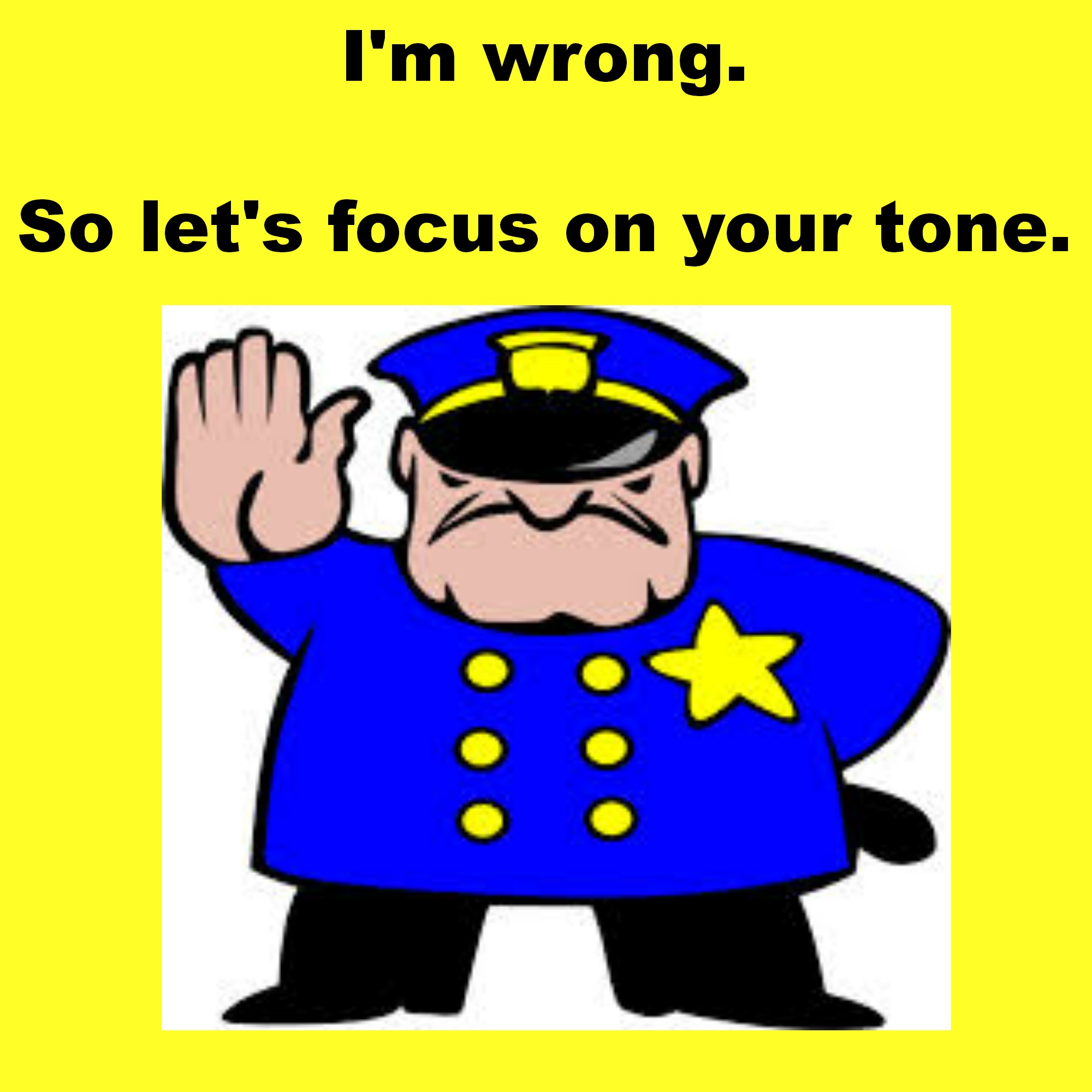
How to Tone it Up?

The goal of this blog is to create a different tone at the Shabbat table. Please share.

ToneDid you ever find that planning for the High Holidays can be stressful?

As if I needed a reminder, this morning I had a very trying exchange with someone with whom I'm coordinating a certain detail of Rosh Hashana programming.

It started when I asked about some women I had heard were uncomfortable with certain details, and had asked why they were uncomfortable, perhaps something could be changed to make them more comfortable. In my haste, I had typed "some woman" and he interpreted that as dismissive rather than sympathetic.

Even after I clarified the error in writing, and even after I spoke with him in person to try to communicate with a smile, I then received a curt message that began:


"I have been handling this aspect of the program since 1994, and honestly have never had this much trouble anyone. You might want to ask yourself whether getting what you want on the Days of Awe is more important than causing this much aggravation."

Ouch.

What I had done to cause any aggravation, let alone "this much"....? No clue.

First question for your table: What would you have advised me to do next?

Sure enough, I apologized for causing aggravation and explained (I think) that my concern wasn't for myself rather for the comfort of other people.

But this time, before I sent it, I showed it to a friend and asked him his opinion about my tone, and to confirm that my reply sounded friendly (and not aggravating).

With his approval, I sent it off, hoping for the best.

A few minutes later I received a short reply that said two things:

1. "No one else has ever been worried about this issue, so why should you?
"
2. "As I have spent more time on this topic than all other topics combined, I would appreciate it if we can just end the communication at this point."


My father used to say, "Beware of email, it is almost impossible to convey tone!"

Question #2 for your table - Was my father right? If so, whose responsibility is it, the writer to get the tone "right" or the reader not to jump to conclusions?


Shabbat Shalom


PS: Some Rosh Hashana links....

1. Rosh Hashana countdown timer: http://jsli.org
2. For my Rosh Hashana prep worksheet (appropriate for any age), reply to this email and ask!
3. Our four favorite honey dishes which make great gifts: Here's the link.


PPS - Just one hidden link this week - can you find it?

Like this email? How about putting your gelt where your gab is: Like it, tweet it, or just forward it.

Friday, December 20, 2013

Face 2 Face

The purpose of this email is to help create some great face time at your Shabbat table. Please print and share.
Face 2 Face

Jerusalem snow scene 2OK, so I'm back from Yerushalayim.

The first thing I did in the airport in New York was to get a professional New York shoe shine for my poor Oxfords, blanched by the Jerusalem blizzard.

How was your trip?

I didn't visit any "sites".

I didn't eat any falafel.

I did drink a lot of coffee.

(Peet's best flavor, that I brought with me. Guess I'm a little spoiled.)

The highlight of the trip?

Surely watching children gleefully, exuberantly reveling in the snow was, hands-down, the greatest joy.

Some kids used baking pans as sleds.

One 13-year-old, who has never left the Land of Israel, told me wide-eyed, "It's like being in Switzerland!"

What is it about connecting with people?

What is it about connecting with people face-to-face?

In eight days I connected meaningfully with eight people/families, any one of whom would have been worth the effort.

Six were old relationships, two were new.

They all have phones. Most have email.

I have asked this question before, but this trip gave me a new way of asking it.

With all this great video technology, why does a face-to-face meeting still matter so much?

You probably know that I'm a big fan of long-distance relationships:

- A live class in San Francisco every Friday morning, while sitting at my desk in Baltimore.
- Studying with individuals and couples via video and phone most days of the week
- Tweeting
- Posting
- (anything new I'm missing?)

Yet... there's something missing, right?

A Forbes survey agrees.

I was pondering this yesterday when I struck up a conversation with a United Airlines pilot. He said, "It's a great truth that is the only thing that keeps airlines in business!"

In other words, in the business world, it's no secret.

This Hilton Hotels report explores some of the psychological reasons.

But I'm not sure they get to the very heart of the question.

So I'll leave it to you and your table tonight:

Why does face-to-face matter so much? Is it merely because our technology isn't good enough to make the other person seem like they're in the room? Can you imagine a day when the video is so realistic that face-to-face won't matter anymore?


Shabbat Shalom

PS - If you want to know the real reason I went to Jerusalem, watch  this ... or this.

PPS - Want to make your Table Talk rabbi happy? Like it, tweet it, or just forward it to someone who might enjoy it.  

Even better, come visit us in Baltimore for some face-to-face time over some great coffee.

Friday, November 12, 2010

It Is Personal

In honor of Lawrence and Amy Gallant, who were married last week in Boston and planning to live in San Jose.

In honor of my sister, Tzipora (and family) who welcomed a baby boy into the world this week, in Jerusalem. Mazal tov!


A strange thing happened to me a few days ago.

Perhaps you or someone at your table can explain it.

Maybe my confusion is because I'm biased.

I'm biased because I believe my own PR. The PR says that this book has changed many people's lives and helped them find what they were looking for. I get emails from Conservative, Reconstructionist, Reform, Orthodox, Orthodox-Hasidic, Conservadox, Reformative and even plain ol' Jews, even from non-Jews, telling me that the book has helped them. After awhile you start to believe this stuff, know what I mean?

So here's what happened.

There is a certain rabbi who runs a certain educational program with hundreds of participants every year. Months ago I asked him if he would like to use the book as a follow-up tool, for his participants to take home after the program. We sent him a sample book, and I showed him how the book dovetails perfectly with his programming.

But he hemmed. He hawed. Via email and phone calls, he would not commit.

Then I heard he was going to be in New York. So last week I made a one-day drive to New York and back (actually New Jersey, so the train was not an option). I found him in his hotel five minutes before he was about to leave for the evening. We talked for those five minutes, and closed the deal. He will use the book for his next program.

This is my question for your table: What is it about the face-to-face meeting?

Shabbat Shalom

Meeting Franklin Roosevelt was like opening your first bottle of champagne; knowing him was like drinking it. - Churchill

PS - have you seen my amazing new iPhone/iPad app? http://tinyurl.com/amazingcalendarlink

.


PPS...

Friday, May 07, 2010

Say It Again, Sam

Last week I did something unusual - I asked an open-ended question, and promised a book for the best answer(s). Some people wrote in that the answer is to be a more giving, forgiving person etc.

I would say that self-transformation is a vision for avoiding the rut in the first place.

But it can take years to change one's disposition.

What about when a relationship is in a rut of negativity - how do you get out of the rut?

Here is the answer you've been waiting for....

I've said it before, I'll say it again, and I'll keep saying it until you actually go and do it:

Lock yourself in the bathroom.

Look in the mirror.

Practice uttering the two hardest phrases in the English language:

"I'm so wrong."
"I'm really sorry."

Let's try that again:

"My bad."
"Sorry!"

Practice makes perfect:

"That was dumb of me!"
"Please forgive me."

Here's something to do at your table that will get everyone laughing and out of their ego-shell at the same time: See if you can come up with 10 different ways to say I'm wrong and I'm sorry.

Everyone who sends in 10+10 answers wins... yes, a free copy of the new Art of Amazement! 1 entry per family!

(Congratulations to last week's winners, I won't name them in public but they'll be getting a book.)


Shabbat Shalom


PS - what do you think of this?

“A lie gets halfway around the world before the truth has a chance to get its pants on.” - Churchill

Friday, April 30, 2010

Long on Oil

Happy 97th Birthday to Eleanor Rubinstein, my late grandparents’ mechutan (does that make her my grand-mechutan?) who could still beat most readers of this blog at tennis.

Get this: the very same day that we learned about BP springing a leak in the Gulf of Meh-hee-ko, we discovered that our kitchen faucet had a leak. Freaky or what??!!

(For those who have been flabbergasted by our stranger-than-fiction news of late, that last paragraph was said tongue firmly in cheek, or thumb in fist as it were.)

Raise your hand if you'd be willing to pay more to drive in order to avoid these mind-boggling spills.

So is there, you ask, a "Jewish" spin on the mega-disaster?

First of all, be prepared to defend Israel and the Jews for causing this catastrophe, along with the bankruptcy of Greece and the Iceland volcano.

Second of all, in proper rabbinic fashion, why don't I answer the question with a question...for your table of course:

What do the BP slick, the Goldman-Sachs affair, the China real estate bubble and John Lennon's lyrics for sale all have in common?

After you ponder that one for awhile, you might consider this take:

It's actually quite simple. These stories make worldwide headlines because they have worldwide impact. The common thread is that we are all connected to one another. Humanity is like a person with many cells, organs and limbs. To fight each other is like cutting off one's proverbial nose to spite one's proverbial face (to coin a proverbial phrase).

The only way to proverbial Mt. Sinai (or choose your own symbol of human spiritual quest) is by working together, or to quote the modern proverb...

You better recognize your brother
in everyone you meet.

You know I spend a lot of time talking to individuals about their stressed-out all-but-broken relationships. Everybody wants an uplifting, compassionate, loving, unifying relationship. We get stuck in these ruts of resentment and criticism.

What's the way out?

Put your thoughts (and those of your table) in the comments below. Anyone who gets the right answer will win a copy of the new edition of the Art of Amazement.

Shabbat Shalom

"I have nothing to offer but blood, toil, tears and sweat." - Churchill


PS - Two weeks ago, I posted this uplifting Jewish story. It's still uplifting. Don't read it if you don't want to be uplifted:

Soldier, survivor have emotional reunion | The Detroit News

In the fall of 1945, a Soviet soldier hoisted a 5-year-old boy aloft and paraded him through a Lithuanian synagogue that had been closed throughout a long Nazi occupation.

For 65 years, the boy and the soldier carried that moment in their heads and hearts. Unknown to each other, they told the story to family and friends. A Toronto songwriter memorialized it in song. The boy became a man and included the anecdote in his 2003 book.

On Thursday, they met and embraced for the first time since then in Rabbi Leo Goldman's Oak Park living room.

(click to read more)

Thursday, October 22, 2009

Change for a Change

Dedicated by a friend in California to Dora bat Yosef. May her memory be for a blessing.

OK, so there’s this guy, let’s call him Steve (not his real name). This is a true story.

Here’s the conversation Steve recently had with his wife, Debby.

Debby: “Hi Steve, how’s it going?”
Steve: “Hi, fine, how about you?”
Debby: “Not so great. I have this major deadline at work and I’m behind. Is there any chance you could take our daughter to her appointment?”

How do you think Steve should reply?

Before you answer, some background:

Steve has been very critical of his wife Debby. He feels that she could do a better job at being a wife and a mother.

Debby has been very critical of Steve. She feels that he could do a better job at being a husband and a father.

Steve is also very busy. In fact, he feels that he really can’t do it. But he’s also feeling a little ticked-off. Debby always is telling him how she wants to put family first, but she’s constantly pushing off the family for her work. Not only that, but she has told Steve that she wouldn’t respect him if he weren’t working full-time. Being a stay-at-home dad is not an option.

Question for you and your table – when Debby calls Steve to ask him to take the child to the appointment, how should he respond?

+ + + +

Here’s how Steve actually responded: “No, I can’t do it. I thought you said your family was your top priority.”

Here’s what he should have said: “Wow, you sound overwhelmed. I so wish I could help you! Unfortunately, there’s no way I can make it on time to that appointment. Do you want me to call and cancel it?”

Habits are really hard to break. Some smart Swedish people came up with a brilliant model for helping people do the hard work of changing a habit:


Shabbat Shalom

PS – Speaking of putting kids first, in case you missed last week’s announcement, the first set of j-wristbands have arrived! See http://jsli.org/Iguardmytongue.html

(They are intended to be used with the lesson on speaking nicely – lashon tov.)

“To improve is to change; to be perfect is to change often listen.” - Churchill

Thursday, September 03, 2009

Figuring Out Rosh Hashana

Dedicated to Chanan Velvel ben Bryna who needs a speedy recovery.

We have had a great response to the live, interactive web-based Rosh Hashana class on Labor Day. The primary topic will be relationships - How RH and YK can be used to fix 'em. Send an email to sign up.

The other day I was visiting a friend who recently moved into a new home.

As I was leaving, stepping outside into the sunshine, a woman happened to be walking down the sidewalk.

“Good morning,” she said.

“Good morning,” my friend said.

“I’m Mrs. So-and-So from across the street.”

“Pleased to meet you…”

“You know, I seem to be locked out of my house. I went for a walk and I think my husband may have locked the dead-bolt. May I possibly use your phone?”

“Absolutely!”

Moral of the story: You can’t choose your neighbors, but you can choose your neighborhood. Some people choose a home based on the house. Others choose to live in a neighborhood with soul-mates around.

(Do you know what I mean by "soul-mates", as opposed to "nice people"?)

If you were reading this blog last year (or even last week and clicked on the video), you heard me make the radical suggestion not to go to synagogue on Rosh Hashana (if going there is not uplifting for you).

Some people thought I was joking. I was not.

Someone objected that if you stay home, you miss out on the social part, the once-a-year chance to feel like you belong to some kind of Jewish community.

Here is your double-header TT question of the week –

1) On a scale of 1-10, how important is the personal spiritual experience of Rosh Hashana?
2) On a scale of 1-10, how important is the social-communal experience?

Don’t tell me they’re equal – Most people have to choose one or the other.

If you would like personalized suggestions on where to go in your community that may nurture both needs, send an email.

If you answered higher than “5” to either question – what are you going to do about it in the coming year (5,770)?

You have exactly 2 weeks to decide.

Shabbat Shalom


PS – Part 2 of the Seinfeld Rosh Hashana series:


Thomas Edison Quote of the Day:
I am not discouraged, because every wrong attempt discarded is another step forward.