Showing posts with label mussar. Show all posts

Friday, November 08, 2013

Everyday Greatness

Looking for a Channuka book, gift or activity? 
We don't sell them, but we have an exclusive list of the best.


 You-are-Good
Have you heard of Alan Morinis?

Easily one of the nicest guys I've met.

Having done time in Marin, California, he now lives in Vancouver and has started a Jewish movement.

Alan has this great personal story.

By profession, he was an anthropologist, specializing in pilgrimmages.

And as a middle-aged Jewish male, Alan was looking up and down for meaning.

He tried everything.

Then he stumbled upon an obscure Jewish book that talked about something called "mussar". He loved what he read, and wanted to know more.

But he didn't know where to go.

He noticed that the book had been endorsed by a certain rabbi in Brooklyn. There was no information about this rabbi, but there was a phone book. Alan found him and asked if he could visit.

Over the next several years, Alan commuted from Vancouver to New York. He sat at the proverbial feet of his mentor - his rebbe - in order to absorb what he could and change his life.

From this learning came:

• Three books: Climbing Jacob's Ladder (partly a memoir of his journey), Everyday Holiness, and Every Day Holy Day.
• An organization with a mission to educate the world about mussar.
• Thousands of lives changed for the better.

So this all leads to two questions for your table:

1. Does spiritual greatness require a pilgrimage or quest, or can it be done at home?
2. What would get you to fly across the country to study with a rabbi?

Shabbat Shalom


PS - Please follow me on Twitter, or tweet this week's email, or like it, or just forward it to someone you love...

Friday, September 13, 2013

Change By Fiat?

Dedicated to the memory of Chana Leah (Jaqueline) Meyeri of San Francisco, who passed away this week after a long battle with breast cancer. May her husband, daughter and extended family be comforted. 

The purpose of this email is to change your life on Yom Kippur and beyond. Please print and share.


Full mailboxA riddle for your Yom Kippur table:

When is something small something big?

See how many answers you can come up with. I'll give you two, one is a story and the other is a Yom Kippur idea.

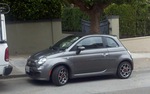
The story is something happened to me in San Francisco this week. When I went to get the rental car, the "midsized" cars were all gone. Never mind that when I paid for the car at the counter they forgot to mention that all they had were Fiat Minis.

The couple in front of me were not pleased.

They squinted in the bright September sunlight, surveying the lot.

"You don't have anything else, only Fiats?"

"Well, sir, we do have that Mustang over there which I could give you."

His face lit up. "Would there be an extra charge?"

"No, sir, I will give you the same price."

"That'll work!" All three were quite pleased - the couple and the agent.

But yours, truly, I'm thinking to myself, "Too bad I wasn't here a minute earlier, I could've had that Mustang. That would have been fun to drive."

The other travelers who didn't get the Mustang were not so pleased. Some of them even decided to wait for a larger car rather than drive the dreaded Fiat!

In the end, I was very fortunate that I didn't have the Mustang or any larger car.

Because.... I had to park in San Francisco.

And for the first time in 13 years Bay Area driving, parking was a breeze!

Check this out:

Easy Parking
    Easy parking with room to spare

To Americans, that ain’t a lot of car.

But so right for that city.

Speaking of paring down, last week's Rosh Hashana blog, "If I Can Do It, So Can You", resonated with a lot of readers.

(It turns out that not only has Zero Inbox already been discovered, someone even wrote a book about it. And here I thought I'd invented something.)

Does an empty Inbox at the end of the day appeal to you?

Does a clean desk appeal to you?

What about a clear head? A clear conscience?

Clutter outside leads to clutter inside. And vice-versa.

Order outside leads to order inside. And vice-versa.

Zero Inbox is the vision.

How do you get there?

“Just do it.”

In the age of liposuction, we all want to trim by FIAT.

It doesn’t work.

But there are two things the Fiat story can teach us:

1. Things really do happen for good reasons. Even though we don’t always see that right away.

2. Small is big. When you need to park in SF, small is huge. When you want to change yourself, a big commitment is worthless because you won’t be able to keep it, but a small step is a huge stride.

On Yom Kippur, after you finish counting all of your flaws, don’t promise yourself you’ll now be perfect. But DO commit to making one small change towards that new you. For example:

“I hereby commit to exercising once a week until Channuka.”
“…to eating no cookies for the month of October.”
“…to drinking no alcohol for 1 week.”
“….to smiling at my wife once a day for two weeks.”
“…to hugging my husband once a day until Thanksgiving.”
“…to pausing to say ‘Wow, thank You” every time I drink a glass of water for 4 weeks.”
“…to turning off the cell phone from 6-8 pm for 6 weeks.”
“…to turning off the TV and Internet every Friday night for 4 weeks.”
“…to giving 10 percent of my September income to tzedaka.”

Think about it. Plan it. Make the declaration out loud at sunset on Saturday, just before the end of Yom Kippur.

Then do it.

Someone in San Francisco asked me yesterday, “What if we don’t succeed?”

Answer: Not an option!

If you can even think that you might not succeed, then you are not committed, or you are over-reaching. Gotta be real, and gotta be 100% committed.

Now you know my answer to the riddle, When is something small something big?

When it's real.
 
May we all be sealed for life and peace, health and wealth, holiness and simcha; a zero inbox, easy parking, and a small but very real change for the better.

Shabbat Shalom and Happy Yom Kippur


PS – Sukkot is next week and our recommended books and supplies, including the no-tools-snap-together Sukka, are at bestjewishkidsbooks.com.

PPS:  At this time of year, many people try to give extra tzedaka. If you're that type, please help aleviate hunger or support Jewish education. This blog is supported exclusively by tax-deductible contributions from readers like you. This is one of two times each year we invite you to become a paid subscriber. Nothing is free, so if you're not a supporter, someone else is paying for you to enjoy this. If it's worth a nickel to you or more, please do the math and click here. It only takes a minute or so and any amount helps.

Friday, August 23, 2013

Hastier But Tastier

Back to school? Have you seen our top picks for school supplies and gifts for teachers?
Visit BestJewishKidsBooks.com. When you use our links, Amazon donates 5% to JSL.


Shabbat_ChallosAs presented earlier this summer, your Table Talk is in summer L'Chaim mode.

The suggestion is this:

At some point during the Shabbat meal, pour everyone their favorite beverage for a l'chaim.

But ask them not to drink until after you finish the story. Make this a ritual every Friday night, and your family will look forward to it.


+ + + +

L’Chaim Story
Parshat Ki Tavo

“The Hasty Meal”

Rabbi Yisrael of Salant believed very much that "love your neighbor" is the most essential idea in the Torah.

He was famous for teaching the details of this mitzvah through example.

One of his students once invited him for Shabbat.

Knowing how careful Rabbi Yisroel was in every detail of observance, and how reluctant he was to stay anywhere as a guest, the disciple described the way he ran his household.

"We buy our meat from Shlomo the butcher. Our cook is the widow of so-and-so who observes every stringency. And the meals are conducted properly, with divrei Torah and songs. It's no wonder that the Friday night meal in my home ends at a very late hour of the night!"

He obviously felt proud of his observance.

“I accept your invitation,” Rabbi Yisrael said, “but only on the condition that you shorten the length of the Friday night meal by two hours.”

Eager to host his rabbi, the disciple quickly agreed.

That Friday night, the Shabbat meal was rushed faster than that family had ever experienced it.

The courses followed each other rapidly, without the usual lengthy break in between.

There were divrei Torah, but they were short and sweet, not long drashas.

They sang Shabbat songs, but only a few, not the entire liturgy.

It felt as though hardly any time passed between washing their hands for the meal and passing the finger-bowl after dessert.

After they said the final blessing of "Birchat HaMazone" the disciple turned to Rabbi Yisrael and said quietly, “Forgive me, Rebbe, but I must ask a question. What fault dd Rebbe find in the way I conduct my Shabbos table, that led him to shorten the meal time by two hours?”

He seemed to ignore the question. Instead he said, "Please ask your cook to come in."

When she entered, Rabbi Yisroel said to her, “Would you please forgive me for making you tired this evening, and causing the courses to be served so quickly tonight.”

To the student’s surprise the cook said, “May the Rabbi be blessed with every blessing! If only he was a guest here every Shabbos! The meal always lasts far into the night, after a day I’ve spent working very hard to prepare everything. By the time the meal is over, I can hardly lift my feet from exhaustion. But tonight, because you finished the meal early, I can go home and rest!”

Rabbi Yisrael didn't look surprised at all.

He turned to his disciple and said, “Here is the answer to your question. Indeed, the way you conduct your Shabbos table is wonderful. But when it harms another person, it becomes something not so wonderful at all!”

Listen to the sensitivity! That's what it means to be a great human being, that's what the Torah is all about. Rosh Hashana is in two weeks - may we all seek this kind of greatness.

L’chaim!


+ + + +

Question for your table... What does it take to become that sensitive to other people's feelings? Is it even possible, or do you have to be born with it?


Shabbat Shalom

PS -


PPS - For this year's updated edition of our "25 Questions to Think About Before Rosh Hashana", send an email.

PPPS - Want to make your Table Talk rabbi happy? Like it, tweet it, or just forward it to someone who might enjoy it.

Excerpted and adapted with permission from Stories My Grandfather Told Me, Vol. 5, © 2001 ArtScroll/Mesorah Publications. All rights reserved. Get the book here.

Friday, September 02, 2011

It's Not the Hurricane, Stupid!

Hurricanes, earthquakes, floods, blackouts, yada yada yada.

Why do these things happen. That's what everyone wants to know.

Why did that bozo driving on a darkened street not only ram the shopping cart lying in the road, sending it hurtling across into my lane and putting a nice dent into my fender, but also speed away?

Why did I go out at all Tuesday night to look for ice when I should have known everyone would be sold out?

Why does this fruit fly buzzing around my desk keep pestering me? Why won't it just go away or die or something?

Why why why?

I have a more basic, Rosh Hashana-dik question.

After all, tis the season.

If you have a shofar at home, now's a good time to dust it off and get that lip back in shape. I've been blowing mine every morning starting Wednesday this week to wake up the kids.

If you don't have one,
here's a low-cost one online.

Nothing beats the real thing, but there is also the virtual shofar for iphone/ipad.

Now, I know I haven't asked you the question yet, but there are a few more Rosh Hashana links I'd like to share....

On jsli.org, you can download for free our "24 Questions to Think About Before Rosh Hashana". Here's the link.

On bestjewishkidsbooks.com, you can find links to our four favorite honey dishes which make great gifts. Here's the page.

Finally, now that school is back for young and old, how about showing your appreciation to the teachers? Don't wait until the end of year. We have found 11 gifts that are inexpensive but quite useful for any classroom teacher. Get them a small gift now that will both show your appreciation and help them be effective. Go to bestjewishkidsbooks.com and browse the category, "Gifts for Teachers".

Now back to our main program.

It seems to me that the question of "Why did such-and-such happen" is useful and instructive if and only if we begin with a more basic question:

What am I here for?

Meaning, What's the purpose of my life?

We now have a little over 3 weeks until Rosh Hashana. Here's your action plan:

1. Download my 24 questions worksheet. Print a copy for everyone you love.
2. Set aside 5 minutes a day to work on one question.

Friday night dinner is a great time to begin with question #1.

Do this, and then between Rosh Hashana and Yom Kippur we'll be able to talk more meaningfully about the "why why why".

Shabbat Shalom

(I made these vids a couple years ago as an experiment. Please tell me what you think.)


PS - If you know anyone who might appreciate this blog, kindly send them the link, or post it to your facebook wall or even tweet it.

PPS - We have audio (CD and mp3) on Rosh Hashana / Yom Kippur here.

PPPS - What better way to help someone prepare for the new year than sending them the amazing Jewish iphone/ipad app?

Friday, July 29, 2011

Older But Wiser?

In memory of my father, Dennis Seinfeld (Dovid ben Eliezer).


Last Friday night I went as usual to the nearby assisted-living home.

Small place, only about 30 residents.

As a rule, by the time I arrive (after dinner) the only residents I see are those who want to participate in the Shabbat program (kiddush + story). Everyone else go up to their rooms straight after dinner.

So it surprised me to see Mr. Aaron still sitting there. At 103 years old and nearly deaf, I doubted he had stayed around for me, maybe he was just feeling too tired to get up.

Anyway, after the program, as I rose to leave, he suddenly stood up and asked me, "Would you walk me to my room?"

He was shuffling with a walker. Big man. Strong man. You could tell he had been fit once upon a time.

We walked to the elevator. I wish I could say we had a meaningful conversation. With his hearing loss, it was next to impossible. I knew that he had a lot going on inside there, because over the course of the past few years knowing him, a great sense of humor occasionally came out.

Like the time 2 years ago he had been in the hospital. When he returned home, I told him, "Good to see you on your feet!"

"Better than on someone else's feet!" he retorted.

Last Friday night was the last I saw him. He was "niftar" this week and the funeral was yesterday.

Yesterday was also the 6th Yahrzeit (anniversary) of my father's petira.

Many people don't know the word "petira" (and niftar, the adjective form) but it's a great word to add to your Jewish vocabulary.

It doesn't mean "passing" or "death".

It literally means "exemption" or better, "absolution".

Exemption from what?

From doing mitzvot (mitzvos).

Isn't that a strange way to refer to someone's passing?

Well, what does "passing" mean?

Think about it.

I did several things in his memory yesterday.

- Lit a 24-hour candle Wednesday night.
- Said kaddish in a minyan
- Learned a little bit of Torah in his honor.

I also went to a funeral.

Of course, the funeral had nothing to do with my father, but it brought back memories.

I sat in the back, and listened to Mr. Aaron's grandchildren (he had outlived his children) talking about this man's long, productive life.

Like my father, he had been an attorney. Like my father, he had been the epitome of compassion.

One time, a grandson told, they were having lunch at a restaurant and his grandfather ordered an extra sandwich to go. What was this for? For a hungry person he had seen outside on the way in.

It's great to hear these kinds of stories, because if you only know someone as a 103-year-old man, you only know him as a disabled, hard-of-hearing wrinkled old fella.

My dad, in contrast, never reached old age. He was niftar in his prime.

Sometimes I wonder what my dad would have been like at age 70, or 80, or 90, or 100.

Sometimes I wonder what I will be like at those ages, should I enjoy living so long.

(Apparently, this site will transform your photo to show you past and future selves.)

First question for your table - What kind of person do you see yourself as in 10 years? In 20? In 40?

One of the things I learned about Mr. Aaron was that he had always had a sense of humor.

Riva, the nurse who cares for the seniors over there, observed after the funeral how for most people, when they age their personality doesn't change.

So it sounds like if you are a complaining person today, you have a high chance of ending up a cranky old man or woman.

If you are a cheerful person today, you have a high chance of ending up a cheerful old man or woman.

Some people feel that they are stuck. They are stuck in their bodies, stuck in their personalities. Change may be possible, but it's just too darn hard.

Question #2
- If there were one thing you could change about yourself between now and when you reach 103, what would it be?

Shabbat Shalom

PS - Here is a recent video of Mr. Aaron

PS - Looking for a bargain birthday gift for someone? For 99¢ send them the amazing Jewish iphone/ipad app that they will love and use every day - http://tinyurl.com/amazingcalendarlink