Showing posts with label Judaism. Show all posts

Friday, November 18, 2016

Do You Believe You Have a Soul?

The goal of this blog is some brain-cleansing at the Friday night dinner table. Please share.
Happy birthday this week to Stuart in California.
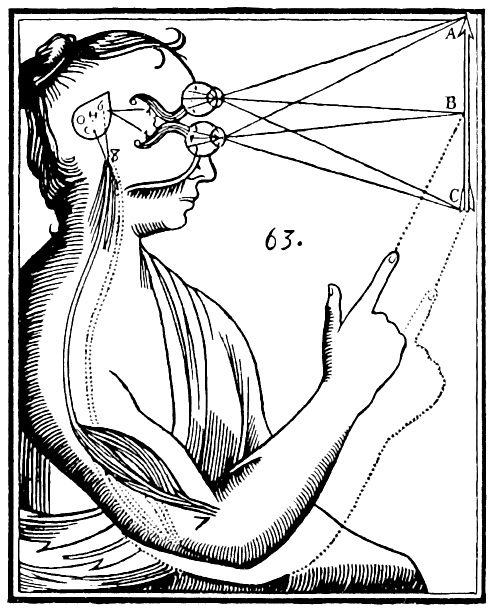

Descartes_mind_and_bodyYesterday there was a voice message that worried me.

"Someone quoted something you said and I wanted to make sure I understood it right."

Uh-oh.

What was quoted as saying? Who is this person? What are they saying about me? What am I going to be asked to defend?

I phoned him back this morning.

The quote in question goes something like this (it actually works very well as a conversation piece for your Shabbat table).

Ask everyone:

Raise you hand if you believe you have a soul.

Most people will raise their hands. In most groups, everyone raises their hands.

Then say, Let me be the first to tell you: I heard from a card-carrying rabbi that you're wrong. You don't have a soul.

Pause and let that sink in.

Then say, You don't have a soul. You have a body. And the fact that you could raise your hand so quickly shows me how confused you really are.

The problem is that we are brainwashed, day-in and day-out, to think of ourselves as bodies. The media around us are constantly shouting, "You're a body, you're a body!" and we come to think that way.

But if your head is on straight, when someone asks you if you have a soul, your reaction should be the same as if they asked you, "Do you have a person?"

"Whaddya mean, do I have a person - I am a person."

Judaism teaches that some aspect of self exists before a person is born, and some aspect continues to exist after a person dies. We call that "soul".

Spirituality is learning how to live with the awareness of yourself as soul and not as body.

One of the most effective ways to become more spiritual is to lock yourself in the bathroom every day and look in the mirror and say, "You're a soul, you're a soul, you're a soul."

The degree to which you live each day with soul-awareness is the degree to which you are spiritual.

And it's a level playing-field. You don't have to be particularly wise, learned or righteous to walk this spiritual path.

You could end the conversation here, and indeed at this point the gentleman was ready to thank me and go about his day.

But there is one vital clarification.

This soul-body (or mind-body) split is a classic problem of epistemology, theology, psychiatry and even neurology.

Some religions teach that the split is so complete that spirituality means minimizing the body (by fasting, celibacy, etc.)

Our tradition says differently.

Mind-body dualism is only hypothetical. At this stage of reality, we are a soul that is fused to a body.

That body is inherently neutral, and can become uplifted and rarefied by using it with soul-awareness.

You can do this every time you give tzeddaka (even to the pushke) or to invite guests (which is hard to do right). Or stop some weekday activity on Shabbat.

Question for the table: When is it hardest to have soul-awareness, and what's the solution?


Shabbat Shalom

PS - Hope you're still counting down the days to Channuka....

PPS - Yes, this week there is a new easter egg....
When you forgive, you in no way change the past - but you sure do change the future.
Read more at: http://www.brainyquote.com/quotes/topics/topic_forgiveness.html
When you forgive, you in no way change the past - but you sure do change the future.
Read more at: http://www.brainyquote.com/quotes/topics/topic_forgivene

dfdfd

Like this email? How about putting your gelt where your gab is: Like it, tweet it, or just forward it.

Wednesday, October 08, 2014

Do you say "rooof" or "ruf"?

In memory of Ronald Fischman, 54, was stabbed to death in his Philadelphia home last week by a man he had tried to help. He was described by his rabbi as "one of the most compassionate people I know - he had an enormous heart."
(To dedicate a future Table Talk, send an email.)


mendel-sukkahToday's title is a serious question - How do you pronounce the word "roof"?

Where I grew up, the top of your house was pronounced "ruf" (rhymes with book) and the horse's foot a "huf".

Then I moved to Mississippi. Down there folks say "reeuf" (sounds better in a phrase, like "cat on a hot tin reeuf").

Then my Mississippi buddy and I drove across the country in his pickup. His name is Billy Joe. I am not making this up.

When we got to California, we happened to arrive in time for my cousins wedding. He didn't want to stay for the whole wedding of distant cousins of mine that I myself hardly knew. But he stayed for the ceremony and reception.

Upon departure, BJ made this observation:

"That wan't no wedding."

"What are you talking about?"

"I'm telling you, that wan't no wedding. There ain't no wedding cake!"

(BJ likes cake.)

Here's the deal. The High Holidays are a banquet. Rosh Hashana is the Entrée. Yom Kippur (ironically because we fast) is the First Course. Sukkot is the Main Course. Simchat Torah is Dessert.

Now, if you had your Entrée and First Course but don't have your Main Course, you're going to leave the Banquet a bit hungry.

So first thing to do over the next 8 days is find a Sukka to sit in for a few minutes. Chances are there's one near you.

Now, you could have the Main Course but leave before dessert, but if you do, your soul is gonna say, "That wan't no wedding!"

And if and when you find yourself in a sukkah, here's the question to ask: What's the most important thing to have in a sukkah?

Happy Holidays and Shana Tova and don't forget to enjoy our beautiful new Fall Good News Newsletter.


(This blog will be enjoying the Banquet until October 24)


Like this email? How about putting your mouse where your mouth is: Like it, tweet it, or just forward it to someone who might enjoy it.

Thursday, January 30, 2014

How Do You Define "Good Art"?

The purpose of this blog is to help your family and friends turn your Shabbat table into a work of art. Please print and share.

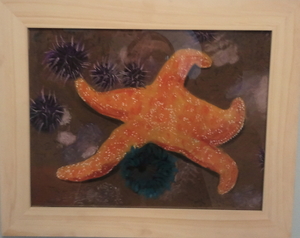
Emuna's starfish 3Please look at the picture to the left.

What do you see?

A. A starfish
B. A work of art
C. A proud father of a budding art student's first effort
D. Some wood, some glass, some pastels.

Our daughter spent many hours on this creation, during six sessions of her first-ever art class.

Question 1 for your table: Does knowing that background information make it more beautiful?

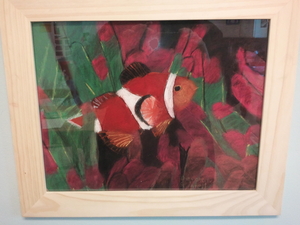
devorah fish1While we're at it, I might as well show you her sister's first creation as well:

Truly stunningly fabulously thrillingly amazingly earth-shatteringly beautiful, right?

Great art teachers often say that the main skill to learn is not how to draw, not how to paint, but how to see.

How to get started learning to see?

You could take the neuroscientist's route and read Inside a Dog: What Dogs See, Smell and Know.

Or you could go the artist's route and read the classic Drawing on the Right Side of the Brain.

This is all a build up to Question 2 for your table: What's the point of art?

And what does all of this have to do with being Jewish?


Shabbat Shalom

"Wagner's music isn't as bad as it sounds." - Mark Twain

PS - If you like, please like, tweet, or just forward to someone who might enjoy.

Friday, January 24, 2014

What's your answer to the Jewish Question?

The purpose of this blog is to help your family and friends feel smarter at the Shabbat table. Please print and share.

gI_0_mystmanSomeone asked me the other day about how to deal with a bad neighbor.

Ever happen to you? That you had a malicious, vindictive, or otherwise harmful neighbor?


What did you do?

Here's an answer in good rabbinic style, in the form of quesitons.

First question, see if anyone can guess what famous person said this:

"Some people like Jews and some do not; but no thoughtful man can doubt the fact that they are, beyond all question, the most formidable and the most remarkable race which has ever appeared in the world....

We owe to the Jews…a system of ethics which, even if it were entirely separated from the supernatural, would be incomparably the most precious possession of mankind, worth in fact the fruits of all other wisdom and learning put together. On that system and by that faith there has been built out of the wreck of the Roman Empire the whole of our existing civilization."


Do you want a hint?

The same guy who said, “You have enemies? Good. That means you’ve stood up for something, sometime in your life.”

Same guy who said, "Courage is what it takes to stand up and speak; courage is also what it takes to sit down and listen."

Still don't know?

How about this one: "I have nothing to offer but blood, toil, tears, and sweat."

Yes, indeed, it was Sir Winston Churchill.

But the more important second question to ask is: What did he mean by "system of ethics"?

Churchill's knowledge of Judaism was mainly through the eyes of Christianity. But he was giving credit where credit is due. He got that Christian ethics is largely a reframing of Jewish ethics.

That takes us to the third question for your table: What's your favorite ethical teaching from the Torah?

The easiest answer is the Golden Rule or the verse, "love your neighbor as yourself".

Here's mine:
When you see the donkey of your enemy struggling under its burden you should help him reload the donkey.

Now why in the world should you help your enemy?

And does it matter if you help him with a frown or a smile?

And what does this imply about helping someone who isn't your enemy?

And what does this imply about being Jewish?


Shabbat Shalom

"A lie gets halfway around the world before the truth has a chance to get its pants on." - Churchill (the original tweeter)

PS - If you like, please like, tweet, or just send to someone who might enjoy.

Wednesday, September 18, 2013

Can You Be Sorry But Happy?

The purpose of this blog is to make sure your Rosh Hashana and Yom Kippur don't go to waste. Please print and share.

Can You Be Sorry But Happy?

Full mailboxSomeone read last week's Fiat email and wondered, "why did he write 'Happy Yom Kippur' - was that an error?"

Now that Yom K ippur is in the rearview mirror, and we've been cleansed of all our sins...

I have a big apology to make. I did make a big error (and many small ones).

But writing "Happy Yom Kippur" was not one of them.

The big one was that last week, some people received this message on Saturday morning instead of Friday.

Oy.

For those who enjoy reading it on Friday, please forgive me.

And maybe this is a good reminder that the cleansing of Yom Kippur is only temporary.

If we're not saying "I'm sorry" at least once a day, we're probably not being honest.

(As I tell some of the men who study with me, "An apology a day keeps the rabbi away.")

I called this email "Happy Apologies" because a sincere apology is a happy moment. It's cleansing.

Isn't it?

No error, I meant it.

So...if you read the story about the Fiat, did you enjoy it?

Did you make a commitment for change this year? (You could ask this question at your table...)

Some people like to keep their commitments private, but telling others can sometimes help you keep them.

So I'd like to share with you my four commiments.

I figure the more people who know, the more focused I'll be on keeping them. All of these are a 6-week commitment:

Physical - Going to bed on time (so much to do, so hard to shut down).
Relationships - Phoning my sister once a week (the time difference makes it challenging).
Society - 10 fundraising meetings for JSL's amazing new project (I hate asking people for money).
Spiritual - 3 hours of Torah study every day (who has time?)

There you have it. I've bared my soul.

(The last one has been the most interesting. It's amazing how many unused minutes you can find in the day, if you try.)

What did you commit to?

Didn't make a commitment? Didn't make one that you feel you can keep? Made one but already screwed up?

Tonight starts the last 8 days of the High Holidays (Sukkot).


Eight more days to set your course straight for the year.

Good luck.

Happy Sukkot.

(no email next week)

"Apology is a lovely perfume - it can transform the clumsiest moment into the most gracious gift." - Margaret Runbeck
"Maturity is the ability to reap without apology and not complain when things don’t go well." -
Jim Rohn

PS:  At this time of year, many people try to give extra tzedaka. If you're that type, please help aleviate hunger or support Jewish education. This blog is supported exclusively by tax-deductible contributions from readers like you. This is one of two times each year we invite you to become a paid subscriber. If you're not a  subscriber/member/supporter, someone else is paying for you to enjoy this. If it's worth a nickel to you or more, please do the math and click here. It only takes a minute or so and any amount helps.

Friday, April 12, 2013

Love Your Who?

The purpose of this blog is to promote friendly conversation at the Shabbat table. Please print and share.


As the famous story goes, two guys made a bet.

One said to his friend, "You know that rabbi, Hillel? Nothing, and I mean nothing, can cause him to lose his cool."

The friend was skeptical. "I don't believe it."

"Wanna bet?"


"Sure, how much?"

"I bet 50 shekels you can't make Hillel lose his temper even for a second."

"You're on!"

So he goes to Hillel. But he waits until Friday afternoon when everyone is running around preparing for Shabbat.

He listens at the window until he hears the familiar splish-splash of someone taking a bath.

Then he makes his move.

Banging on the door, he shouts, "Hillel, is Hillel there? Hillel, I need Hillel!"

In moments, a dripping Hillel appears in his bathrobe with a look of great concern. "What is it? How may I help you?"

"Are you Hillel?"

"That is my name, yes."

"Are you the famous rabbi?"

"I don't know if I'm that famous, but I am the rabbi they call Hillel."

"I heard you're real smart."

"Well, I don't know about that. You shouldn't believe everything you hear."

"Listen, I want to convert to Judaism on the condition that you teach me the entire Torah while I'm standing on one foot [i.e., quickly]."

"My dear friend, I thought you were going to ask me a hard question. That one I certainly can agree to do."

So he converted him and then taught him: "What is hateful to you, don't do to your neighbor. That is the whole Torah! The rest is explanations. Now go learn."

The whole story is much longer, but this is enough for me to ask this week's first question for your table:

Most people understand that Hillel's summary of the Torah is derived from, if not identical to the famous line from Leviticus, "Love your neighbor as yourself." But does it really mean the same thing?

This week someone asked me what is the Hebrew word for "neighbor" in "Love your neighbor". The answer is "ray'echa", the root of which is "rah" which means "bad". In other words, the verse could be interpreted as, "Love [even] the one who is bad to you as much as [you love] yourself."

(I don't think this has anything to do with someone who is dangerous or abusive. Just someone who isn't pleasing you all the time.)

Question #2 - If we're supposed to love the one who is "bad", what does that imply about someone who is for the most part good?


Shabbat Shalom


PS - Want to make your Table Talk rabbi happy? Like it, tweet it, or just forward it to someone who might enjoy it.

Friday, February 01, 2013

You're a 10

The purpose of this blog is to get the kids and folks talking. Please print and share.

10commandments

Today's question for your table is something that I know has been bothering you for a long time.

You've probably laid awake at night wondering this.

Maybe you've googled it a few times. Google doesn't know.

Psychologists have discovered that we're wired for the number 7.

But for some reason when listing the "top" of any category, we love 10.

Why is this?

Similarly, when we do a countdown, it's always from ten; we never start at nine or eleven.

Why????

Why do weight-lifters do sets of ten?

[pause for discussion around your table]

So here's an experiment I've done numerous times.

Practically everyone in the world has heard of the Ten Commandments.

Some people (anyone at your table?) can actually name them.

There are even a few who can name them in order.

Even some who saw the movie.

Here's the problem - when you look at the text of the Torah - in any language - is it clear that there are exactly ten?

Try it yourself. Here's the text - print it out and pass it around the table - don't tell everyone there are ten - just ask them, how many commandments are there?

(Exodus Ch. 20:1-14)
1 And God spoke all these words, saying, 2  I am the Lord your God, who have brought you out of the land of Egypt, out of the house of slavery. 3 You shall have no other gods before me. 4 You shall not make for you any engraved image, or any likeness of any thing that is in heaven above, or that is in the earth beneath, or that is in the water under the earth; 5 You shall not bow down yourself to them, nor serve them; for I the Lord your God am a jealous God, visiting the iniquity of the fathers upon the children to the third and fourth generation of them that hate me; 6 And showing mercy to thousands of those who love me, and keep my commandments. 7 You shall not take the name of the Lord your God in vain; for the Lord will not hold him guiltless who takes his name in vain. 8 Remember the sabbath day, to keep it holy. 9 Six days shall you labor, and do all your work; 10 But the seventh day is the sabbath of the Lord your God; in it you shall not do any work, you, nor your son, nor your daughter, your manservant, nor your maidservant, nor your cattle, nor your stranger that is within your gates; 11 For in six days the Lord made heaven and earth, the sea, and all that is in them, and rested the seventh day; therefore the Lord blessed the sabbath day, and made it holy. 12 Honor your father and your mother; that your days may be long upon the land which the Lord your God gives you. 13 You shall not kill. You shall not commit adultery. You shall not steal. You shall not bear false witness against your neighbor. 14 You shall not covet your neighbor’s house, you shall not covet your neighbor’s wife, nor his manservant, nor his maidservant, nor his ox, nor his ass, nor any thing that is your neighbor’s.


And what's even more interesting is that although we seem to agree that there are supposed to be ten, others count them differently than we do.

Hmm....

Now I'm assuming by now I've convinced you that there could easily be eleven or twelve commandments on that list.

So here's the question:

Does that sit OK with you - "The 12 Commandments" - ??

If not, why not?

And finally - aren't there supposed to be 613 commandments? (proof that we're not addicted to round numbers?)

So what's up with these ten?

Let me know what you and your table-mates come up with, would you please?


Shabbat Shalom 

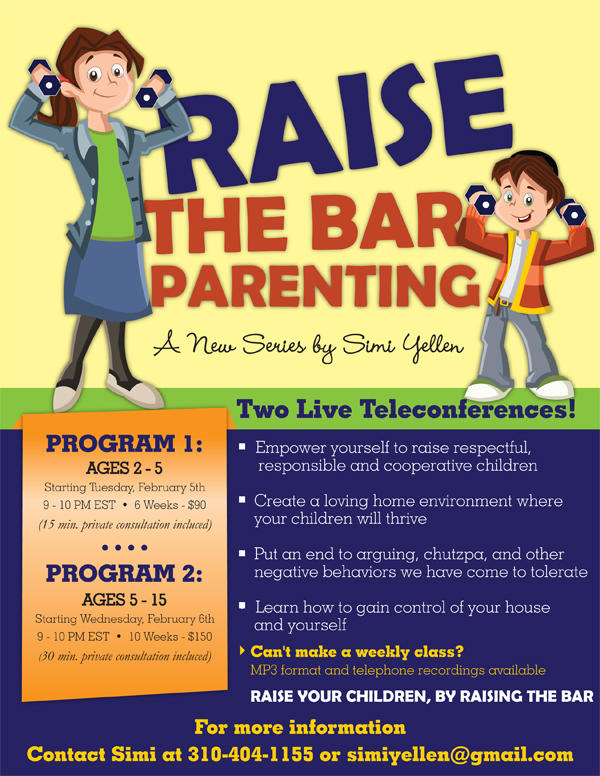
FebClasses2013_TeleconferenceV3PS - Parenting is a lot harder than a simple to-do list, great parenting needs great coaching.

Simi Yellen is one of the best out there. Here's the info on her new phone-class starting next week.

If you have a 2-15-year-old, this is for you. If you know someone who does, please let them know.

Great parents will benefit too.


If you enjoyed this post, please "like" it, "tweet" it, or simply forward it or the online link to others who may enjoy it.


Friday, October 12, 2012

Begin Again Now

The purpose of this blog is to help you turn your Shabbat table into an vibrant salon. Please share.
In honor of my dear Mother's birthday - Happy Birthday Mom!
(To dedicate a future TT, send an email.)


For a conversation-starter, try showing this photo around the table and ask everyone what they think it depicts:

Foxconn

(If you cannot view the photo in this email, click here.)

Hint: The snap shows a street at Foxconn, the Shenzhen (China) factory that makes our iphones, ipads, ipods and many other gadgets.

So what are those nets for?

They were installed in 2010 in response to the high rate of suicide at the factory that year.

That's the screaming headline.

In fact, even at the peak of its problem, Foxconn (which employs a mind-boggling 400,000 people in Shenzhen) had a lower suicide rate than the national China average.

But I'm re-hashing this topic because it makes an interesting conversation starter and an opener to the bigger question of the week:

What is wrong with suicide?

I'm sorry if that sounds morbid, but it's really a question about life and meaning, and purpose. So now that the High Holidays have passed and Jewish life is "back to normal", I'm challenging you to ask this at your table: Why shouldn't suicide be a moral and legal option?

I hope that the discussion will lead to an affirmation of the value of life, and perhaps greater scrutiny of what makes life itself precious.

Shabbat Shalom


PS -  If you haven't already, please download our (corrected) fall bulletin here.
PPS - This week's title is borrowed from a terrific book by Rabbi Pliskin well worth your time.

Friday, July 13, 2012

To Tell the Truth

Happy birthday to all of the Pinchas's out there (most popular name for boys born during this Torah portion!)
The purpose of this email is to provide something different for dinner table conversation. Please print and share.


So this week's story starts off ordinarily enough.

I'm getting more and more emails about my app.

In case you missed it, it's the Amazing Jewish Fact-a-Day Calendar (links below).

Someone found an error.

(:-(>

The fact of the day a week ago or so was about the Jewish cadet at West Point who was told that the "History of War" course doesn't cover Jewish wars, ancient or modern, because according to military science, the Jewish should have lost those wars.

Now if you have the app and read that fact, you may have noticed that it promises to take you to more info if you click the link below. Problem is none of the links take you to more info.

It turns out that I had fixed a broken link but failed update the text.

In searching for a better link for this gentle reader, I came across an online forum.

Maybe you've seen these online forums.

Perhaps you've even joined one.

I'm not a big forum guy. I don't like the name-calling, the rants.

But this one was particularly civil. It appeared well-moderated.

And there I found myself joining a spirited discussion around the topic of religious "truth".

Some of the writers were bothered by the whole idea of "truth".

Truth, they stated, is a subject of science. The function of religion is belief.

Question #1 for your table: Do you agree?

Therefore, they said, what's the point of debating religion?

Someone else, however, made the point that many religions make exclusive claims about the truth.

For instance, "Believe XYZ if you want to go to Heaven, otherwise you go to Hell."

But the problem is, there are about as many variations of belief out there as there are people.

So we boiled the question down to a very simple one: Christianity, Islam and Judaism all claim that their book has some exclusive "truth" to it. It seems to me that these claims should be as subject to scrutiny as any scientific claim.

For example, the chemist claims that matter is made of atoms. All matter. S/he doesn't claim that "matter is made of atoms for me, but not necessarily for you." It is an exclusive claim. We therefore require a certain amount of evidence in order to accept it as "true" or even probable.

In my humble opinion, the big claims of religions, such as the exclusive truth of their respecdtive books, should be held to the same standard of evidence.

For your table: What's your opinion?

Shabbat Shalom


The iPhone app: http://tinyurl.com/amazingcalendarlink
Android version: http://tinyurl.com/amazingandroidcalendar

Bar and Bat Mitzvah gift suggestions at bestjewishkidsbooks.com (a service of JSL).

Friday, March 23, 2012

Are You a Racialist?

Announcement: My app, the Amazing Jewish Fact-a-Day Calendar, was named one of the top 5 in its class by the Jerusalem Post. Here's the link.

You may have heard of Michele Norris, an afternoon host on NPR's "All Things Considered". As you can see from this image, she is a black woman.... ? Well, that's how I heard her describe herself once. But she looks whiter than I do.

She was on "Talk of the Nation" yesterday for a discussion on racism, fueled by the shooting in Florida.

What I would like to report to you is her closing line:

"I've learned that all over the world, they may not call it racism, maybe it's bias, maybe it's tribalism."

My question for your table is going to be: Is tribalism the same as racism?

But before I ask the question, let's ask a more personal question for most of the readers of this blog.

Question 1 - What does the phrase "being Jewish" mean to you?

Some will say that being Jewish means that you are always a potential target for someone.

Not a random target.

A premeditated, cold-blooded target.

Here is a photo of 3 of the victims of this week's assassination in Toulouse, with their now-widowed wife/mother.

Others will say that being Jewish means reaching out to the Jewish community of Toulouse. If you would like to do so, here is their info:

Collège et Lycée Ozar Hatorah
33 rue Jules Dalou
31500 Toulouse, France
Email: ozar31  @  wanadoo.fr
  (remove spaces)

Michele Norris has an online project cleverly called "The Race Card" - the idea is to invite the public to submit 6-word statements about race. Here's the link.

Question 2 for your table: What 6 words would you submit?

Here are mine:

Racism is false, but racialism true.


OK, your turn again. As promised, here's the 3rd question for your table: Is tribalism the same as racism?

Shabbat Shalom.

Friday, August 19, 2011

YES U CAN

“Think of who bin Laden was. The 17th child out of 54, he could have lived in rich mediocrity and obscurity. Instead, he shook the world, and changed not only the course of history, but the way a hundreds of millions of people would live their daily lives. For a decade, he escaped a manhunt organized by the most capable government on the planet.

"One man accomplished so much in the service of evil! We believe that the power of good is so much greater than the power of evil. Think of how much good one person can do!”

- R. Avrohom Ausband

"If one person could kill 6 million Jews, then one person could save six million Jews!"
- Rav Elazar Shach

Shabbat Shalom

Friday, July 01, 2011

Being Childish

This week's post is dedicated to my wonderful wife, a true woman of valor, who has stuck with me for 15 years (this week).

As always, the goal of this blog is to give you something interesting and meaningful to discuss at your Friday night dinner table. Please print and share.


Shalom from Jerusalem.

Here visiting my sister and family.

One of my favorite things about visiting Israel is getting to spend time with them all.

Her six-year-old, Yehoshua, looks like one of those religious kids in the movies. Extremely short hair, long side curls, fringes dangling from his waist.

And like kids anywhere, he can say the darndest things.

To understand the first vignette, you have to know that that in the Torah there is a concept called "tuma" which is a ritual impurity. One can contract it and become tamay, among other ways, from contact with someone or something that has died. Sort of like the cooties.

We're exploring an ancient site called Maresha, which was a cave-town carved out of limestone. It's just a stone's throw away from where David fought Goliath. Today you can easily explore these labyrinthine caves, a child's dreamscape.

The last cave we visit had been used for burials. Yehoshua starts to climb into one of the crypts.

His eight-year-old sister stops him. "You can't do that! You'll become tamay!"

But Yehoshua is no dummy. "We're all tamay anyway!"

"Yeah, but then you'll get more tamay!"

First question for your table — Is there any benefit to giving people a rule to follow that defies reason?

So then later when I'm walking them home Yehoshua suddenly says to me (or to himself?):

Kol ha-goyim magiah may-ha-kotel ad kahn
Hashem ohev lishmoah otam.


That translates roughly as:

The voice of the Gentiles reaches from the Western Wall until here
Them God loves to hear.


Which Gentiles? What voice? Why does God love to hear them?

As we walk, he explains: the Moslems in the mosques, you hear their prayers (on loudspeakers). God loves to hear them because they are monotheists and not worshipping idols.

It took some prying, but I finally get it out of him that he got this idea from the rabbi who is his primary school teacher.

"And their voice reaches all the way to here?" I ask.

"No, back there!" he corrects me.

Question #2 for your table: We adults spend a lot of time talking about what and how to teach children, but what should we be learning from children?

(Rav Nachman, the famous Chasid, used to say: We should learn three things from children: They're always busy, they're always happy, and when they want something, they say "please, please, please Daddy" until they get it.)


Shabbat Shalom


(Did I mention printing out this message and reading at your dinner table? Try it, they'll love it.)

Friday, June 03, 2011

Two Feets

What I'm about to relate may sound a little trite.

This week I did something that I've never done before, but some people I know have done it many times. (I wonder, now that I've done this, am I in the majority or the minority?)

Let's call it the peat-feat.

In addition, I managed to do something else that I haven't been able to do since I was about ten. Let's call it the feet-feat.

In this, I know for sure that I am now in the minority.

The first for me this week, the peat-feat... Believe it or not, I planted a vegetable garden.

Hard to believe, I know (that I'd never done this before).

Well, it always seemed such a chore, especially compared to going to the supermarket.

Inspired in part by our friend Marc in California (who could sell tickets to visit his garden) and in part by a need to give the kids something to do on Sunday afternoon, we trekked over to The Home Depot to pack the minivan with soil, manure and lumber to build a planting box.

Now, here's the best part of the story. Devorah (5 years old) has had her eye on a packet of flower seeds that has been sitting on a counter for who-knows-how-long. She asked me, "Can I plant these flowers too?"

"Sure, that's a great idea! Now let's go to Home Depot to get the soil."

So we get into the car and head down the alley when Devorah suddenly gets very agitated... "Oh no!!! Abba!!! We have to go back! I forgot something very important!"

She's practically in tears.

(Well, she's at that age where she's often practically in tears.)

"What did you forget?"

"I forgot the flower seeds!!!!"

And that's why it was so important that we plant a garden.

Question for your table: How important is it for kids to plant a garden? How about adults?

(Remember that kids' riddle - what's the first thing you plant in a garden? A: your foot... How does that go if you are using a raised bed?)

Achievement of the Week #2: The Feet-Feat

For the first time in at least 30 years, probably more, drum-roll please.....

I touched my toes.

Yes, that's what I mean - feet together, legs straight.

I've been working on this only three times a week for 5 months. If you want to know my technique, pop me an email.

Question #2 for your Table -

A. On a scale of 1-10, rate the importance of:

- a healthy, fit body
- a healthy, fit mind
- a healthy, fit soul

B. Then ask each person to rate themselves on their own fitness in these 3 areas.

C. Are you living according to your values?

Next week is Shavuot, which is the holiday that celebrates the idea that Jewish wisdom can teach us about all three. Best way to celebrate? Print out the Jewish book of wisdom and read it on Tuesday night.

(Email me your favorite quote from the above download and a reason why, and I'll send you a gift.)


Shabbat Shalom and Chag Sameach.

PS - if you haven't seen this recently, take 2 minutes and be uplifted:

Friday, April 01, 2011

Exercise

Announcement - JSL is now providing amazing improve-your-life tools from Jewish wisdom, including self-esteem and weight-loss. Go to jsli.org and click on the FEELING CHALLENGED? tab.

So the other day I'm going into the JCC for my annual exercise and there's this guy I know.

We have never seen each other at the JCC. He maybe is surprised, because in my mild-mannered alter-ego, I maybe don't look like the type who would be "working out."

He doesn't say hello. He does't say Shalom. The first words out of his mouth are:

"So tell me, rabbi, what mitzvah are you doing here? And don't tell me 'taking care of the body' because everyone says that."

So as I tread along on the mill, I come up with 5 mitzvahs (in addition to 'caring for the body') that one could be doing while getting exercise.

Question for your table - How many can you think of?


Shabbat Shalom

PS - I was just kidding, I actually go 3x/week

Friday, April 23, 2010

Do Gooder

Done any good deeds lately?

How about mitzvahs? Done any of them?

If you think that a mitzvah is a good deed then you've come to the right blog.

Let's start with 4 common misconceptions:

* A mitzvah is not a good deed.
* A mitzvah is not a commandment.
* A mitzvah is not helping someone.
* There are not 613 mitzvahs or mitzvot.

I'm not saying that a mitzvah isn't related to good deeds, but they are not the same.

So what is it already? A mitzvah is a certain type of transcendent connection that you create when you do some actions (such as good deeds) with the right frame of mind.

Let's take the most basic example:

You're walking outside and a stranger asks you for a handout. You give him a dollar. Did you do a mitzvah? Let's say for the sake of discussion that he uses the money to buy food to stay alive.

Survey says: You definitely did a good deed. But you didn't do a mitzvah!

It's not a mitzvah until you have in mind as you had him the dollar that you're doing a holy act that unites heaven and earth and imitates God as it were.

A person can spend their entire life helping others and never do a mitzvah. If you are doing good things without knowing it, without consciously choosing, it means that you had parents who gave you good habits. It doesn't make you a spiritually-oriented person.

Judaism says that you were put on this planet for a purpose. Actually, you have two purposes, your meta-purpose and your specific purpose. Your meta-purpose is the same as mine, it is the general purpose of human existence. Your specific purpose is the details of how you are going to realize that meta-purpose.

Our meta-purpose is to transcend the auto-pilot and perceive the hand of God in every transaction of Nature and of Man. What makes this constant awareness so hard is that we have these bodies that have physical cravings and distract us from the spiritual awareness. One solution to this problem is to unite body and mind by focusing like a laser on the transcendence of the body's action.

To put it simply, when I do a mitzvah with the proper focus - called kavanah - I am fulfilling my purpose in this life (in at least the general sense).

Now, how many mitzvahs are there? As I mentioned above, if you say 613, then you've come to the right blog to get your head fixed. Before I tell you the actual number, let's clarify one point: regardless of the number, the fact that there are a set number of mitzvahs means that there are x number of channels through which you can connect your physical existence to the Source in order that your existence be meaningful and not a pointless sham.

Each one of those channels is a unique opportunity to give your life transcendent meaning. So, for instance, giving tzeddakah gives you a different connection than not eating meat and cheese together.

But the uniqueness of a mitzvah compared to another mitzvah is only one facet. Another facet is the way you give tzedakah (or any other mitzvah). Your way is different from the way in which I do it. In order for us to bring the world into harmony, the world needs both your expression and mine of that mitzvah. If either of us fails to do a mitzvah, then our collective karma is lacking one connection that it would have otherwise had.

Therefore the true number of mitzvahs is really 613 times the number of Jewish people. Your mitzvahs affect me and mine affect you.

A mitzvah to the soul is like food to the body: it's good for you to do, but how you do it is just as important as what you do.

Below are three videos to compare and contrast. The first is a player piano recording of Scott Joplin himself playing "Maple Leaf Rag". It's undoubtedly a work of genius.


The second is a human being playing the same song.


Which is more enjoyable to watch?

The third is a different human playing a different fast song:


What do you think? It seems to me that the contrast between these performances compares to doing a mitzvah on auto-pilot versus with all your heart and soul.

You can test this: In the next 30 minutes, try to find a mitzvah to do (keep it simple - you know, "love your neighbor" or something), and do it with the awareness that you are creating a connection while you do it.

Then let us know how it went in the comments section below.

Shabbat Shalom

"Great and good are seldom the same man." - Churchill

Friday, March 19, 2010

What We’ve Sacrificed For You

In memory of Phil Saltman, our next door neighbor, who passed away this week. He was an extraordinarily talented, sensitive and giving soul. The salt of the earth.

A short story. . .and 2 questions.

There was a little boy who loved his mother.

Every Friday he would see his father buy his mother beautiful flowers for his mother would place in a large crystal vase.

The little boy thought to himself, "I would like to do that for Mommy also. So he goes out one Friday afternoon and picks some flowers for his mother.

You can imagine what a little boy brings back, a few weeds, some grass, something dripping pollen. The little boy is so proud of himself and marching in he declares, "Look Mommy, I got you flowers just like Daddy!"

Well, the mother would really like to throw them into the garbage, but she understands that they represent the love her son has for her and so she gets a Styrofoam cup and arrange them as nicely as possible and set the little cup next to the crystal vase.

How proud the little boy is!

So every week he would go out and pick his "flowers" for his mother for Shabbat.

But little boys being what they are, after a while the excitement wore off and it began to be another chore he had to perform. One Friday afternoon he’s playing with his friends and he remembered the flowers. He runs and grabs a few weeds and dashes into the house. Tossing them on the table he says slightly annoyed "Here! You want flowers, I brought you flowers".

The question: How should the mother respond?

His mother looks at him sadly and says, "That's all right, Daddy gets me lots of flowers. I don't need you to bring me any." And she scoops up the weeds and drops them into the garbage. Then, realizing there is no more need for the Styrofoam cup, crushes it and tosses it into the garbage can.

A second question: What’s the lesson for the boy?

When the young boy looks at the crushed cup, just maybe he begins to realize that he wasn't doing his mother a favor, rather she was doing him a favor by allowing his weeds to sit next to the beautiful flowers in the crystal vase.

This story is about Judaism. Everything in Judaism, without exception, is for our benefit.

It is therefore only natural that when (throughout history) we’ve lost our desire to participate with enthusiasm, our “flowers” have been thrown into the trash.

On the other hand, when we do participate with enthusiasm, our flowers matter.

Shabbat Shalom

Friday, February 19, 2010

On Ice and Snow

Attention all ye snow birds out there, and that includes you Easterners who are really really ready to see springtime arrive...

What comes first, righteousness or holiness?

Let's say someone is acting all holy, keeping kosher, praying, that kind of thing, but speaks a lot of gossip. Or cheats on their taxes. How do you react?

Pretty disappointing, right?

OK, let's say someone is super-duper ethical in action and speech, but has no spiritual practice, in fact disdains "spirituality" as "mythology" and is exceedingly proud of his or her great accomplishments. How do you react?

I used to be a big fan of the Winter Olympics.

I particularly loved the Giant Slalom (perhaps because as a skier, I could somewhat relate to the sport).

What changed me was a realization that the thesis of "human perfection" has a spiritual antithesis, of humility.

The Olympics do not seem to encourage nor honor humility.

Just look at the face of the Russian figure skater, standing on the podium with his silver medal.

Silver! He ought to be thrilled. But he has the scowl of a sore loser.

Righteousness is like striving for the gold.

Holiness is like being happy with whatever the outcome may be, whether Gold, Silver, or even being disqualified or falling during your routine.

How do you fall on this topic? Here's the big question you can ask your table to flush out where everyone stands:

With whom would you rather spend an hour and why:

A) Your favorite Olympian (or pro athlete)
B) His Holiness the Dalai Lama (or other comparable person)

If you answered "B" - how does your time cultivating holiness compare to your time watching sports?

These days, I've become a "small" fan of the Olympics.

Shabbat Shalom


He has all of the virtues I dislike and none of the vices I admire. - Churchill

Thursday, November 05, 2009

Life is a Test, Revisited

Please help support the victims and the families of the mass shooting by sending a check here:

The Central Texas-Fort Hood Association of the U.S. Army
Attn.: Community Response to 11/5
P.O. Box 10700
Killeen, TX 765478-0700


God said to Abraham, want you to kill me a son
Abe said man, you must be puttin' me on
God said No
Abe said What
God said you can do what you want Abe but
Next time you see me comin' you'd better run....
Abe said where do you want this killin' done
God said out on Highway Sixty-One....

- Bob Dylan (Robert Zimmerman)

(If you want to hear the song, link below.)

When a great tragedy occurs, some people sometimes ask me, "What does Jewish wisdom have to say about this?"

As if that question weren't hard enough, there's usually some smart-alex who adds, "Doesn't the Talmud say that wisdom is the ability to learn from everyone? What can we learn from this mass murderer?"

Maybe that's the question for your table - what can we possibly learn from Nidal Hasan?

You know, he was a religious person of a certain persuasion, who in all likelihood believed he was doing a religiously meaningful act.

Here's the thing - we all have books. They have their book, we have our book. Even the secular humanists have their book(s). We all turn to our respective books for wisdom.

His book tells him that he is a descendant and disciple of Abraham. That means submission to God's will.

My book tells me that I am a descendant and disciple of Abraham. My book also tells me that one of Abraham's greatest traits was submission to God's will. But my book also tells me that Abraham was a complex person, and emulating him includes acting with compassion towards all people.

Hmm.... So if you want to be a good disciple, what do you do when you believe that God wants you to hurt someone?

My book tells me that we look for every loophole to avoid hurting someone (when not in self-defense).

My book also tells me that being a vigilante (acting on my own, without consulting a higher authority) leads to evil. Not just in the area of violence, but in all areas.

So whose book is right? Can they both be right? Maybe his book is "right for him" and my book is "right for me"?

But the deeper Jewish wisdom on this subject is to turn the spotlight on myself: Am I pursuing the wisdom of my book with the same passion that he is pursuing his?

We are slumbering....time to wake up.

Shabbat Shalom

Friday, August 14, 2009

Reincarnation

Question for your table: Do you believe in reincarnation? Do you want to believe in it?

This story is either proof of reincarnation or a very elaborate hoax:


Either way, every reader should know that it is not inconsistent with Jewish tradition.

Question #2 – if it’s for real, what’s the point?


Shabbat Shalom


+ + + +

The goal of Table Talk is to give you a conversation-starter for the Friday night dinner table. Please print and share.

+ + + +

Friday, January 16, 2009

The Next Generation

In memory of Eidla bas Avraham Yonah, who lived to the age of 95, as sharp as she was growing up in Memphis. She was a role model for the idea that you're never too old to learn something new.

If you missed last week's post on the war in Gaza, see the "Here, Israel" link to the right - including how to "adopt" a soldier.


This week: a comment, a story, a story, and a question.

The comment:

I was in San Francisco this week and someone wanted to know: What is the Jewish view of the new leadership in Washington?

The question reminds me of a story, my first day teaching public school in rural Mississippi.

Fresh out of college on the West Coast, I'd never been to the South before. Some of my mostly-black students were suspicious of me for my whiteness as were some of my white neighbors (for my choosing to teach black students. (Most were just surprised that an outsider had taken interest in their little corner of the world.)

The students let me know that what they wanted most from me was to treat them "normal". What the white people wanted most from me was not to make waves. I never had any problems with anyone who met me, only those who saw me from afar, or heard about me.

For example, I once heard through the grapevine that some folks were talking about me because they saw me talking in a friendly way to a certain black person in the grocery store.

Similarly, once I had to call the father of one of my more challenging students in to school to discuss his son's behavior. His son, Toby, was rude to me and often refused to follow directions. The father was six-foot-two and spoke with a deep, slow voice. He came in wearing the dusty clothes of a lumberjack. had to take time off from his low-paying job, and this displeased him.

He spoke to me so deliberately it sounded like he was putting a comma between every word, "I, hear, you, are, too, hard, on, the, children."

It is no accident that Jewish people have been at the forefront of civil rights movements around the world. We should look at Obama's presidency as a great victory for Jewish values. Our vision of leadership is a meritocracy, period.

Or that's the way it's supposed to be at least.

Here's a mini Talmudic story you can tell at your dinner table:

On Yom Kippur, the High Priest used to make a giant break-the-fast feast. Everyone knew and believed that what he did in the Temple that day was on their behalf. So when he came out successfully, the crowd would cheer and escort him. Remember, the High Priesthood can only be held by a direct male descendant of Aaron, Moses's brother. No one else need bother apply.

One Yom Kippur, while being escorted by such a crowd, there was a sudden commotion through the crowd, and all of the people suddenly abandoned him to follow two scholars who had been seen passing down a side street. These were not just any two scholars - they were Shemayah and Abtalion, the greatest of the generation. And they were both descended from converts.

Question for your table - how do you interpret this story? What does it say about merit versus peerage?

(Question for children: How do you decide whom to be friends with? How do the other kids in your class decide?)

I was in record warm weather in San Francisco this week, to return to weather so cold it feels like we're headed for a record low. But things are supposed to warm up next week in Washington...


Shabbat Shalom

PS - sometimes we combine scholarship and royalty - have you heard of the royal rabbi from Swaziland? See also rabbigamedze.com.

Here he is telling his story: