Showing posts with label Torah. Show all posts

Friday, February 10, 2023

AI or OY?

Table Talk from the desk of Rabbi Alexander Seinfeld
Feb 9, 2023 •  20 Shevat 5783 • Parshat Yisro (Ex 19-21)


The purpose of this blog is to add some natural intelligence to the Shabbat table. Please share.

Digital-exercisebikeI wonder if you noticed the image in last week's email about Manna from Heaven.

It was generated by an AI computer to which I had given the following instruction: "Matisse painting of hands reaching down from heaven with bread."

First question for your table: How well do you think the computer followed my directions?


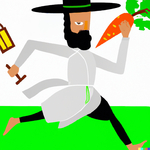
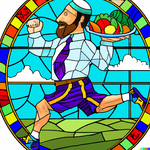
This week, I've been experimenting with the tool to see if it could help us in launching the Torah Health and Fitness program.

Here are some samples:


Digital-rabbi Abstract-rabbi1 Stain-glass-rabbi3

It's a work in progress, but please tell me what you think!

Question for your table: Since I used the AI tool to help me create these images, can I reasonably call myself the artist?

Last question: In your mind, is the AI future utopian or dystopian? Will it make us wiser or dumber?

Shabbat Shalom 

PS - as you may have guessed, the top image above is also from the same experiment. Click on it for a thought-provoking 10-minute video on the potential of AI.


Enjoyed this Table Talk? Vote with your fingers! Like ittweet it, forward it....  


aleph wing logo-nobox tight

The mission of Jewish Spiritual Literacy, Inc. (JSLI) is to foster a paradigm-shift in spiritual and moral education in general, including but not limited to Jewish education, towards an experiential pedagogy that transforms students with its spiritual vision and relevance to their daily lives.
 
We envision a future when every human being can access and enjoy the incredible database of 3,000 years of Jewish wisdom.
 

See our Purim countdown clock at the JSLI homepage.... If you'd like to join a special Torah Health and Fitness mailing list for updates on the forthcoming book, podcasts and other events, please visit the Torah Health and Fitness landing page.

Friday, November 06, 2020

The Ideal Form of Government?

The purpose of this blog is to democratize the Friday night dinner table. Please print and share...

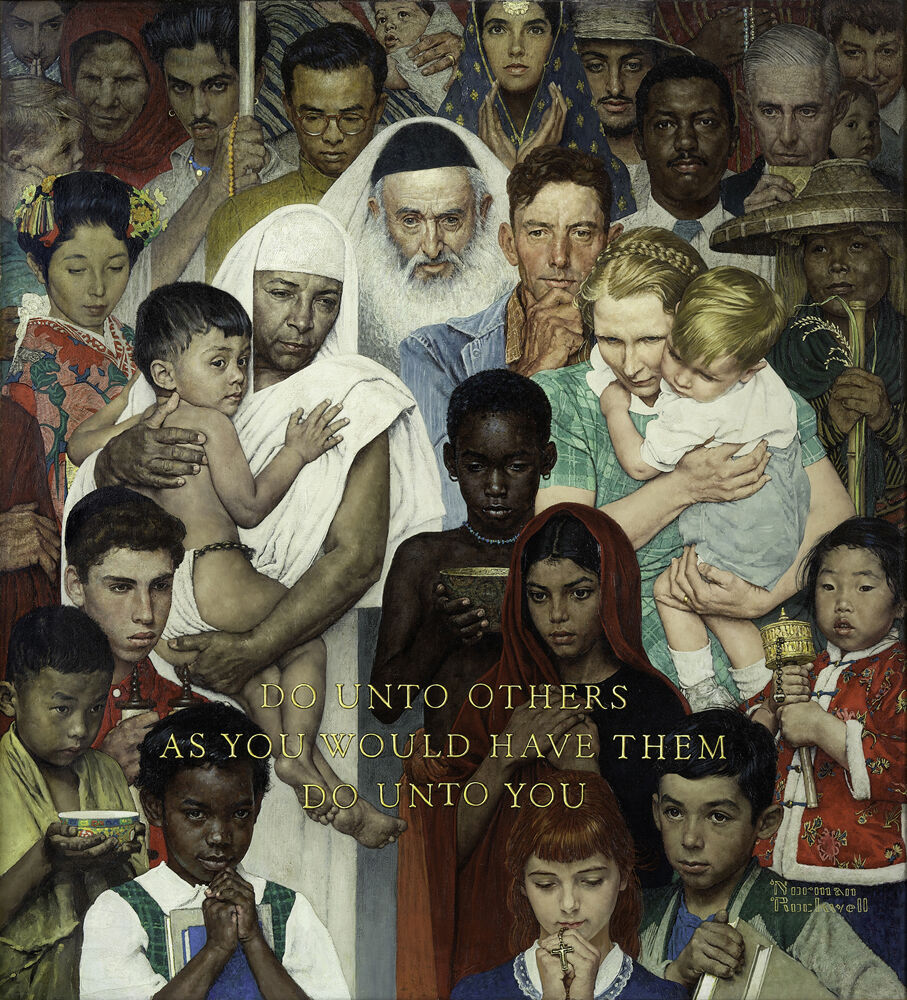
Rockwell - Golden Rule

How accurate would you say was my election prediction last week?

Some people think we have the best possible system, because in the long-term it's so stable compared to other democracies.

But how can anyone be happy with a system that spends - collectively - over a billion dollars just to elect the president? 

Combined, all of the races have spent $14 billion.

These amounts seems obscene to me. Can't we get the job done cheaper than that (without outsourcing to China)?

Imagine what else could have been done with that $$$. 

 
Election week always reminds me of my late friend Norman Hansen.

I met Norman in the 1980s when he was 90. He had retired at age 65 and spent the next 25 years reading many books of history and political science and traveling the world. 

So by the time I met him, he was a highly-opinionated old man.

My favorite quote from him: "The biggest mistake of my life was voting for Roosevelt in 1944 - I should have known he was too sick!"

Norman was a keen student of political theory, and loved to quote 
Toynbee quoting Lord Acton"Power corrupts; absolute power corrupts absolutely."

Yet paradoxically, he had come to the conclusion that "the greatest form of government possible" is a "benign monarchy". That is, something like the Danish model, he said. (Although I am not sure now which period of Danish history he was referring to.)

So all this leads to tonight's question for your table: What's the ideal form of government?


Shabbat Shalom


Another Norman

Announcement: To become a partner in the publication of groundbreaking new book, Body and Soul: A Torah Guide to Health, Fitness, and Longevity, Medically-Annotated, it is now possible to contribute a dedication in someone's honor or memory to be printed in the book, please email dedications@jsli.org for instructions and may the merit of your contribution uplift them and the Jewish People and the world. Eight years in the making, this collaboration of Torah scholars, doctors and dietitians will, we hope, change the way we relate to our bodies and to food.


Enjoyed this Table Talk? Vote with your fingers! Like ittweet it, forward it....
  

Friday, October 16, 2020

Why on Earth Are You Here-o?


The purpose of this blog is to make the Shabbat Table epic. Please print and share.

Dedicated to the memory of Yermiyahu Matan (Jeremy Dossetter) - whose yahrzeit was this week (please remember him here);
Happy birthday shout-out to his dear mother Susan;
and Mazal tov to Yaakov Felson on becoming bar mitzvah. 

Announcement: To become a partner in the publication of groundbreaking new book, Body and Soul: A Torah Guide to Health, Fitness, and Longevity, Medically-Annotated, it is now possible to contribute a dedication in someone's honor or memory to be printed in the book, please send an email to dedications@jsli.org for instructions and may the merit of your contribution uplift them and the Jewish People and the world. Eight years in the making, this collaboration of Torah scholars, doctors and dietitians will, we hope, change the way we relate to our bodies and to food.

Hero-

Try starting off the conversation with this couplet:

Who's your hero?
Whose hero are you?


I wonder how many people think about such questions. Or about this week's title question....

Why in the world are we here?
Surely not to live in pain and fear....

The question is arguably the fundamental problem driving the entire Torah.

It seems to me the Torah's answer to that question is: You're here to be a hero.

Like all great heroes, you only become a hero through trial and tribulation.

Of course, the tests often come when we're least expecting them. The surprise too is part of the test.

So here is a true story that happened to my friend the other day.

He was filling up at a service station near the highway. Two women approached him and told him that they were en route to the airport, but the person driving them had ditched them while they were using the ladies' room. He had driven off with their luggage. 

For your table: Put yourself in his shoes. What would you do?

Less dramatic versions of this encounter happen every day: a panhandler at the red light; a spouse asking for help; a child whining; a parent lecturing; any of the above nagging....


I'm guessing everyone at the table can come up with many better examples.

If you find yourself resisting playing the hero, just wanting to be left alone and not get involved, it's a sure sign you're being tested.

What about a test of your patience? Is that also a test of your heroism?

What about when you make a mistake and someone calls you on it - is that also a call to heroism?

Now we can bring it full circle:

Who's your hero?
Whose hero are you?


Shabbat Shalom


Enjoyed this Table Talk? Vote with your fingers! Like ittweet it, forward it....
  

Friday, May 05, 2017

May the Mitzvah Be With You

The purpose of this blog is to raise the bar at the Shabbat table.... Please forward / like / tweet....
Mazal tov to Yoseph Seinfeld on the celebration of his becoming Bar Mitzvah.


Yoda-PrayingYes, not everyone loves archaeology and some don't care for neophilism....

So today's theme is something we all want.

Well, we all say we want it.

We probably do want it.

But how many of us achieve it?

I'm talking of course about living in the present moment.

How many of us actually do it?

Every moment?

Once a day?

Once a year?

Why is it so hard?

Here is the answer you've been looking for your entire life.

Notice above at the top of this message in the fine print, I wrote, "becoming bar mitzvah".

How come I didn't write, "on his bar mitvah"?

Do you get the difference?

"Having a bar mitzvah" or "having a bat mitzvah" means that the event is external to you. It is a celebration of something, but the occasion - the event - is external - it's something you're having. Like having breakfast. You consume it, and maybe some of it affects you, maybe some of it even stays inside of you, but it begins (and ends) as something external that you "had". Once it's over, you "had" it and it is in the past.

But "becoming bar mitzvah" means it is all about you, about what's going on inside of you, about your relationship to the concept of "mitzvah".

What is the concept of "mitzvah"?

A mitzvah is - yes - a good deed. Better: it's an opportunity to do a certain kind of good deed, namely one that is defined as "good" by the Torah.

So a bar mitzvah is someone who has the awesome ability to do a TGD - a Torah Good Deed.

Question 1 for your table: What if a person becomes of age and is unaware of their ability to do a TGD?

Question 2: What if a person is aware they are bar or bat mitzvah, but doesn't know much about the Torah?

After everyone offers their answers, you might share mine with your table:

Imagine someone has telekenesis but is unaware of it. Then one day they accidentally will a chair to move in order to prevent a child from injury - the power was there all along, they just didn't know it. It is merely a matter of concentration.

That's what a mitzvah is like to a bar mitzvah. You have the power to turn every - yes every - action into a TGD.

Once again: You can turn every action into a TGD.

How?

Step 1: Want to.

Step 2: Do the hardest thing in the world to do:

You must use your mind.

Think about it obsessively.

When you wake up and when you lie down.

And pause before every action to think, "How can this action be a TGD?"

May the mitzvah be with you.

Shabbat Shalom


Good one this week? Vote with your fingers! Like it, tweet it, or just forward it.
(Haven't tried the new "forward" button yet? Give it a tap!)

Friday, February 17, 2017

Learn It Again, Sam

The goal of this blog is to create an epic Shabbat table ...  Please share.
  
play-it-again-samThis week, a brief story and seven questions for your table.

Last week's Soul of a Strawberry inspired some happy responses.

Some people sent pictures of their favorite fruit. Someone thanked me for the limerick about resurrection.

But the biggest surprise was when someone said that the email made him more conscious about healthy eating.

Five questions:

1. How long can that last? How do you keep an inspiration going for more than a few days?

2. Did you ever know someone who for years has tried - and failed - to change a single habit? (I see one every time I look in the mirror.)

3. What's worse - to keep trying to turn over a new leaf yet to fail, or never to try at all?

4. Is there such a thing as a personal habit that is impossible to change?

5. If you knew you could change one thing about yourself, what would it be?

For me, these questions became more focused this week when I was in San Francisco for a very, very special event, a very big simcha.

For six years, a group of women have made the habit of attending a class Friday morning where the teacher doesn't even bother to come - get this - he shows up via Skype.

Why would busy people show up week-in-week-out, year-in-year-out, for so long?

(Certainly not for the teacher. I know him personally and know he won't mind my saying so.)

The main answer I think is very simple: the class is called "The Wisdom and Beauty of the Chumash" (AKA the 5 Books of Moses, AKA the Torah).

But I think the secret to that group is three things:

1. They are learning Torah, the world's greatest book of wisdom;
2. They are learning together. Some people learn best in a group, and this group are all deep thinkers;
3. They take turns bringing breakfast.

Question #6 for your table: Which of those three reasons do you think is the most important?

So this week we celebrated completing the entire Torah together. Yes, it's a "mazal tov".

Yes, I flew across the country for less than 24 hours just to celebrate that siyum. Yes, it is that big of a deal.

It's a big mazal tov for those who came every week and it's a big mazal tov for those who came even once and it's a big mazal tov for those who never came. It's a mazal tov for all of us.

I asked the women to share one special thing that they have learned from the Torah. Their answers were all inspiring and too much to quote here. But here's one that I think resonates universally:

"Everything in life is a test to make you a better person."

Wow. If you could hold onto that idea every day, you would never worry.

So today the class resumes. After all, warns the Talmud, the second question they ask you in the next world is, "Did you schedule regular times to learn Torah?"

And there is an obvious question - which I'll leave for discussion at your table....

Question #7: What should the group do next? Continue through Tanach, or go back to the beginning?

Mazal tov and

Shabbat Shalom

PS - If you'd like to test your own Chumash-knowledge with the 26-question "Final Exam" I gave them, shoot me an email.


Like this email? How about putting your gelt where your gab is: Like it, tweet it, or just forward it.


Friday, January 20, 2017

Trumpic Cascade (who's top predator?)

The goal of this blog is to send reverberations through your dinner conversation tonight ...  Continuing to wish a speedy recovery to Tamar Adina bas Kayna Shulamis.

Trump webA trophic cascade is an amazing phenomenon of nature.

In a nutshell, a top predator's presence reverberates throughout the entire ecosystem, affecting the behavior of not only all other animals in the complex food web but also the plants and even the abiotic factors.

In other words, who's at the top really matters. (Even if you believe it is Divinely ordained.)

Last summer I mentioned the perils of simple-majority voting.

This week seems like a good time to dust-off and update our leadership quiz.

So today's main question for your table: What are the qualities of a great leader?

On each of these alternatives, choose the one that you think is most important:

1. [A] Wise in all major matters of state v. [B] Relies on wisdom of advisors
2. [A] Upholds the letter of the law v. [B] Upholds the spirit of the law
3. [A] Doesn’t make serious mistakes v. [B] Admits mistakes and apologizes
4. [A] Clean background v. [B] Proverbial skeleton in the closet
5. [A] Commands respect and wields authority v. [B] Walks humbly
6. [A] Multicultural v. [B] Patriotic
7. [A] Quick to respond v. [B] Slow to respond
8. [A] Fully developed skills v. [B] Able to learn on the job
.

OK, don’t peek below until you’ve made your choices ...

+ + + + +

Now, I don't claim these are the "right" answers, but it seems to me that the weight of Jewish thought would say:

1. B – When King David faced a social-economic problem, he consulted the wise men (Talmud Ber. 3b).

2. A and B. Tough job. He or she should keep a travel-size copy of the Constitution on hand at all times as a reminder that not even the King (or President) is above the law. (Would the Kindle or iPhone/iPad version count?)

3. BNo question about this – everyone makes mistakes. If we expect perfect leaders we are guaranteed scandals and cover-ups. If our leaders know we can forgive their errors as long as they own up to them, then we will have both more honesty and better role models.

4. The surprising answer here is B. The Talmud considers this a necessary quality for a successful head of government. The idea is to keep your leader from becoming arrogant. See Q. 5.

5. Tough one. Obviously A and B, but how do you balance authority with humility?

6. The Executive should be patriotic but worldly. Legislators should be worldly but patriotic. Judges should be multilingual.

7. I'm going for B - we like decisiveness but we don't want hasty. The three eldest sons of Yaakov (Jacob) lost the leadership because they were impetuous.

8. I'll leave this one unanswered here, but would be pleased to hear the answers from your table.

(Advanced question: What does this whole discussion have to do with this week's parsha?)


Shabbat Shalom

Like this post? How about putting your gelt where your gab is: Like it, tweet it, or just forward it.

Friday, June 24, 2016

It's So Tempting . . .

The goal of this blog is to bring some leadership training to the Shabbat table....

Majority-Rules
With news so dramatic, the temptation to comment is hard to resist.

But I know that you expect more of this email. You enter this intellectual space every week for a break from the 24-hour news feed, for a little bit of soul food.

May I just point out that the Brexit was no landslide.

minorityIf the British People had decided to require a sensible supermajority, it would have failed.

If yesterday's vote were an opinion poll, it would be a statistical tie. (Not unlike the last four POTUS elections.)

Making such a radical national policy based on a simple majority reminds one of the people of Athens voting to go to war with Syracuse, and some of Pericles's best quotes:
 
 
""Your empire is now like a tyranny: it may have been wrong to take it; it is certainly dangerous to let it go.
Read more at: http://www.brainyquote.com/quotes/authors/p/pericles.html
Your empire is now like a tyranny: it may have been wrong to take it; it is certainly dangerous to let it go.
Read more at: http://www.brainyquote.com/quotes/authors/p/pericles.html
"Wait for that wisest of all counselors, Time.”
"Just because you don't take an interest in politics doesn't mean politics won't take an interest in you."
“What you leave behind is not what is engraved in stone monuments, but what is woven into the lives of others.”
“The greatest gift you can give another is the purity of your attention.”


All of this leads to an interesting question for your table, which is ultimately a spiritual question, and a very Jewish one:

For profound progress to occur, which is more important — grass-roots change or great leadership?


Shabbat Shalom

PS - Which is your favorite Pericles quote?
PPS - There are two hidden links in this post. Can you find them?

Like this email? How about putting your gelt where your gab is: Like it, tweet it, or just forward it.

Friday, May 27, 2016

What You Can Learn From a Tomato

The goal of this blog is to create an heirloom-quality Friday night  - please print and share, repost, forward, tweet, etc.

Heirloom tomatoesBefore today's main topic, a correction from last week.

Many people tried to view the video about the "Humanity Being" and the link was initially broken.

It was later corrected. If you haven't seen it, or want to see it again, here is the working link:

https://www.youtube.com/watch?v=jmN3ubufUA4

Now, what's this business about tomatoes?

I'm not much of a gardener, but how hard is it to buy a couple starters from the Home Depot and stick them in the ground?

Well, it turns out I have a lot to learn.

First of all, my thoughtful wife reminds me, you have to prepare the soil. Mix in all of that compost you've been making all winter.

That's not so hard to understand.

What surprised me was when I read the instructions on the starter plants. They write them in tiny print on the plastic label around the plant. I would ordinarily just ignore such things, but on whim decided to read it:

"Plant deep enough for soil to reach the base of plant. Plant tomatoes deeper, covering 2/3 of plant."

Did I read that right? Bury 2/3 of the plant?

Yep, say the experts. Especially if you're trying to grow succulent heirlooms.

Here's a superb blog that tells you how to do it.

Why 2/3 deep?

They say it allows the plant to grow stronger roots. It will actually grow roots right out of the sides of the plant.

With those stronger roots, it will grow taller and stronger and produce better fruit.

I didn't know that.

I think maybe there is something to learn here, but I'll put it in the form of a Question for your table:

How is a person like a tomato?


Shabbat Shalom


Like this email? How about putting your gelt where your gab is: Like it, tweet it, or just forward it.

Friday, January 01, 2016

And the Greatest Leader is....

The purpose of this blog is to lead an inspired Shabbat table.... Please print and share.
humble-leaderYesterday the following email came in:


I was just on your site searching for materials on leadership.
I was surprised not to find any . . .
Please lmk if you've got but just have not uploaded.


The site he is referring to is our teacher's resource site, jewishspirituality.net, where one can download free lesson plans, handouts, and other materials on any subject loosely related to Judaism (including ethics, spirituality, history, philosophy etc.)

Alas, while we have many unique materials that you won't find on any other site anywhere, many of our materials have not yet been published, awaiting editing and formatting.

Indeed a brief search of our server turned up what he was aksking for - our 40-week course, "Lessons in Leadership" which teases out the leadership lesson of many chapters in the Torah.

I wrote that curriculum nearly three years ago when I was studying privately via Skype with someone who wanted and needed that approach. He wasn't interested in the religious parts of Judaism, nor the philosophical. But as a businessman, father and grandfather, becoming a wiser leader mattered to him.

Someone more recently suggested I lead such a course as a webinar, perhaps via Facebook....

What are your thoughts?

In the meantime, as we race towards the presidential primaries, this may be a good time to ask at your table the broad but meaningful question, What is your ideal of leadership? What qualities make the greatest leader?

It seems to me that this is a worthwhile question to ask every four years or so.

Maybe in the coming months, some readers of this email will join me in an exploration of what ancient Jewish wisdom has to say on the subject.

In the meantime,

Shabbat Shalom.


WHO SAID IT:
"We owe to the Jews…a system of ethics which, even if it were entirely separated from the supernatural, would be incomparably the most precious possession of mankind, worth in fact the fruits of all other wisdom and learning put together.”
(Winston Churchill, Illustrated Sunday Herald, February 8, 1920)

PS - Not a lot of time to read, but recently enjoyed Stephen MR Covey (jr)'s new book on leadership and the role of trust - highly recommended. Click here.

PPS - Notice how every mailing list you are (un)lucky enough to be on have bombarded you with end-of-2015 appeals? Notice how this list has not? We are contrarians here at JSL, and I hope you are too, believing that starting '16 on the right foot is even more important than scrambling at the end of '15. If so, please show your leadership instinct and click here to become a partner (or renew your partnership) in our inspiring educational mission.
  
Like this post? How about voting with your finger: Like it, tweet it, or just forward it.

Friday, October 30, 2015

Big Ben

The goal of this blog is to chase down some "true" wisdom at your Shabbat table.... please print and share.
Happy Anniversary to Lawrence and Amy and Happy Birthday to Steve, all in California! Live long and prosper. (To dedicate a future Table talk - send an email.)
BenThis week I had the honor of attending a unique event.

It was the bar mitzvah celebration of a young man in California.

His name is Ben.

It was unique in the very true sense that Ben is unique. It had his unmistakable imprint.

Some of the guests were nonplussed at the venue - a golf club instead of a synagogue? Is that allowed??

In my opinion, the essence of a bar mitzvah is not the ritual, it is the bar mitzvah boy's (or girl's) speech. He's teaching us a bit of Torah wisdom that he has learned.

That is his true coming-of-age - taking ownership of the tradition.

As I told him, "It's your Torah as much as it is mine."

What Ben said was inspired and inspiring.

He spoke of his favorite pastime - the game of golf - and how Torah lessons can be applied to the game. He then expanded the theme to point out that the same is true for life itself.

After all, Ben concluded:

The Torah’s full name is Torat Chayin – which means wisdom for living, wisdom for life. So you could say that the entire book is wisdom not just one section. One of the great rabbis, Ben Zoma, said: the person who is wise is someone who learns from all others. I think this is a great way to sum up the entire Torah.

The obvious question for your table is, What in the world does Ben Zoma mean? How can he define wisdom as "learning from all others"? Does he really mean all others?

Mazal tov Ben!

and Shabbat Shalom

PS - Here's your countdown timer to remember how many days til Hannuka.
Like this post? How about voting with your finger: Like it, tweet it, or just forward it.


Friday, January 24, 2014

What's your answer to the Jewish Question?

The purpose of this blog is to help your family and friends feel smarter at the Shabbat table. Please print and share.

gI_0_mystmanSomeone asked me the other day about how to deal with a bad neighbor.

Ever happen to you? That you had a malicious, vindictive, or otherwise harmful neighbor?


What did you do?

Here's an answer in good rabbinic style, in the form of quesitons.

First question, see if anyone can guess what famous person said this:

"Some people like Jews and some do not; but no thoughtful man can doubt the fact that they are, beyond all question, the most formidable and the most remarkable race which has ever appeared in the world....

We owe to the Jews…a system of ethics which, even if it were entirely separated from the supernatural, would be incomparably the most precious possession of mankind, worth in fact the fruits of all other wisdom and learning put together. On that system and by that faith there has been built out of the wreck of the Roman Empire the whole of our existing civilization."


Do you want a hint?

The same guy who said, “You have enemies? Good. That means you’ve stood up for something, sometime in your life.”

Same guy who said, "Courage is what it takes to stand up and speak; courage is also what it takes to sit down and listen."

Still don't know?

How about this one: "I have nothing to offer but blood, toil, tears, and sweat."

Yes, indeed, it was Sir Winston Churchill.

But the more important second question to ask is: What did he mean by "system of ethics"?

Churchill's knowledge of Judaism was mainly through the eyes of Christianity. But he was giving credit where credit is due. He got that Christian ethics is largely a reframing of Jewish ethics.

That takes us to the third question for your table: What's your favorite ethical teaching from the Torah?

The easiest answer is the Golden Rule or the verse, "love your neighbor as yourself".

Here's mine:
When you see the donkey of your enemy struggling under its burden you should help him reload the donkey.

Now why in the world should you help your enemy?

And does it matter if you help him with a frown or a smile?

And what does this imply about helping someone who isn't your enemy?

And what does this imply about being Jewish?


Shabbat Shalom

"A lie gets halfway around the world before the truth has a chance to get its pants on." - Churchill (the original tweeter)

PS - If you like, please like, tweet, or just send to someone who might enjoy.

Friday, December 27, 2013

When Is It Too Late?

The purpose of this blog is to help foster some great talk at your Shabbat table. Please print and share.

Rabbi Akiva's TombThe main question for this week is: When is it too late?

A little story to set the scene:

The year: Around 90 CE, a decade after the destruction of Jerusalem.


The location: Lod, Israel.

There is this man named Mr. Kalva-Savua. He's a wealthy businessman.

Much of his wealth is in livestock.

He has a daughter named Rachel. She comes of age and it's time to find her a husband.

But she rejects every match suggested to her (no, Judaism never allowed parents to coerce their children into a marriage).

"What's wrong with these men you keep rejecting?" we can imagine her mother saying. "They are scholars. They come from good families!"

Rachel isn't impressed by breeding. She has something entirely different in mind.

"I want to marry Akiva."

"Akiva who?"

"Akiva the shepherd."

"Akiva the shepherd? On our staff? Are you out of your mind? If you married someone with learning but no breeding, that we'd understand. If you married someone with breeding but no learning, that we'd understand. But he has neither learning nor breeding! How could you even consider an illiterate shepherd who comes from a poor, illiterate family? What are you thinking?"

"I see something in him. I see greatness in him. He just needs the right woman to help him bring it out."

"You are out of your mind. Do not think about it any more. And should you go and marry him behind our backs, you will be disinherited. Keep that in mind!"

But she does.

And so do they.

And Rachel and Akiva live in poverty.

They sleep on straw.

But they are happy.

Once, someone comes to the door asking for charity.

Akiva looks at him and thinks, "He has even less than we do," and gives the beggar their straw.

That's the kind of man he is.

After some time, Rachel says to him, "I want to remind you that I only married you on condition that you go study. Now it's time to go. By my estimate, it's going to take you twelve years, so I don't want you to return for twelve years. Got that?"

So off he goes....to kindergarten.

There he is sitting with the five-year-olds. Feeling out of place.

"What am I doing here in kindergarten? I'm a forty-year-old man! I feel like such a chump!"

He goes outside for some fresh air. "I can't take it in there! I'm a big oaf. But I can't go home, Rachel will clobber me, and besides, I promised. Oy!"

He sits down by a stream, watching the water trickle, listening to it gurgle.

At a certain spot the water has carved out a niche in a rock.

"How could that happen? Water is soft, the rock is hard...."

Suddenly inspiration hits him like a splash of water. "If soft water could make a dent in a hard rock, surely the Torah, which is like fire, could make a dent in my hard heart!"

So he gets himself up and goes back to kindergarten.

Flash forward twelve years. Akiva returns home. Before he opens the door, he overhears Rachel in the garden talking to a neighbor.

The neighbor says, "You're living like a widow! Your husband has been gone for twelve years!"

"If he'd listen to me, he'd go for another twelve years!"

"Aha!" he decides on the spot, "She's giving me permission!" He about-faces and returns to the yeshiva.

Twelve years later he returns a second time.

This time he has 24 thousand students with him. He has become the greatest sage in Israel.

When he arrives to town, everyone turns out to see the great Rebbe Akiva.

Rachel pushes her way through the crowd to find her husband.

She is in rags and his students try to shield him from her.

"Leave her be! Every one of you owes all of your Torah to her!"
Questions for your table:

When is it too late to study?
When is it too late to change careers?
When is it too late to change your life?


Shabbat Shalom

PS - Read more about Rabbi Akiva - including what his father-in-law did when he found out whom he'd become, click here or here.

PPS - If you were thinking of making a tax-deductible contribution before the end of 2013, please click here.

PPPS -  Like it, tweet it, or just forward it to someone who might enjoy it.

PPPPS - the photo above is Rabbi Akiva's tomb in Tiberius.


Friday, October 04, 2013

Better Late Than Never?

The purpose of this email is to help you turn Friday night dinner banter into a thoughtful discussion. Please print and share.

In memory of Andrew Sarosi - Aharon ben Chaim - whose first yahrzeit was observed this week. May his memory be for a blessing.

Better Late Than Never?

images?q=tbn:ANd9GcQAOvfwk8cPmW3symC96kyHj6UavsaFmBtnQUL9On5v0XEWVUoYThe other day I dropped our teenager off at the barbershop with a word of fatherly wisdom.

As I handed my son the tenspot, I said, "Don't forget to have in mind when you pay the barber that you're doing a mitzvah."

First question for your table: What mitzvah are you doing when you pay the barber?

Here's a clue in the form of a riddle:

What mitzvah is a chesed (kindness) if you do it and tantamount to murder if you don't do it?

Still don't get it? Alright I'll tell you.

Answer: "Thou shalt pay your worker on time."

Does the Torah really say that?

Sure does - Deuteronomy 24:14.

OK, if you read the actual verse, you might think it only means a poor person. (And I suppose that those people who read it casually or don't know about Judaism's Oral Tradition can interpret it in many ways, such as this and this and this.)

But the rabbis teach that this mitzvah:

1. Applies to any sort of wage earner, poor, rich or even middle-class
2. Is fulfilled if and only if you pay them before the end of the day that payment is due
3. Is only a spiritually-meaningful act ("mitzvah") if you have in mind that you're doing a mitzvah
4. In addition to the obvious benefit to the worker, has two benefits to the one who is paying

Second question for your table: What are the two benefits to the employer (including, in this case, my son)?


Shabbat Shalom

PS: This discussion is based on the idea that the Torah's essence, its fundamental principles, can be summed up in three words. Know what they are?

If you don't already know, watch this:


Friday, August 23, 2013

Hastier But Tastier

Back to school? Have you seen our top picks for school supplies and gifts for teachers?
Visit BestJewishKidsBooks.com. When you use our links, Amazon donates 5% to JSL.


Shabbat_ChallosAs presented earlier this summer, your Table Talk is in summer L'Chaim mode.

The suggestion is this:

At some point during the Shabbat meal, pour everyone their favorite beverage for a l'chaim.

But ask them not to drink until after you finish the story. Make this a ritual every Friday night, and your family will look forward to it.


+ + + +

L’Chaim Story
Parshat Ki Tavo

“The Hasty Meal”

Rabbi Yisrael of Salant believed very much that "love your neighbor" is the most essential idea in the Torah.

He was famous for teaching the details of this mitzvah through example.

One of his students once invited him for Shabbat.

Knowing how careful Rabbi Yisroel was in every detail of observance, and how reluctant he was to stay anywhere as a guest, the disciple described the way he ran his household.

"We buy our meat from Shlomo the butcher. Our cook is the widow of so-and-so who observes every stringency. And the meals are conducted properly, with divrei Torah and songs. It's no wonder that the Friday night meal in my home ends at a very late hour of the night!"

He obviously felt proud of his observance.

“I accept your invitation,” Rabbi Yisrael said, “but only on the condition that you shorten the length of the Friday night meal by two hours.”

Eager to host his rabbi, the disciple quickly agreed.

That Friday night, the Shabbat meal was rushed faster than that family had ever experienced it.

The courses followed each other rapidly, without the usual lengthy break in between.

There were divrei Torah, but they were short and sweet, not long drashas.

They sang Shabbat songs, but only a few, not the entire liturgy.

It felt as though hardly any time passed between washing their hands for the meal and passing the finger-bowl after dessert.

After they said the final blessing of "Birchat HaMazone" the disciple turned to Rabbi Yisrael and said quietly, “Forgive me, Rebbe, but I must ask a question. What fault dd Rebbe find in the way I conduct my Shabbos table, that led him to shorten the meal time by two hours?”

He seemed to ignore the question. Instead he said, "Please ask your cook to come in."

When she entered, Rabbi Yisroel said to her, “Would you please forgive me for making you tired this evening, and causing the courses to be served so quickly tonight.”

To the student’s surprise the cook said, “May the Rabbi be blessed with every blessing! If only he was a guest here every Shabbos! The meal always lasts far into the night, after a day I’ve spent working very hard to prepare everything. By the time the meal is over, I can hardly lift my feet from exhaustion. But tonight, because you finished the meal early, I can go home and rest!”

Rabbi Yisrael didn't look surprised at all.

He turned to his disciple and said, “Here is the answer to your question. Indeed, the way you conduct your Shabbos table is wonderful. But when it harms another person, it becomes something not so wonderful at all!”

Listen to the sensitivity! That's what it means to be a great human being, that's what the Torah is all about. Rosh Hashana is in two weeks - may we all seek this kind of greatness.

L’chaim!


+ + + +

Question for your table... What does it take to become that sensitive to other people's feelings? Is it even possible, or do you have to be born with it?


Shabbat Shalom

PS -


PPS - For this year's updated edition of our "25 Questions to Think About Before Rosh Hashana", send an email.

PPPS - Want to make your Table Talk rabbi happy? Like it, tweet it, or just forward it to someone who might enjoy it.

Excerpted and adapted with permission from Stories My Grandfather Told Me, Vol. 5, © 2001 ArtScroll/Mesorah Publications. All rights reserved. Get the book here.

Friday, August 16, 2013

The Silver Spoon


Ercuis-Rocaille-place-spoon-sterling-silver,25425_1As presented earlier this summer, your Table Talk is in summer L'Chaim mode.

The suggestion is this:

At some point during the Shabbat meal, pour everyone their favorite beverage for a l'chaim.

But ask them not to drink until after you finish the story. Make this a ritual every Friday night, and your family will look forward to it.


+ + + +

L’Chaim Story
Parshat Ki Teitzei

“The Silver Spoon”

Rabbi Nachum of Chernobyl was a Chassidic sage of the 1700s, a student of the Baal Shem Tov.

(His son founded the Chernobyl dynasty.)

One of Rabb Nachmun's priorities was to care for the poor. The poor came to him frequently to request tzedaka.

Once upon a time, a poor man walked out of the Rebbe's room in good spirits. The Rebbe had given him a nice sum of money.

On his way out, he spied a silver spoon, which he took.

[Truncated due to copyright agreement.... the full story is available on the email version of this blog...for the full story, send an email.]

Listen to the sensitivity to another person's feelings! That's what it means to be a great human being, that's what the Torah is all about.

May we all achieve this level of greatness - L’chaim!

+ + Excerpted and adapted with permission from Stories My Grandfather Told Me, Vol. 5, © 2001 ArtScroll/Mesorah Publications. All rights reserved. Get the book here. + +

 
Question for your table... What do you say - did the Rebbe do the right thing?

Shabbat Shalom


PS - For this year's edition of my "25 Questions to Think About Before Rosh Hashana", send an email.

PPS - Want to make your Table Talk rabbi happy? Like it, tweet it, or just forward it to someone who might enjoy it.

Friday, May 03, 2013

Ask Yer Rabbi


The purpose of this blog is to for some good ol Jewish conversation at the Shabbat meals. Please print and share.


 Ever met a first-time parent?

They're worried about everything.

Back in 1996 when we were expecting our first child, the doctor wanted to run a routine ultrasound.

He said it wasn't required, but could reveal certain problems and was a good idea, and that there was no risk.

Something about that technology sounded invasive and risky.

Something bothered us about bombarding our baby with anything, not even sound waves.


Something bothered us about his "no risk" certainty.


So we did something very unscientific.

We asked our rabbi what he thought.

Without hesitation he answered, "There's no evidence that they're harmful, but I don't think they've been around long enough to assume they're safe. Unless there is an urgent medical need, I wouldn't do it."

So we declined. (Later, during the second trimester, we had a more urgent need for one.)

NO, I did not say that rabbis can replace doctors.

And since then, ultrasound tech has become so portable that you can buy your own. (And led to some disturbing uses.)

Yet it wasn't long after that that evidence started to emerge that ultrasounds can affect fetal brain development.

For instance, this 2001 study on the increase in left-handedness among ultrasounded babies.

More recently, even scarier data has come in about a possible link to autism. (But the research, while scary, is not yet conclusive.)

So maybe having the right rabbi - even if he isn't a doctor - is not such a bad idea?

(Of course, having the right rabbi doesn't help much if you don't ask the question....)

Some people say, "I just don't want to bother the rabbi...."

To that concern, Rav Wolbe once said: When you find a rabbi who can answer your questions, "never give him any rest."

So this week's question for your table is: When is the last time you asked your rabbi a question?


Shabbat Shalom

PS - Want to make your Table Talk rabbi happy? Like it, tweet it, or just forward it to someone who might enjoy it.

Friday, April 12, 2013

Love Your Who?

The purpose of this blog is to promote friendly conversation at the Shabbat table. Please print and share.


As the famous story goes, two guys made a bet.

One said to his friend, "You know that rabbi, Hillel? Nothing, and I mean nothing, can cause him to lose his cool."

The friend was skeptical. "I don't believe it."

"Wanna bet?"


"Sure, how much?"

"I bet 50 shekels you can't make Hillel lose his temper even for a second."

"You're on!"

So he goes to Hillel. But he waits until Friday afternoon when everyone is running around preparing for Shabbat.

He listens at the window until he hears the familiar splish-splash of someone taking a bath.

Then he makes his move.

Banging on the door, he shouts, "Hillel, is Hillel there? Hillel, I need Hillel!"

In moments, a dripping Hillel appears in his bathrobe with a look of great concern. "What is it? How may I help you?"

"Are you Hillel?"

"That is my name, yes."

"Are you the famous rabbi?"

"I don't know if I'm that famous, but I am the rabbi they call Hillel."

"I heard you're real smart."

"Well, I don't know about that. You shouldn't believe everything you hear."

"Listen, I want to convert to Judaism on the condition that you teach me the entire Torah while I'm standing on one foot [i.e., quickly]."

"My dear friend, I thought you were going to ask me a hard question. That one I certainly can agree to do."

So he converted him and then taught him: "What is hateful to you, don't do to your neighbor. That is the whole Torah! The rest is explanations. Now go learn."

The whole story is much longer, but this is enough for me to ask this week's first question for your table:

Most people understand that Hillel's summary of the Torah is derived from, if not identical to the famous line from Leviticus, "Love your neighbor as yourself." But does it really mean the same thing?

This week someone asked me what is the Hebrew word for "neighbor" in "Love your neighbor". The answer is "ray'echa", the root of which is "rah" which means "bad". In other words, the verse could be interpreted as, "Love [even] the one who is bad to you as much as [you love] yourself."

(I don't think this has anything to do with someone who is dangerous or abusive. Just someone who isn't pleasing you all the time.)

Question #2 - If we're supposed to love the one who is "bad", what does that imply about someone who is for the most part good?


Shabbat Shalom


PS - Want to make your Table Talk rabbi happy? Like it, tweet it, or just forward it to someone who might enjoy it.