The goal of this blog is to chase down some "true" wisdom at your Shabbat table.... please print and share.
Happy Anniversary to Lawrence and Amy and Happy Birthday to Steve, all in California! Live long and prosper. (To dedicate a future Table talk - send an email.)
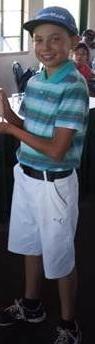 This week I had the honor of attending a unique event.
It was the bar mitzvah celebration of a young man in California.
His name is Ben.
It was unique in the very true sense that Ben is unique. It had his unmistakable imprint.
Some of the guests were nonplussed at the venue - a golf club instead of a synagogue? Is that allowed??
In my opinion, the essence of a bar mitzvah is not the ritual, it is the bar mitzvah boy's (or girl's) speech. He's teaching us a bit of Torah wisdom that he has learned.
That is his true coming-of-age - taking ownership of the tradition.
As I told him, "It's your Torah as much as it is mine."
What Ben said was inspired and inspiring.
He spoke of his favorite pastime - the game of golf - and how Torah lessons can be applied to the game. He then expanded the theme to point out that the same is true for life itself.
After all, Ben concluded:
The Torah’s full name is Torat Chayin – which means wisdom for living, wisdom for life. So you could say that the entire book is wisdom not just one section. One of the great rabbis, Ben Zoma, said: the person who is wise is someone who learns from all others. I think this is a great way to sum up the entire Torah.
The obvious question for your table is, What in the world does Ben Zoma mean? How can he define wisdom as "learning from all others"? Does he really mean all others?
Mazal tov Ben!
and Shabbat Shalom
PS - Here's your countdown timer to remember how many days til Hannuka.
Like this post? How about voting with your finger: Like it, tweet it, or just forward it.
This week I had the honor of attending a unique event.It was the bar mitzvah celebration of a young man in California.
His name is Ben.
It was unique in the very true sense that Ben is unique. It had his unmistakable imprint.
Some of the guests were nonplussed at the venue - a golf club instead of a synagogue? Is that allowed??
In my opinion, the essence of a bar mitzvah is not the ritual, it is the bar mitzvah boy's (or girl's) speech. He's teaching us a bit of Torah wisdom that he has learned.
That is his true coming-of-age - taking ownership of the tradition.
As I told him, "It's your Torah as much as it is mine."
What Ben said was inspired and inspiring.
He spoke of his favorite pastime - the game of golf - and how Torah lessons can be applied to the game. He then expanded the theme to point out that the same is true for life itself.
After all, Ben concluded:
The Torah’s full name is Torat Chayin – which means wisdom for living, wisdom for life. So you could say that the entire book is wisdom not just one section. One of the great rabbis, Ben Zoma, said: the person who is wise is someone who learns from all others. I think this is a great way to sum up the entire Torah.
The obvious question for your table is, What in the world does Ben Zoma mean? How can he define wisdom as "learning from all others"? Does he really mean all others?
Mazal tov Ben!
and Shabbat Shalom
PS - Here's your countdown timer to remember how many days til Hannuka.
Like this post? How about voting with your finger: Like it, tweet it, or just forward it.
|
|


