Showing posts with label middot. Show all posts

Friday, August 23, 2013

Hastier But Tastier

Back to school? Have you seen our top picks for school supplies and gifts for teachers?
Visit BestJewishKidsBooks.com. When you use our links, Amazon donates 5% to JSL.


Shabbat_ChallosAs presented earlier this summer, your Table Talk is in summer L'Chaim mode.

The suggestion is this:

At some point during the Shabbat meal, pour everyone their favorite beverage for a l'chaim.

But ask them not to drink until after you finish the story. Make this a ritual every Friday night, and your family will look forward to it.


+ + + +

L’Chaim Story
Parshat Ki Tavo

“The Hasty Meal”

Rabbi Yisrael of Salant believed very much that "love your neighbor" is the most essential idea in the Torah.

He was famous for teaching the details of this mitzvah through example.

One of his students once invited him for Shabbat.

Knowing how careful Rabbi Yisroel was in every detail of observance, and how reluctant he was to stay anywhere as a guest, the disciple described the way he ran his household.

"We buy our meat from Shlomo the butcher. Our cook is the widow of so-and-so who observes every stringency. And the meals are conducted properly, with divrei Torah and songs. It's no wonder that the Friday night meal in my home ends at a very late hour of the night!"

He obviously felt proud of his observance.

“I accept your invitation,” Rabbi Yisrael said, “but only on the condition that you shorten the length of the Friday night meal by two hours.”

Eager to host his rabbi, the disciple quickly agreed.

That Friday night, the Shabbat meal was rushed faster than that family had ever experienced it.

The courses followed each other rapidly, without the usual lengthy break in between.

There were divrei Torah, but they were short and sweet, not long drashas.

They sang Shabbat songs, but only a few, not the entire liturgy.

It felt as though hardly any time passed between washing their hands for the meal and passing the finger-bowl after dessert.

After they said the final blessing of "Birchat HaMazone" the disciple turned to Rabbi Yisrael and said quietly, “Forgive me, Rebbe, but I must ask a question. What fault dd Rebbe find in the way I conduct my Shabbos table, that led him to shorten the meal time by two hours?”

He seemed to ignore the question. Instead he said, "Please ask your cook to come in."

When she entered, Rabbi Yisroel said to her, “Would you please forgive me for making you tired this evening, and causing the courses to be served so quickly tonight.”

To the student’s surprise the cook said, “May the Rabbi be blessed with every blessing! If only he was a guest here every Shabbos! The meal always lasts far into the night, after a day I’ve spent working very hard to prepare everything. By the time the meal is over, I can hardly lift my feet from exhaustion. But tonight, because you finished the meal early, I can go home and rest!”

Rabbi Yisrael didn't look surprised at all.

He turned to his disciple and said, “Here is the answer to your question. Indeed, the way you conduct your Shabbos table is wonderful. But when it harms another person, it becomes something not so wonderful at all!”

Listen to the sensitivity! That's what it means to be a great human being, that's what the Torah is all about. Rosh Hashana is in two weeks - may we all seek this kind of greatness.

L’chaim!


+ + + +

Question for your table... What does it take to become that sensitive to other people's feelings? Is it even possible, or do you have to be born with it?


Shabbat Shalom

PS -


PPS - For this year's updated edition of our "25 Questions to Think About Before Rosh Hashana", send an email.

PPPS - Want to make your Table Talk rabbi happy? Like it, tweet it, or just forward it to someone who might enjoy it.

Excerpted and adapted with permission from Stories My Grandfather Told Me, Vol. 5, © 2001 ArtScroll/Mesorah Publications. All rights reserved. Get the book here.

Friday, August 16, 2013

The Silver Spoon


Ercuis-Rocaille-place-spoon-sterling-silver,25425_1As presented earlier this summer, your Table Talk is in summer L'Chaim mode.

The suggestion is this:

At some point during the Shabbat meal, pour everyone their favorite beverage for a l'chaim.

But ask them not to drink until after you finish the story. Make this a ritual every Friday night, and your family will look forward to it.


+ + + +

L’Chaim Story
Parshat Ki Teitzei

“The Silver Spoon”

Rabbi Nachum of Chernobyl was a Chassidic sage of the 1700s, a student of the Baal Shem Tov.

(His son founded the Chernobyl dynasty.)

One of Rabb Nachmun's priorities was to care for the poor. The poor came to him frequently to request tzedaka.

Once upon a time, a poor man walked out of the Rebbe's room in good spirits. The Rebbe had given him a nice sum of money.

On his way out, he spied a silver spoon, which he took.

[Truncated due to copyright agreement.... the full story is available on the email version of this blog...for the full story, send an email.]

Listen to the sensitivity to another person's feelings! That's what it means to be a great human being, that's what the Torah is all about.

May we all achieve this level of greatness - L’chaim!

+ + Excerpted and adapted with permission from Stories My Grandfather Told Me, Vol. 5, © 2001 ArtScroll/Mesorah Publications. All rights reserved. Get the book here. + +

 
Question for your table... What do you say - did the Rebbe do the right thing?

Shabbat Shalom


PS - For this year's edition of my "25 Questions to Think About Before Rosh Hashana", send an email.

PPS - Want to make your Table Talk rabbi happy? Like it, tweet it, or just forward it to someone who might enjoy it.

Friday, April 19, 2013

Explosive News

In memory of my father, who would have turned 73 today.
The purpose of this blog is to promote soul-stirring conversation at the Shabbat table. Please print and share.


Photo credit: ABC News
Who said it:

"A tragedy and devastation that has stolen our innocence, forced our children to grow up way too soon to experience a pain that nobody should ever know, and to confront questions that simply have no answers."

Can you guess???

We all heard about two terrifying explosions this week (I'm counting Boston as one).

But there was a third that made fewer headlines.

The quote above was a response to the one you didn't hear about.

It happened this past Sunday, but the story begins twenty years ago.

Twenty years ago, yours, truly wandered into Jerusalem looking for a place to learn about Judaism.

Some Jews I'd met in Paris told me that there were these schools called yeshivas where beginners like me could learn.

In English.

For free.

(Although it isn't always easy to decide to go.)

(Nor to find them when you do decide to go.)

(Nor to learn once you get there.)

OK, I wasn't a total beginner, but I knew all of about 10 words in Hebrew, didn't know what the Western Wall was west of, and couldn't have told you why Jacob was the good guy and Esav was the bad guy (although I somehow knew that much).

There's a long story here, but let's cut to the chase.

rabbimikestern
One of the several yeshivas I tried out put me up in an apartment with a couple other guys in it.

One of these guys was a rabbinical student named Mike.

Mike was about two days from his wedding.

He was one of the happiest guys I'd ever met.

He invited me to the wedding and it had a profound impact on me. That night I wrote in my journal, "I don't know if I'll ever become religious, but I know that I want to get married like that!"

Later I often visited Mike and Denise in their Jerusalem apartment. I helped with the baby, etc. And I discovered that Mike (and Denise) was happy all the time, it wasn't just because of his wedding.

That happy energy made Mike and Denise a magnet for all kinds of people, Jewish and Gentile. They set up rabbi-shop in Philly for a few years, then in Milwaukee, and most recently in Boca Raton.

Over the past twenty years, they have hosted thousands at their Shabbat table. The impact of their kindness is immeasuraable.

Twelve years ago, while they were still in Philly and the world was still innocent, they had a baby girl, their second daughter and fourth child.

MIke and Denise named her Shoshana Rachel, which means "the Rose of Rachel".

Shoshie grew up in a family whose middle name was Lovingkindness.

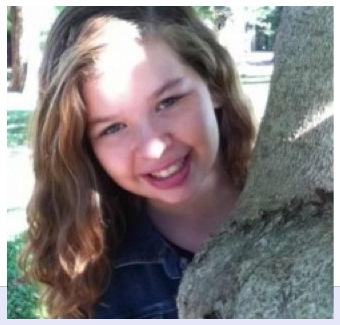
shoshieShe grew up with a natural compassion, second nature to her.  She was the rare kid who never complained where she had to sit in the carpool, or next to whom, she was happy and she connected with all kinds of people.

Shoshie was also a natural athlete, and on Sunday afternoon, she went out sliding (reportedly a form of skateboarding).

She was crossing a street at the crosswalk. She waited for the light. She was not wearing headphones or otherwise distracted. She passed in front of a car waiting at the light and smiled her warm smile at the driver, perhaps she recognized him, a member of her Jewish community.

This happy smile was her final communication.

To his horror, the driver watched the light change before Shoshie reached the other side. He realized that she was in mortal danger but there was nothing he could do. A moment later,  a car (not speeding) hit her, she was in the air and she was gone. This eyewitness, a doctor, leaped out of his own car and rushed to the scene but her soul had already departed.

An hour later when Denise went out looking for her daughter, the ambulance had already come and gone and the police were doing their investigation.

The 1,000 people at Shoshie's funeral Tuesday, arriving from all corners of the country, were a testament to what Mike and Denise mean to us.

By "us" I mean you and me.

I paid a shiva call yesterday, and would like to leave you with two things that Denise told me. Maybe you'll share them with your table.

First, I asked her, "If you had known 12 years ago that you would have only been able to have Shoshie around for 12 years, would you have wanted to have her, or is the pain of losing her too great?"

Denise said, "Are you kidding? I hate that she's gone, it hurts, but I'm grateful that she was in my life. She was a light. I'm a religious person, I was in Jerusalem for eight years. I believe that everything happens for a reason, even if I don't know the reason."

Shoshie had just recently prepared for her parents a gift of a collage of photos of herself, and a birthday gift for her sister two months in advance. These were bizarre things for her to do and Denise said that Shoshie must have known subconsciously that her time here was running out.

"What is an example of how she was a light?"

"When we moved here, Shoshie was a new kid in school. But she wasted no time making an impact. There was some kind of feud going on between two girls and each one had gotten into her own clique, and Shoshie made them make up. She told them, 'I'm not going to be friends with either of you unless you make up.' And they listened to her. That's the kind of girl she was."

May her memory be for a blessing.


Shabbat Shalom

PS - The best way to honor the departed is to try to emulate their goodness and to teach it to our children. JSL's Simi Yellen is offering her incomparable parenting course via telephone, beginning next week. Click here for details. Whether for yourself or a parent you know, we only get one chance to raise a Shoshie, this is the time to put in the time and effort.

Friday, September 21, 2012

Whose Coat are You Wearing?

The purpose of this blog is to provide something creative for Shabbat table conversation. Please print and share.

So on Rosh Hashana morning it's a little drizzly and I throw on my light raincoat.

These new men's raincoats have become all the rage in Baltimore. Lightweight and inexpensive. They won't keep you warm, but they will keep you dry.

As long as it doesn't rain too hard.

And you can have them in any color you want!

So long as it's black.

But you know, regardless of whether or not my coat is hung in a sea of look-alikes, I don't like to have to go searching for my coat. So I developed a system to find my coat extremely quickly.

I turn the hanger around, hooking it on backwards.

(Hopefully no one in Baltimore is reading this, because if the word gets out, everyone's going to do this, and then it won't work anymore.)

Well, actually, on Rosh Hashana this year, my foolproof system failed me for the first time in years.

Unbeknownst to moi, someone (whom I know) had hung his nearly identical black raincoat right beside mine, also with the hanger turned around.

You know where this is going. When Rosh Hashana services are over, I take the coat from the reversed hanger. I.e., his coat.

Later in the day, towards evening, I decide to go to a different synagogue for the afternoon service. Again, a light drizzle, throw on the coat.

This time I notice that it isn't quite fitting me right but it isn't wrong enough for me to pay attention. I am in a hurry after all.

I get to this other synagogue and opt for the hooks instead of the hangers. Doesn't really matter, there aren't so many coats and besides, my name is in it, right?

The problem is, when I'm fixing to go home, I go for my coat and where I expect to find it, I find this other fellow's.

"Oh no," I'm thinking. He must have taken my coat by mistake. I could just take his to him, but what if he's already realized his error and is en route here to swap them?

So I leave it, and when I get home, I phone him up.

"Did you happen to be in such-and-such a shul tonight?"

But he's quicker-witted than I am.

"No, why is my coat there? Because I saw your coat in the other shul this morning where mine should have been."

Notice how I didn't accuse him of taking my coat.

But nor did I assume from the beginning that the error was mine!

"By the way," he added, "didn't you notice that it was a little big on you?" (he is about 50 pounds heavier than I).

"Well it wasn't raining, so I slung it over my arm."

"Oh, well that explains it."

You see, he had also stumbled, thinking for a moment that I must have been preposterously absent-minded not to notice that I had the wrong coat.

How many times has this happened to you, when you saw an error that you committed and assumed someone else had done it? (that's the weekly question, by the way)

Last week I challenged you to choose one character trait to change this year. It could be jumping to conclusions. It could be a short temper. It could be complaining. Or perhaps laziness. Maybe too much criticizing.

The trick to making it happen on Yom Kippur is:

1. Really regret it. Contemplate the damage you've done, or the opportunities lost, due to this trait. Let yourself feel bad about this, for a few moments.
2. Apologize if needed.
3. Commit to not doing it again - just this one trait. But if you're truly committed, you'll have a plan of how to eradicate it, such as reading a self-help book, or practicing meditation, etc. Without a concrete plan, you're paying lip-service but you're not real. Make it your mission, with daily practice, to conquer this trait before next Rosh Hashana.

We all share these bad habits to a greater or lesser degree. In this sense, they're like the ubiquitous, monotonous, homogeneous black rain coats. We've put on the homogenized raincoat of our socialization.

But to conquer one bad habit - even a small one - is so rare, that doing so is like wearing a new custom-made coat. Do this and there won't be any chance of mistaking it for someone else's. This is the path to revealing the real you beneath the socialized façade.

Wishing you a Shana Tova

and a

Shabbat Shalom


 PS - This year's High Holidays prep class is a short 45 minutes. To hear the audio and get the handouts, including the new "24 Questions to Think About from Rosh Hashana to Yom Kippur", click here.

PPS - Help your friends and loved ones break in their new iphone or ipad: The most amazing Jewish app -  http://tinyurl.com/amazingcalendarlink (Android version: http://tinyurl.com/amazingandroidcalendar )

And of course you can search our free database of the best Jewish books and gifts here: http://bestjewishkidsbooks.com .