Showing posts with label Jewish ethics. Show all posts

Friday, November 17, 2017

Fool me 30 times, shame on?

The purpose of this blog is to wisen up the Friday night dinner table. Please print and share (+ like it, tweet it, forward)
Dedicated by friends in San Francsico to the memory of Yermiyahu Matan (Jeremy Dossetter),
alav hashalom whose Shloshim ends today.
 
 
Einstein quoteFirst question for your table: Should this email be used for commenting on current events?

I'm sad to admit that scandalous, horrid human behavior doesn't shock me. I'm guessing you may agree.

Saddens, disappoints, but does not shock.

Personally, the biggest shock I received recently was the email last week from a subscriber to this very list.

If you recall, last week I eulogized Rabbi Mendel Freedman, contrasting his outstanding character with men in recent news.

My comparison displeased a certain reader. Here is her reply, in full:

 
Where was this chat when a man who is NOW PRESIDENT was accused by more women?
When FOX News elite were ousted?
Why are you not mentioning the GOP politician in Alabama?
Is your bias showing?
 
I work in Hollywood and it has always been a “boys will be boys” land or horror.
But I have also worked for Jewish Federations that were JUSt as horrific for me, as a woman!
But when members of the tribe VOTED FOR THE LEADER OF THE FREE WORLD despite his atrocities, they lost ALL RIGHTS to this discussion.
 
And your silence on THAT side of the issue is making me ask you to unsubscribe me!

I am disappointed and disgusted!


First question for your table: How would you respond to her?

Acknowledge her pain? Check.

Sympathize with her mistrust? Check.

Agree with her analysis? No way.

Check the archives — this blog usually steers clear of politics and other over-reported current events.

But bias is a serious accusation, especially within the realm of news and education ,it better be backed up with a modicum of invetor. Here is some of the evidence:


http://rabbiseinfeld.blogspot.com/2016/08/how-you-play-game.html


Question for your table: Is there a pattern?

Maybe the pattern depends on how you answer this question:

What gets you out of bed in the morning — t
o feed your desires, or to leave a legacy?


Shabbat Shalom


Friday, January 06, 2017

Can a Bribe Be Ethical? (Let's say it's for good intentions...)

The goal of this blog is to induce some better behavior at the Shabbat table ...  Please share.
Continuing to wish a speedy recovery to Tamar Adina bas Kayna Shulamis and to Ruth bat Sarah.
Happy 11th birthday to Devorah!


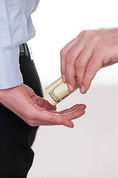
bribeIn honor of 2017, a new feature this week.

At the end of the email, there will be both a basic question for your table and....

an ADVANCED question. Don't worry, we'll try to keep it not-too-difficult.

+ + + +

Now, here's a lead question for your table:

What should you do when there is another student in the class who is disruptive?

Do you:

A) Tell them to settle down?
B) Tell them they are bothering you?
C) Complain to the teacher?
D) Complain to the Principal?
E) All of the above?
F) Something else?
G) Do nothing?

According to our newly-turned-seven-year-old, the correct answer is....F - something else.

For week's she had been complaining about a certain girl in her class who was constantly disruptive and rude to the teacher.

Our daughter is very sensitive to this sort of thing.

Finally, a couple weeks ago, the school found a solution - they bumped the trouble-maker up a grade!

So yesterday I asked our daughter, "How is it going now?"

"Well, since they moved that girl into second grade, now another trouble-maker has stepped up to take her place."

Based on the evidence she provided, an email was crafted and sent to Admin to ask them to look into the matter.

So today's converation went something like this:

"How did it go today?"

"A little bit better. That girl is still misbehaving, but not as much. So I keep telling her, her prize is getting smaller....!"

"What prize?"

"I offered her a prize if she stops misbehaving."

"You what? What are you talking about?"

"A few weeks ago I offered her a prize."

"A few weeks ago? So this has been going on for a long time? Where....when...did you do this?"

"In the bathroom. I told her, if she behaves nicely she's going to get a prize."

"What's the prize?"

"I don't know yet. We'll see. Every time she behaves nicely the prize gets bigger. And every time she does not behave nicely, the prize gets smaller."

This revelation of my daughter's clandestine intervention in the management of her first-grade classroom left me speechless.

The question for your table: How should I react (if at all)?

Advanced question: what does this anecdote have to do with this week's parsha?


Shabbat Shalom

PS - advanced video

PPS - Thanks to those who responded to last week's "word from our sponsor".

Friday, February 05, 2016

Just or Right?

The purpose of this blog is to spark some righteous dignation at the Shabbat table.
Wishing Suzanne in SF a happy birthday this week.
Wishing Mom (Chaya bas Yehudis) a continued recovery.

ShkreliIs this the face of righteousness?
Today's question for your table is very simple:

Is following the law the same as being righteous?

There are so many
stories out there. The Flint water crisis itself could be the basis of an entire ethics course.

How about this one:

Martin Shkreli made headlines in September for raising the price of Daraprim, a drug, from $13.50 to $750 per dose.

In December he said, "I should have raised the prices higher."

This week he was back in the headlines for mocking Congress. 

Here's his tweet:

"Hard to accept that these imbeciles represent the people in our govern
ment."

When he raised the price of the drug, he was following the rules of the free market and the law of supply and demand.

So it was just.

But was it right?


Shabbat Shalom 


Did you make a resolution to become more righteous this year? Or to become more spiritually connected? Put your $$ where your ) is - give yourself a subscription to the Amazing Nature for Teachers program - AmazingNature4Teachers.com. Great for anyone who enjoys a daily dose of inspiration. Now available in "Jewish" and "general" versions.

Like this post? How about voting with your finger: Like it, tweet it, or just forward it.

Friday, August 01, 2014

The Deadliest Weapons

The goal of this blog is to encourage some healthy speech at your Shabbat table. Please print and share.

Tongue

Try starting with these 2 questions at your table:

1. Do you know the difference between slander and libel?

2. How true does gossip it need to be to be OK?

A woman told her friend a rumor about someone. She later felt bad and went to the rabbi to ask for advice on what to do.

"Take a down pillow outside, cut it open and scatter the feathers in the wind."

She did so, then returned to the rabbi.

"Now go collect all the feathers."

“But that's impossible! The feathers have scattered who knows where!”


“Now you understand why lashon hara is so evil. The defamation scatters far and wide and the damage that can never be undone.”

One of the great Jewish urban legends is that speech is only "evil" if it's false.

In fact, lashon hara is "ra" (evil) even if it's true.

(There are exceptions, but the ethical rules are very narrow.)

When it's false, it's just that much worse.

“Falsehood flies, and the truth comes limping after it." - Jonathan Swift, 1710

“Falsehood will fly from Maine to Georgia, while truth is pulling her boots on." - Portland Gazette, 1820

“A lie can travel half way around the world while the truth is putting on its shoes.” - Mark Twain, ca. 1880

"A lie gets halfway around the world before truth has a chance to get its pants on." - Winston Churchill, ca. 1930

Question for your table: What's worse - speaking lashon hara or listening to it?


Shabbat Shalom

PS - Have you told your favorite teachers about the Amazing Nature for Teachers program?

PPS - For last week's blog on the Gaza war, click here

Like this blog? How about putting your mouse where your mouth is: Like it, tweet it, or just forward the link to someone who might enjoy it.

Friday, February 14, 2014

Right to Death, Left to Life?

The purpose of this blog is to resuscitate the conversation at your Shabbat table. Please print and share.

Belgian Parliamant / ReutersTo the left is a photo of the world's newest Death Panel.

The photo illustrates this Reuters article on the Belgian Parliament's action this week to permit a terminally-ill child to request euthanasia (with parent consent of course).

Forget the slipperly slope (unless you've been in the South or NE this week).

Forget the long-term implications.

Quite simply: According to every Jewish ethical writing with which I am familiar, euthanasia is a euphemism for murder.

(Granted there may be some gray-area cases, the basic ethic remains.)

So now a Belgian child who is suffering and terminally ill may request that doctors murder him.

The


Here's the question for your table:

Which is more disturbing:

1. The law itself

2. The following comment in the Reuters article:

The vote has attracted more attention abroad than in Belgium, where none of the major newspapers carried the news of Thursday's vote on their front pages, and television news concentrated on Belgium being in the international spotlight.

3. The apologetic line that "In practice, supporters of child euthanasia say, there are likely to be few minors who will be allowed to die."

4.
The comment from a nurse who has cared for some 200 children in the final stages of their lives that, "In my experience as a nurse, I never had a child asking to end their life. But requests for euthanasia did often come from parents who were emotionally exhausted after seeing their children fight for their lives for so long.


Shabbat Shalom

PS - Euthenasia is currently legal in three countries; assisted-suicide in three as well, but not in Belgium!

PPS - Want to make your Table Talk rabbi happy? Like it, tweet it, or just send it to someone who might enjoy it.

Friday, October 04, 2013

Better Late Than Never?

The purpose of this email is to help you turn Friday night dinner banter into a thoughtful discussion. Please print and share.

In memory of Andrew Sarosi - Aharon ben Chaim - whose first yahrzeit was observed this week. May his memory be for a blessing.

Better Late Than Never?

images?q=tbn:ANd9GcQAOvfwk8cPmW3symC96kyHj6UavsaFmBtnQUL9On5v0XEWVUoYThe other day I dropped our teenager off at the barbershop with a word of fatherly wisdom.

As I handed my son the tenspot, I said, "Don't forget to have in mind when you pay the barber that you're doing a mitzvah."

First question for your table: What mitzvah are you doing when you pay the barber?

Here's a clue in the form of a riddle:

What mitzvah is a chesed (kindness) if you do it and tantamount to murder if you don't do it?

Still don't get it? Alright I'll tell you.

Answer: "Thou shalt pay your worker on time."

Does the Torah really say that?

Sure does - Deuteronomy 24:14.

OK, if you read the actual verse, you might think it only means a poor person. (And I suppose that those people who read it casually or don't know about Judaism's Oral Tradition can interpret it in many ways, such as this and this and this.)

But the rabbis teach that this mitzvah:

1. Applies to any sort of wage earner, poor, rich or even middle-class
2. Is fulfilled if and only if you pay them before the end of the day that payment is due
3. Is only a spiritually-meaningful act ("mitzvah") if you have in mind that you're doing a mitzvah
4. In addition to the obvious benefit to the worker, has two benefits to the one who is paying

Second question for your table: What are the two benefits to the employer (including, in this case, my son)?


Shabbat Shalom

PS: This discussion is based on the idea that the Torah's essence, its fundamental principles, can be summed up in three words. Know what they are?

If you don't already know, watch this:


Friday, July 20, 2012

A Handy Man

The purpose of this email is to provide something creative for dinner table conversation. Please print and share.
In memory of HaRav Yoseph Shalom ben Rav Avraham Elyashiv who passed away this week in Jerusalem, and in memory of my father, Dovid ben Eliezer, whose seventh yahrzeit was this week. (To dedicate a future Table Talk, send an email.)


What do you do when Truth contradicts Reality?

If you've been reading this blog for awhile, you have learned something every summer around late July about my father....

My father, the champion of justice.
My father, the people-lover.
My father, with the corny sense of humor.
My father with the beard and bow ties.


This week: my father the handyman.

Here's how dad-the-handyman taught me grammar:

Me: "Alls you have to do is..."

Dad (smiling): "Awls? I have awls in the basement."

Our deck had a wall-like fence along one side of it, made of horizontal slats.

One time he decided to build a bench and back-rest along that wall.

He measured. He cut. He leveled.

He was really big on leveling. To him, if something wasn't level, it was just, well, wrong.

So that summer, he built the most perfectly level bench and perfectly level back-rest.

But when he had finished, there was one problem.

Evidently the contractor who had built the deck hadn't been so careful with the level.

Dad's perfectly level back-rest was not perfectly parallel to the planks of the wall.

There's a case where Truth (true level) clashes with Reality.

First question for your table: In this case, what do you do? Change Reality? Change Truth? Live with the contradiction?

The answer, in my humble opinion, is that there is Truth, and there is Truth. "Perfect level" is one truth. "Parallel" is another truth. Which is the higher truth? Level or parallel?

That's a good question for your table. Let's make that #2.

I'll tell you what my father did. He decided that in this case the very visible aesthetics of parallel was a higher truth than the more subtle truth of level.

In other words, Dad adjusted the back-rest.

Rabbi Elyashiv, mentioned at the top, was one of those exceedingly rare people who can distinguish between the most subtle differences between competing truths.

Over the past five or so decades, he was asked every manner of question, from life-and-death emergencies to the more benign.

Here's a famous one someone asked him (not the most subtle, but fun for the table):

Jerusalem has a well-known seat belt law. A certain driver picked up a hitchhiker, reminded him to put on his seat belt, but the passenger did not and they were pulled over. The driver asked the passenger to pay the 500 shekel ticket. After all, it was his fault. The passenger refused: "He gave you the ticket, not me!"

Who is right?

They agreed to take the question to Rav Elyashiv.

Questions for your table:
a. How many possible answers are there to this question?
b. How would you answer?


Want another one?

Five people got stuck in an overloaded elevator, they had to be extracted and were fined for the cost of the rescue and repairs. Four of them blamed one of them who, they said, was overweight and came in the elevator last, over the objections of the other four who said it would be too crowded. The fifth person responded that they should all pay equally.

The question came before Rav Elyashiv and he ruled....?


Shabbat Shalom

PS - If you want to know how the Rav ruled in each case, send me an email.


The iPhone app: http://tinyurl.com/amazingcalendarlink
Android version: http://tinyurl.com/amazingandroidcalendar

Bar and Bat Mitzvah gift suggestions at bestjewishkidsbooks.com (a service of JSL).

Friday, May 18, 2012

Where Do U Draw the Line?

Bar and Bat Mitzvah gift suggestions at bestjewishkidsbooks.com.


Where Do U Draw the Line?

One of the most disturbing stories of the year appeared last week then completely disappeared.

The New York Times did NOT cover it (except in a blog).

MSNBC did, as did the Huffington Post (don't read if you're squeamish) and of course the macabre-loving BBC.

Here's the headline:

Korea strengthens customs inspections to stop smuggling of 'human flesh capsules"
(link)

Since last August, customs officials in South Korea say to have intercepted between 17,000 and 17,500 pills filled with some type of finely ground white powder. The powder is said to be a stamina enhancer and medical panacea in parts of Asia.

The Korea Customs Service said it had found almost 17,500 of the capsules being smuggled into the country from China since August 2011.


Let's put all cultural issues aside. You and I cringe, but maybe that's merely our cultural bias?

After all, no American dog-lover is up and arms about the consumption of dog meat in some Asian countries and by some US presidents....

So aside from our cultural aversion, is anything wrong with this fetus-pill practice?

According to the South Koreans, the pills are objectionable on the grounds that "such pills could pose serious health hazards".

I hear that. Unregulated ground-up-aborted-baby-flesh could be full of nasty "super bacteria", which was the BBC's angle on the story.

In other words, this is a public health story, which is why it only generated a few brief headlines.

Question for your table: Is there anything else objectionable here? Is the health issue the only ethical red-line? Or are all non-health-and-safety red-lines just cultural bias?

And if there is something wrong here that transcends culture, where is tha red line?


Shabbat Shalom


Friday, March 02, 2012

Stop Me If You've Heard This One

Published February 22, 2012 in the Journal of Medical Ethics:

"After-Birth Abortion: Why Should the Baby Live?"

ABSTRACT
Abortion is largely accepted even for reasons that do not have anything to do with the fetus’ health. By showing that (1) both fetuses and newborns do not have the same moral status as actual persons, (2) the fact that both are potential persons is morally irrelevant and (3) adoption is not always in the best interest of actual people, the authors argue that what we call ‘after-birth abortion’ (killing a newborn) should be permissible in all the cases where abortion is, including cases where the newborn is not disabled.

Full article here.

Authors:

Alberto Giubilini
Department of Philosophy, Univ. of Milan, Milan, Italy
Centre for Human Bioethics, Monash Univ., Melbourne,

Francesca Minerva
Centre for Applied Philosophy and Public Ethics, Univ. of Melbourne
Oxford Uehiro Centre for Practical Ethics, Oxford Univ.

Dr. Minerva invites your comments here: francesca.minerva@unimelb.edu.au

Question for your table: Are these professors right, wrong, or is it just a matter of opinion?


Shabbat Shalom

PS - if you are looking for something new for Purim (next Thursday!) try our customized search portal: Best Jewish Kids Books.