Showing posts with label suffering. Show all posts

Friday, July 01, 2022

A New Vocabulary Word?

 The purpose of this blog is to expand everyone's vocabulary to the Shabbat table... Please print and share...

In memory of my grandmother Yehudis bas Alexander, whose yahrzeit was observed this week.

Calvin
Here's an interesting question to try at your Shabbat table:

Can you guess what's the #1 question asked to rabbis?


In my opinion, the answer is: "Why the Holocaust?"

Or some version of that.... 

Next question: What's really bothering someone when they ask that question?

It seems to me that what's bothering them is: How can a putatively good God allow innocent people to suffer?

Not a new question, not unique to Judaism, yada yada. 

But I'd like this week to focus on one aspect of that question that came up recently.

Recently, someone asked me, "OK, let's say for the sake of discussion that I accept that there is a reason for everything and that God has a masterplan and that one day it will all make sense. But why does it appear never-ending? We're supposed to be good to each other, we're not, we're going in circles, it looks like a never-ending cycle."

So again, what's the question? What's bothering this person?

Maybe what's bothering him is: How are we meant to get out of the cycle? How are we meant to repair the world?

It seems to me that the key to humanity's "salvation" is learning how to master maklokus.

Maklokus means argument or disagreement. 

The Talmud says that there are two kinds, good maklokus and bad maklokus.

Good makokus is when we're loving and respectful and we happen to disagree, and we're both arguing - sometimes passionately - not because we each want to win but because we each want to arrive at the Truth. Arguing is like playing tennis - I need you to argue with me either to help me see flaws in my thinking or to help me solidify my thinking. 

Bad maklokus is when we're neither loving nor respectful, we're not seeking clarity, we're both convinced a priori that we have the Truth and the only goal is to win.

Bad maklokus is thesis-antithesis.

Good maklokus is thesis-antithesis-synthesis.


Question for your table - How can you make sure that every maklokus is a good one?


Shabbat Shalom

PS - Yes, as always, that pic up there is clickable....
PPS - Shopping on Amazon? Please use 
https://smile.amazon.com and Amazon will donate a % of the sale to the non-profit of your choice (such as Jewish Spiritual Literacy), at no extra cost to you. Why not? 
 
Enjoyed this Table Talk? Vote with your fingers!  Like ittweet it, forward it....
  

Friday, November 30, 2018

The Bearable Bareness of Being

The purpose of this blog is to enable some soul-baring at the Shabbat table. Please print and share.

A deep thank you to all those who helped make our "Giving Tuesday" appeal (here) a great success. PS - It's never too late to join the party.

In memory of Marshall Bach, Moshe Topas and others who have recently left us.

And in case you got distracted, here is a reminder of the days, hours and minutes until Channuka.


Medical loveThis morning I paid a shiva call to a family who lost their son a few days ago to an overdose.

With that brief intro, here's the first question for your table:

What mental image do you have of their son at this point?

Frankly, I didn't know their son at all, never even met his mother, only know his father casually. So everything I'm about to tell you I learned just this morning.

First, their son was brilliant. He loved biology, was very good at it, and completed a pre-med degree in under four years.

As an undergraduate, he worked with a professor on biomedical research and co-authored a paper.

He was accepted to the Technion Medical School.

Perhaps due to his brilliance, his chemical addictions did not follow a smoothe, predictable trajectory.

They involved alcoholism rooted in his teenage years, drugs readily available during his gap-year in Israel, pain medication supplied liberally after a motorcycle accident, several stays at rehab centers.

And through it all, an extremely loving and caring family.

At the shiva, his father told about the graduation ceremony from rehab.

Each participant stood and said, "My name is So-and-so, and I'm an addict."

His son stood and said, "My name is Moshe, and I'm an addict, and I'm a Jew."

His father also quoted a Talmudic passage about the famous rabbis healing each other:


R. Hiyya b. Abba fell ill and R. Yohanan went in to visit him. He said to him: Are your sufferings welcome to you? He replied: Neither they nor their reward.  He said to him: Give me your hand. He gave him his hand and he raised him.

R. Yohanan once fell ill and R. Hanina went in to visit him. He said to him: Are your sufferings welcome to you? He replied: Neither they nor their reward. He said to him: Give me your hand. He gave him his hand and he raised him. Why could not R. Yohanan raise himself? The prisoner cannot free himself from jail.


I see at leats two profound lessons there.

Let's break it down.

First of all, why does the visiting rabbi ask, "Do you want this illness?"

What kind of question is that? Why would anyone want an illness?

You'll probably get some very interesting answers from your table.


In my opinion, think the answer is clear in the patient's reply. The reason a person may want (or at least accept) an illness is due to the concept of tikkun - that ever adversity that we experience is for our own good, to help us in some way.

His question in effect is, "Is the sickness bearable in light of the putative benefits, or is it unbearable?"

It reminds me of another person who died recently, a lifetime San Francisco resident, of lung cancer. Like all lung cancer patients, his last days were of unbearable suffering.

"I want neither the illness nor its benefits!"

A second take-away, it seems to me, is the role of the patient. In many cases - especially addiction - he has to want to recover. And he has to want to every day.

Hopefully we can encourage him and help him find motivations, but the will has to be real.

A third piece of wisdom, it seems to me, comes from the fact that the healing comes by asking him to grasp his hand, and by the analogy to a prisoner.

It seems to me that too many of us want to go it alone - whether it be in recovery, weight-loss, investing, or even home repairs. DIY is praiseworthy but there is no shame - in fact there is tremendous praise - to someone who ignores his or her ego and asks others for help.

If someone helps you climb the mountain, it doesn't make you any less heroic and in fact a shared summit is sweetest.


Shabbat Shalom

and

Happy Channukah (however you spell it)


PS - If you're still scrambling for Channuka, you may want to click here.

Friday, December 16, 2016

Wheel of Fortune.... How does it turn?

The goal of this blog is to not leave the Friday night table talk to chance.... Please share.
In memory of Moshe Simcha Moskowitz and wishing a speedy recovery to Tamar Adina bas Kayna Shulamis.


Dreidel RouletteA horrific accident this week.

A mother and her son drop older sister off at the airport, going to Israel to study. What a happy goodbye!

On the way back, in front of her is a disabled vehicle on the highway - she slows down, but the semi behind her does not slow down and rams her into the stalled vehicle.

How long it took first responders to arrive, who knows and who wants to know. Both mother and son were airlifted to separate hospitals in DC.

The mother is presently in ICU, fighting for her life.

The son - a 13-year-old in our son's school - did not make it.

The funeral was yesterday.

It looked like the entire Jewish community was there. Not only were all 600 seats filled in the huge sanctuary, so was every foot of the standing room, so was the overflow room, spilling out into the hallways and the foyer.

First question for your table: Was it because the parents are well known and loved?

But speaker after speaker told of how special this boy was. His name was Moshe Simcha - and he was always happy (simcha means happiness). He wasn't an extroverted, joking kid. He was mild-mannered, soft-spoken, but extremely friendly and even more than friendly, he was helpful.

His seventh-grade teacher said, "You know those days when you come in to school and you really need a coffee but you don't have time because you have to go copy your handout? Moshe would make sure you had a coffee on your desk and the copies made before you even had a chance to ask him for help."

His father said, "At home, he was always asking, 'What can I do to help?'"

It seems that he had perfected the
mitzvah of honoring your parents.
 
Other kids loved him, because he was super nice to everyone, of all ages.

Our son called him "really nice". (That is a very rare compliment.)

He was a fighter - he didn't let diabetes stop him from training for and completing a 120-mile bike-a-thon to raise money to help disabled kids go to camp.

He was a learner - he recently asked his father if they could spend five minutes a day learning together the laws of lashon hara. Why? "Because it's really important and I don't think I know it well enough."

His father, a beloved first-grade teacher, said, "Moshe taught us all something. He was a teacher - a rebbe - to all of us."

Even those of us who never met him.

(Even those of us who merely read about him in an email?)

His family ask:

• In his memory, that we aspire to emulate him;
• As a collective "prayer" for his mother, that we light Shabbat candles five minutes early today.

Hence I share the story with you, and ask you to
forward it to everyone you love.

Second question for your table: What's a greater tragedy - a meaningful life cut short at 13, or a long, healthy life without meaning or mission?


Shabbat Shalom


PS - After 2,500 years, there is finally a new way to play dreidel. Click on the image above.

Like this post? How about putting your gelt where your gab is: Like it, tweet it, or just forward it.

Friday, July 11, 2014

Could it Be Any Other Way?

The goal of this blog is to bring peaceful conversation to your Friday night dinner. Please print and share.
In honor of our great friend in Jerusalem, whose birthday was this week - Happy Birthday, Pinchas.


669928.503perseverance_orig

A young woman phoned me the other day - someone I've never met - with a burning Jewish question, that is so good I offer to you as this week's Table Talk question:

Did God have to create a world with pain and suffering?


It seems to me the answer must be yes....

....or no


Let's start with the no.

The question assumes that we're talking about creating a world with a specific purpose. Let's say that purpuse is for us to achieve a certain thing. So the question is, did God have to create this purposeful world with pain and suffering - was it impossible to create a world with the same potential but without the pain and suffering?

If the answer is "no" - that God could have created creatures with the same potential yet without the pain and suffering, then it seems to point to God the sadist. Why would God make us suffer unnecessarily?

OK, so perhaps God is a sadist.

But if that's so, then God isn't a very successful god. After all, millions of people are happy. Millions of people - despite their pains and sufferings - are enjoying many blessings. If God were a sadist, he's not batting 1000.

So we have to reject the "no" answer and turn to the "yes" answer - that God had to create this purposeful world with pain and suffering, or at least with the potential for pain and suffering (perhaps triggered by our own actions).

That is, we need pain and suffering in order to achieve our purpose.

What is that purpose?

Simply put: knowledge of God.

In other words: the pain and suffering are custom-designed for each person to achieve divine knowledge.

The reason people are confused by this is because our materialistic culture teaches us that our purpose is material (money, leisure).

Judaism is a spiritual culture, teaching us that our purpose is spiritual.

In a materialistic culture, pain and suffering are inherently bad, because they are the opposite of comfort.

In a spiritual culture, comfort is not the goal. The goal is enlightenment, and usually this only comes through discomfort.

The girl's question was, Couldn't God have made a world with the same enlightenment but without the discomfort (pain)?

The answer is no, because learning to deal with discomfort is part of the enlightenment. Without discomfort, we would be missing certain facets of the jewel of enlightenment:

Without someone testing my patience, how will I learn patience?
Without someone testing my calmness, how will I learn calmness?
Without having my honesty tested, how will I learn honesty?
Without feelings of laziness, how will I learn zeal?


And so on.

And here's the real zinger for your table:

What's the greatest discomfort (pain) in the world?

I'm interested in your answers. Here's mine:

The greatest pain in the world is the bruised ego.

That's why the Torah starts with the legend of Adam and Eve in the Garden. Their great mistake wasn't eating the fruit - it was their refusal or inability to admit they'd done something wrong.

Thus the singlemost important thing you and I can do right now in order to become enlightened is to look in the mirror and practice over and over saying the two hardest phrases in the English language:

- "You are right - I'm wrong"
- "I'm sorry."


Only by embracing the pain of saying those two phrases can a person become truly great.

Good luck....

....and Shabbat Shalom


PS - There is another, less painful, route to enlightenment, and you can find it here.


Friday, June 21, 2013

Warm Heart

Happy Anniversary this week to Joel and Lisa! Wishing you a lifetime of bliss together.
(To dedicate a future Table Talk, send an email.)


Kamianets CastleAs presented last week, your Table Talk is now in L'Chaim mode.

The suggestion is this:

At some point during the Shabbat meal, pour everyone their favorite beverage for a l'chaim.

But ask them not to drink until after you finish the story. Make this a ritual every Friday night, and your family will look forward to it.


The best book I have found full of Jewish-themed stories is called Stories My Grandfather Told Me. The publisher has granted me permission to excerpt these via email, but not on a web page. If you would like to receive a copy of this week's story, "Someone Else's Property", please join the email list or send me an email, seinfeld  (at)   jsli.org

This week's story is called “A Warm Heart”.

It begins like this:

When Rabbi Moshe Feinstein underwent open-heart surgery, he searched his deeds to find the reason for his suffering.....

And ends like this:

May we all learn to be so sensitive to other people's feelings. L'chaim!

Question for your table - how do you think he felt when he remembered the childhood incident?


Shabbat Shalom

PS - Want to make your Table Talk rabbi happy? Like it, tweet it, or just forward it to someone who might enjoy it.


Excerpted and adapted with permission from Stories My Grandfather Told Me, Vol. 4, © 2001 ArtScroll/Mesorah Publications. All rights reserved. Get the book here.

Friday, July 27, 2012

The Dynamic Duo

The purpose of this email is to provide something creative for dinner table conversation. Please print and share.

You may have noticed that I don't often use this space to comment on the news.

There are massacres committed daily in distant lands.

There are natural disasters that boggle the mind.

There is rampant thievery. And poverty. And disease.

I would like this message to be a mini refuge from the "news" which is invariably bad news. For some reason, our journalists feel that we are mainly interested in hearing the bad news. It used to be because "bad news sells." But is that still true today?

But there's something particularly disturbing to me about this Batman massacre.

Maybe it's the image of these innocent people settling down for some truly innocent pleasure.

Rather than only shake our heads, let's see if we can gain something positive from this evil.

This story hit close to home. Maybe, if nothing else, we can allow ourselves to be reminded that every moment is truly precious, how each day may indeed be one's last.

We should therefore live each day as if it were our last.

If you knew this were going to be your last day, what would you do?

Would you savor your food?

Would you hug your kids?

Would you say I love you to anyone?

Would you say I'm sorry to someone?

Would you do an act of kindness?

Would you try to control your anger/impatience/anxiety - just for the day? Go out on a high note?

Would you turn off the TV and learn a little wisdom?

Notice the dynamic here?

The self is a fusion of two forces: my centrifugal drive to connect to others and to the world, and my centripetal drive to suck the world into myself (ego). This is a true dynamic duo!

Enlightenment is a measure of how well a person remains aware of this dynamic duo, of what truly matters. What matters is both what you do but also how you do it.

That's my two-bits (as my grandfather would have said). What's yours?


Shabbat Shalom

PS -Here is a video I just made related to this topic. This is a rough draft. I'd like to re-do it with a fancier production, but would like to hear your feedback first:

PPS - This Shabbat is the 9th of Av - Tisha B'Av. The fast is put off until Saturday night. To learn more, click here.

The iPhone app: http://tinyurl.com/amazingcalendarlink
Android version: http://tinyurl.com/amazingandroidcalendar

Bar and Bat Mitzvah gift suggestions at bestjewishkidsbooks.com (a service of JSL).

Friday, January 20, 2012

Part of Me

Part of me.

Do we have parts?

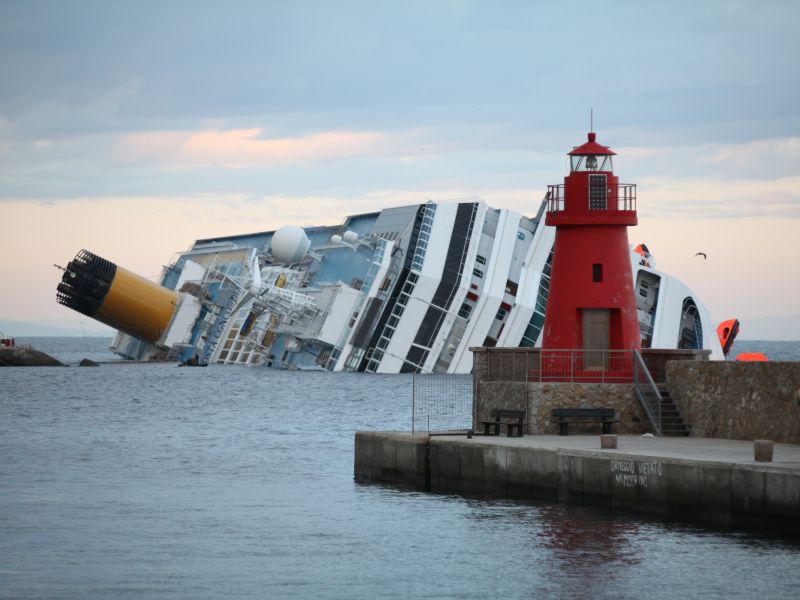
Part of me really wants to write about the Costa Concordia. I want to compare it to the Titanic. I want to talk about the way everyone rushed to judge Captain Schettino for reckless driving and abandoning ship among other things, and now we are reading reports that his driving may not have been as reckless as everyone assumes and he may not have intentionally abandoned ship.

And you have to wonder if the lighthouse was in service.

Lots of great fodder there, on fate, hubris, judgement, yada yada.

But then part of me wants to wonder why we care more about this tragedy in Italy than the 100,000 avoidable deaths in Somalia last year. Deaths by starvation. Or the 16,000 children who die worldwide (mostly in Africa) every day from starvation and malnutrition. That's one kid every five seconds.

Do you have parts too?

Last week's blog about the snowstorm brought two diametrically opposed reactions.

One reader said, "Thank you for making my day! I forwarded it to everyone!"

Another reader wrote, "I think this notion of 'nothing happens by chance' is the worst kind of magical thinking."

(Incidentally, the latter reader is now digging out of the a "freak" snowstorm - the worst in a decade - in Washington State. Of course it's just a coincidence.)

Question for your table: Do you have parts too? Which part is the real you? Which part do you want to be the real you? And what do you do about it?


Shabbat Shalom

PS - thanks to Krosbie Arnold for the inspiration

Friday, September 02, 2011

It's Not the Hurricane, Stupid!

Hurricanes, earthquakes, floods, blackouts, yada yada yada.

Why do these things happen. That's what everyone wants to know.

Why did that bozo driving on a darkened street not only ram the shopping cart lying in the road, sending it hurtling across into my lane and putting a nice dent into my fender, but also speed away?

Why did I go out at all Tuesday night to look for ice when I should have known everyone would be sold out?

Why does this fruit fly buzzing around my desk keep pestering me? Why won't it just go away or die or something?

Why why why?

I have a more basic, Rosh Hashana-dik question.

After all, tis the season.

If you have a shofar at home, now's a good time to dust it off and get that lip back in shape. I've been blowing mine every morning starting Wednesday this week to wake up the kids.

If you don't have one,
here's a low-cost one online.

Nothing beats the real thing, but there is also the virtual shofar for iphone/ipad.

Now, I know I haven't asked you the question yet, but there are a few more Rosh Hashana links I'd like to share....

On jsli.org, you can download for free our "24 Questions to Think About Before Rosh Hashana". Here's the link.

On bestjewishkidsbooks.com, you can find links to our four favorite honey dishes which make great gifts. Here's the page.

Finally, now that school is back for young and old, how about showing your appreciation to the teachers? Don't wait until the end of year. We have found 11 gifts that are inexpensive but quite useful for any classroom teacher. Get them a small gift now that will both show your appreciation and help them be effective. Go to bestjewishkidsbooks.com and browse the category, "Gifts for Teachers".

Now back to our main program.

It seems to me that the question of "Why did such-and-such happen" is useful and instructive if and only if we begin with a more basic question:

What am I here for?

Meaning, What's the purpose of my life?

We now have a little over 3 weeks until Rosh Hashana. Here's your action plan:

1. Download my 24 questions worksheet. Print a copy for everyone you love.
2. Set aside 5 minutes a day to work on one question.

Friday night dinner is a great time to begin with question #1.

Do this, and then between Rosh Hashana and Yom Kippur we'll be able to talk more meaningfully about the "why why why".

Shabbat Shalom

(I made these vids a couple years ago as an experiment. Please tell me what you think.)


PS - If you know anyone who might appreciate this blog, kindly send them the link, or post it to your facebook wall or even tweet it.

PPS - We have audio (CD and mp3) on Rosh Hashana / Yom Kippur here.

PPPS - What better way to help someone prepare for the new year than sending them the amazing Jewish iphone/ipad app?

Friday, August 05, 2011

Harvesting Grapes

Four years ago I planted a couple stubby grape vines.

Four years later, they are HUGE, covering our entire deck in a giant embrace.

We have been staring at these luscious bunches, wondering when is the right time to harvest them?

The birds and bees have also taken notice, so the time to harvest got decided for us - now or never!

Yummmm. Sweet white grapes, sweet reds.

It was a long wait, those four years, but so worth it.

What a great way to pass the time on a summer day.

Yes, we know they're starving in Africa. We know that millions are unemployed. But to suckle a piece of fruit after four years of waiting, that's a sweet moment.

It's all going to end next Monday night.

"Next Monday night?" you ask....

If you have to ask, you have to read this.

Next Monday night is the 9th of Av

So what?

It takes enormous effort to connect with this holiday.

Even if you consider yourself "Jewishly connected".

Is it worth the effort?

Here's a story you can read at the table. See how people react.

Imagine the Taliban were to conquer America.

Would our lives really change that much?

Well, we can assume that they would move quickly to abolish Hollywood, destroy museums, dismantle universities. Probably convert all synagogues and churches into mosques.

Now just imagine that you join a few families on a boat to escape. You set sail for the South Pacific. You are hoping that the forces of Good will triumph, but in the meantime, you're saving your own skin. Nothing wrong with that.

But the forces of Good do not get the upper hand so quickly.

Not even in your lifetime.

Nor your children's lifetime.

Not even your grandchildren or great-grandchildren.

So your great-great-grandchildren are born on this South Pacific atoll, they have a decent life with plenty to eat and great surfing. They hear stories from their parents and grandparents about where the family came from, a place called Amerika where there were amazing cities, magical technologies, etc. etc. But that all this was destroyed by the Taliban.

It would be very hard for your great-great-grandchildren to relate to these stories as much more than legends.

That's what Jewish history is for us. We are so far removed from what was, we have almost no appreciation for what was lost.

Why bother?

Because when the Taliban are eventually overthrown, a boat will be coming to offer us passage back home. If we don't appreciate what we lost, we won't want to get on that boat.

Think about it.

The very best things in life often take years of toil and patience before they are ready for harvest.

Three things for your perusal:

1. Here is a packet of Tisha B'Av readings that I compiled for you. I've uploaded it to our jewishspirituality.net teacher-parent resources page.

2. Here is a class I gave in Los Angeles on the topic of how to find a silver lining in any tragedy.
99¢ link .... Free link
(Why a paid download alongside the free one? The first download is for those who recognize the costs incurred in creating and sending you this content and choose to support it. But there will be no hard feelings if you take the latter!)
3. Here is a video by the incomparable Charley Harary:


Shabbat Shalom

PS - Did you know you can send someone my amazing Jewish iphone/ipad app even if you don't use the iphone/ipad yourself? Here's the link.

For the biggest enjoyment of this email, try printing it out and sharing at your dinner table.

Friday, July 22, 2011

My Heart

Last week you may have noticed that I dedicated the blog/Table Talk to the memory of Leiby Kletzky, and then went to write about music, something apparently completely disconnected to this great tragedy to befall the Jewish People - the murder of an innocent child.

One reader from Los Angeles questioned my silence on the issue:

"When I saw your email I was looking for some comfort....I am kind of disappointed and I was expecting to learn a lesson when I opened your email, instead with much surprise I read about music. The whole world was mourning for that boy, he was on media, he was all over the news and you just decided to mention his name and that’s it!!!!!!!!"

First of all, there is a piece of ancient Jewish wisdom that says don't offer a person words of comfort while his deceased lies before him. Meaning, while someone is grieving, let him grieve. Comfort - and all the more so with any lessons - are for later.

As others have written, what words can I say? I could have left the Table Talk blank, maybe that would have been appropriate.

Now that shiva has passed (although mourning continues for 1 year), I will take up the reader's request.

There is a rule of thumb for interpreting the "karma" of events in one's life: When something happens, our reaction is a clue to the purpose or meaning of the event.

What were some of our reactions?

1. Achdut - Unity - Jewish people all around New York and the world working together with one heart to find Leiby. Interpretation: We need to work on our achdut (and eliminate those things that are hindering our achdut, like lashon hara).

2. Pain at the loss of an innocent child. Interpretation: We need to work on our compassion for "lost" children (not necessarily dead.... think of all the children who are growing up without a Jewish education....)

3. Pain at seeing the security videos of Leiby wandering around and no one helping him. Interpretation - we are

As Shlomo Katz, a New York paramedic, wrote:

"The videos have shown Leiby standing lost for SEVEN minutes!!!! None of us, none of us, stopped to talk to help this little boy, looking so obviously lost! It was only this monster who had the time for this little boy! I am just as bad as the next, I am always doing one thing to many, rushing to try to get it all done, busy on my cell phone and often distracted. But my Grandfather ob”m never had a cell phone and never was too busy for anyone on the street, he could stop to show his concern and love for any of Hashem’s creations....So we as the Jewish People, merciful people, we have received a brutal wake up call. Are we ready to answer it? Will we stop the next time something might not be right, with a child, with an elderly, or even with one of those that makes us a little uncomfortable?"

That's a poignant message. It seems clear and to the point. A child was lost and the only person who stopped to help him was a murderer. What's wrong with us?

I would like with all due humility to expand on Shlomo's point.

Shlomo addresses the Jews of New York. He takes them to task for a lack of chesed. Some of the reader comments attest to this, a feeling of everyone rushing around doing their own thing and not looking out for strangers - yes strangers - in the street.

But my reader is from LA. Surely the Jews in LA who cried over Leiby, the Jews in Mexico, in Russia, in Israel, and everywhere else, is our lesson also that we need to look out for lost souls in the street?

Possibly.

Probably.

We cried over Leiby. One sweet innocent child. My reader tells me that she "could not sleep for 3 nights" because of this unspeakable tragedy.

Yet I wonder: Should we also be losing sleep over the 16,000 children who die EVERY DAY from starvation and malnutrition in Africa?

(This is not an exaggeration: http://www.bread.org/hunger/global)

4. We recoiled at the ugliness of HOW he was killed. Interpretation - our bodies are precious gifts, are we taking care of them properly?

5. We shuddered at the idea of an evil person among us. Interpretation - evil comes in many forms. This form was blatant. But for a member of the Tribe to be unethical in business is also an act of evil among us.

On the one hand, we should not live in fear, nor should we become depressed nor anxious. On the other hand, we all have a tendency to become complacent. We're "busy", trying to be good people, good parents, good neighbors. But Jews are not supposed to become complacent. We can strive to do better, in the above 5 ways at least.

Your thoughts?

PS - Leiby literally means "my heart". Think about it.

Shabbat Shalom


PS - Want to help another Jew learn what it means to be Jewish? Send them the link to the Amazing Jewish Fact-a-Day Calendar - http://tinyurl.com/amazingcalendarlink or send them to http://bestjewishkidsbooks.com

Friday, June 22, 2007

Instant Karma

Dedicated to the memory of Galit Schiller, who died last Shabbat from complications after the birth of her third child. Our deepest condolences to husband Judah, son Tomer, daughter Naomi and baby Satya.
To dedicate a future Table Talk, send an email.


Question for your table: From a Jewish perspective, what do you think is the most problematic aspect of Christianity?

For me personally, growing up in America, one of the things that I found most challenging about the dominant religion was the idea of some guy “dying for our sins.”

Preposterous, right? How could someone die for my sins? And why should my belief in him have anything to do with it?

Well...

Actually, it turns out that 95 percent of Christian and Islamic theologies come directly from Jewish thought. They just changed some of the key details.

For instance, the Talmud states: “The death of the righteous atones (for the living).”

Gee, that sounds a lot like the religion that I just dismissed....

To understand the Talmud, consider two questions:

1. What does atonement mean?
2. Why it should be only the death of the righteous that atones. Why not anyone’s death?

The answer to #1: atonement means purifying the soul of negative karma.

The answer to #2: it isn’t the death per se that atones, rather how we react to it.

When a less-than-righteous person dies, we may be sad but we don’t feel that sense of incomprehension, “Why did this happen?!!”

When a righteous person dies, we feel that overwhelming shock, “How could this have happened?” Some even say, “How could God let this happen?” It’s much more than a mere shanda.

And it is precisely that deep-down shutter of realizing that I don’t understand that atones, because negative karma can come from ego, which is characterized by feeling that I know something, that I’m smart, that I’m good because I know what good means. The shocking “unjust” death of the righteous wakes us from this ego-trip and thereby atones for all who hear the tragic news.

Is this what Lennon meant?


Think about it.

Shabbat Shalom.

(By the way, in that video, what's the deal with the knitting?)

========================
Do you search the internet? Do you sell items on eBay?

There are new ways to help support this Table Talk and JSL’s broader mission:

Every time that you use goodsearch.com to search the internet, you can designate that a penny to Jewish Spiritual Literacy. Doesn’t sound like that much, but a few hundred people doing as few as 2-3 searches per day will add up to a significant donation to JSL at the end of the year.

When you sell an item on eBay, you can designate a percentage of the proceeds to a qualified non-profit organization. JSL has been approved, so please keep us in mind when you are selling.

Direct paypal.com contributions may be made to the account donate@jsli.org.

If you feel that this Table Talk is worth a buck or two a week and would like to make an automatic monthly contribution, please go here.
========================


Upcoming speaking schedule:

June 25 – Philadelphia: The Foundation of Ethics (Business lunch)
June 25 – Philadelphia: The Kabbalah of Wine (evening wine tasting + class)
(For details, send an email)

Yiddish of the week:
shanda — shame

Yiddish review - how many do you know?
anee — poor person
koptsen — panhandler
ballaboss — homeowner; layman
nu — various meanings (see archives)
mishpocha — family
mameh — mother
tateh — father
mazal – (MAH-z’l) luck or fortune, as in, “It was good mazal that....”
beshert – (b’shairt) - meant to be, as in “It was beshert that...”
mine eltern – my parents
mine lair-er – my teacher
hamantashen – Haman-pockets
zeigezunt – all the best (said upon parting)
kesher - connection
Ikh volt veln a kave, zayt azoy gut. - I'd like a coffee, please.
...kave mit shmant. – ...a coffee with cream.
...kave mit milkh. – ...a coffee with milk.
...kave mit tsuker. - ...a coffee with sugar.
Di Fir Kashes - The Four Questions
Oy vey! - Good grief!
mensch — a decent person
rachmanos — mercy
neshoma (neh-SHOH-ma) — soul
minig — custom, as in, "Why do you do that?" "It's my minig!"
Gavaltig — wonderful
Oy gavalt — how wonderful (sarcastic)
Azoy gait es! — That’s how it goes!
Shabbos — Cessation; stopping; day of stopping; weekly sabbatical experience
"Gut Shabbos" — "Enjoy your weekly sabbatical experience"
Neshoma — Soul
meshugass — insanity
meshuganeh — insane
kyna hara — no evil eye
shvitz — sweat