Showing posts with label justice. Show all posts

Friday, February 05, 2016

Just or Right?

The purpose of this blog is to spark some righteous dignation at the Shabbat table.
Wishing Suzanne in SF a happy birthday this week.
Wishing Mom (Chaya bas Yehudis) a continued recovery.
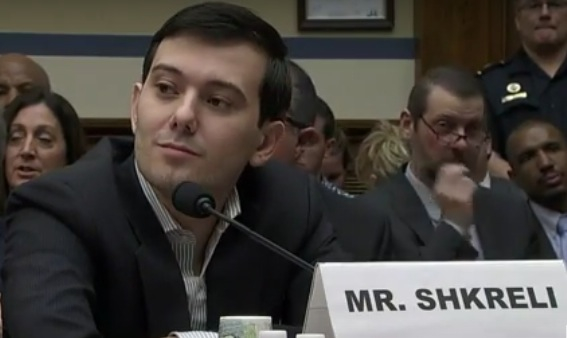
ShkreliIs this the face of righteousness?
Today's question for your table is very simple:

Is following the law the same as being righteous?

There are so many
stories out there. The Flint water crisis itself could be the basis of an entire ethics course.

How about this one:

Martin Shkreli made headlines in September for raising the price of Daraprim, a drug, from $13.50 to $750 per dose.

In December he said, "I should have raised the prices higher."

This week he was back in the headlines for mocking Congress. 

Here's his tweet:

"Hard to accept that these imbeciles represent the people in our govern
ment."

When he raised the price of the drug, he was following the rules of the free market and the law of supply and demand.

So it was just.

But was it right?


Shabbat Shalom 


Did you make a resolution to become more righteous this year? Or to become more spiritually connected? Put your $$ where your ) is - give yourself a subscription to the Amazing Nature for Teachers program - AmazingNature4Teachers.com. Great for anyone who enjoys a daily dose of inspiration. Now available in "Jewish" and "general" versions.

Like this post? How about voting with your finger: Like it, tweet it, or just forward it.

Friday, July 25, 2014

Yes, But Are They Evil?

In memory of my father, Dovid ben Eliezer (Dennis Seinfeld), whose 9th yahrzeit was observed this week.
We are wishing
Nosson Tzvi ben Sarah Rivka Kashtia
, a toddler in a coma, a speedy and complete recovery.
The goal of this blog is to meld some minds around your Friday night dinner conversation. Please print and share.

Shalom Wall Hanging

They use human shields to protect their weapons.

They invest millions of donated funds in sophisticated attack tunnels instead of schools, hospitals and roads.

They regard every Jewish community in the Land of Israel, without exception, as "occupied territory".

They aim to kill as many civilians as possible.

They celebrate death.

All these facts are well known.

But we still have the question: Are they evil?

Try asking this at your dinner table and you will likely be surprised at the range of opinions.

My father, who died 9 years ago yesterday, enjoyed ethics discussions.

He was eulogized by the local paper as "one of the good guys".

His epitaph reads, "Champion of Justice" but it could just as well have read, "Champion of Peace".

He fought tirelessly for justice, but he also had the wisdom to see that sometimes peace requires foregoing a bit of what you "deserve". In Jewish talk, this quality is called being mevateir.

He was able to see both sides of an argument. Doesn't mean he always agreed, but he could disagree without being disagreeable.

Someone asked me to write about what Jews and others around the world could do to help bring shalom to the Land of Israel. Here's my top four:

First and foremost, cultivate peace in your own relationships. Greet people with a smile, your family members, your neighbors (even the ones you don't like), strangers. Try to be mevateir.

Second, put your money where your mouth is:

Feed a Soldier
Adopt a Soldier
Thank a Soldier

Support Terrorized Civilians
Share this Video Liberally
Help Israeli Farmers
Visit Israel
Buy Cool Israeli Stuff (have you seen the Zaksenberg juicer?)

Third, if nothing else, be better informed And here. And here. Oh yeah, and here.

Fourth, ask this question at your Shabbat table:

True or False - "There are no evil people. Only very confused people."


Shabbat Shalom

PS - Have you told your kids'/grandkids' schools about the Amazing Nature for Teachers program?


Friday, May 06, 2011

Just Dessert

Question for your table: What's the #1 question rabbis get asked?

A: "Where was God in the Holocaust?"

Second question: What's the #1 question rabbis got asked this week?

A: "Is it right to celebrate or be happy about the death of Bin Laden?"

Many rabbis will answer the way I do: It is not inappropriate to be joyful when hearing of the death of a Hitler, a Stalin, a person whose life mission it is to murder thousands or millions of people, especially people like you and me.

Third question: Who gets the "credit"?

Perhaps the following true story will shed some light on the question.

Approximately four weeks prior to the September 11, 2001 attacks on New York City, the suicide bombing of the Sbarro pizzeria in central Jerusalem occured on August 9, 2001. The following is a true story:

"May I please get ahead of you in this line? I have to catch a plane back to America and in a great hurry to get to the airport."

The elderly gentleman generously granted this request and soon the tourist was outside, pizza in hand, rushing towards his cab. But then a huge explosion rocked the air and he realized that the Sbarro restaurant he had just left had been the victim of a terrorist suicide bombing. Rushing back to see what happened to the man who had given him his place and thus had saved his life, he found him alive but wounded. After expressing his deep appreciation for his role in saving his life, he informed him that he was a wealthy businessman back in New York and he would be glad to help him any time he was in need. He left his business card and was on his way to the airport.

The opportunity to keep his promise came less than 4 weeks later. The son of the elderly man phoned him that his father required major surgery in an Israeli hospital and could not afford to pay for it. Upon hearing this, the businessman responded that he was ready to come to Israel to see that everything would go well with the operation and he would cover all expenses.

He soon found himself sitting together with the son who called him in the lobby outside the area where the elderly man was undergoing the critical operation. As they looked up at the television screen they saw one plane after another crash into the World Trade Center. The businessman had offices in one of the buildings.

The person that was saved from the Sbarro pizza bombing in Israel was again saved by the same person from the September 11 attacks on the World Trade Center.

Fourth Question: Just a "coincidence"?

Shabbat Shalom

PS - BestJewishKidsBooks.com now has Seinfeld-approved toys and games - and even more books for parents.

The goal of this email is to offer conversation-starters for your Friday night dinner table. Please print and share.

Friday, May 14, 2010

Jew for Justice

The goal of this blog is to provide a conversation-starter for the Friday night dinner table. Please print and share.

Just about a year ago, I asked, "What makes someone qualified to sit on the Supreme Court?"

The Jewish Supreme Court (Sanhedrin) was disbanded 1,600 years ago, but lives on in the pages of the Talmud.

In 1806, Napoleon convened a "Sanhedrin" in order to emancipate the Jew and assimilate him once and for all into French society.

In 2004, a quasi-Sanhedrin convened in Jerusalem, in order to get the bureaucratic ball rolling for when the real Sanhedrin will be revived.

Why wouldn't these rabbis want to go ahead and make a real Sanhedrin?

One problem is the requirements are quite stiff.

You can read last year's blog for the full scoop, but today I'd like to focus on just one of those amazing qualifications:

All the wisdom in the world won't get you anywhere unless you are first and foremost a "tov" - a person with a good heart.

How can you tell if you're a tov?

So I've designed a short self-assessment. You can print this out and try it at your table.
1. Do you eat the last cookie or do you leave it in case someone else may want some?
2. Do you cheerfully allow others enter traffic in front of you?
3. Do you notice when the cashier looks frazzled? Do you say, "Long day?"
4. Do you look for ways to help your spouse/parent/child/neighbor every day? Or do you wait to be asked?
5. How do you react to someone's help or a gift that you don't want, when given sincerely?
6. When giving tzedaka, are you doing them a favor, or are they doing you a favor?
7. Are you the first to greet, or do you wait to be greeted?
How'd you do? If nominated would you serve?

Shabbat Shalom


“Although prepared for martyrdom, I preferred that it be postponed.” - Churchill

Friday, June 26, 2009

If it isn't, should it be?

Dedicated to Yaakov ben Suzanne - may he get well soon.

Two stories that happened this week, both of them point to the same question.

I was back in San Francisco / Bay Area. What a great place.

While I was gone, our five-year-old Yoseph went to bed nicely every night in anticipation of receiving a reward from me today - a toy jet plane. There were not a lot of options in the Oakland toy store, so I hope he likes it.

Even though I told him on Monday that he'd get it Friday afternoon, this morning he was begging me for it and using just about every argument in the book to convince me.

He first started off trying to be discreet because he was within earshot of his 3-year-old sister Devorah.

"Abba, can I have the thing?"
"Yes, after school today."
"But I want it now!"
"Sorry, I said you would get it this afternoon."
"But I went to bed nicely for five nights!"
"But I want it now!"
"Can I at least just see it? I just want to see it!"

This was too much for Devorah. She got between Yoseph and me and looked up at me with her big brown eyes, "Can I have a thing too?"
"No, this is for Yoseph."
"But I went to bed nicely for five nights!"
I tried to ignore her.
"It's not fair..." (never heard that expression from her!) "I should get something too!"

Among my meetings in SF were two guys who are not content with being single.

Both of them are gentle, soft-spoken men over 40. Both are highly intelligent. Both are financially stable. Both are good looking and fun to be with. One of them is on the fast-track to getting married, the other isn't, and I'll tell you why I think so.

The one has made marriage a priority. He has had serious discussions with experienced match-makers on what steps he should take to fund his soul-mate. He has made the crucial "A" list and "B" list. But not only is he focused, he is open to feedback and able to adjust his thinking and strategy based on that feedback.

The other one has paid lip-service to marriage, and is open to finding the right woman, but has not pursued the goal with the same dedication and professionalism that he pursued his job. He has not, in my opinion, made the choices that he must make. He listens to feedback, but rarely acts on it, and ends up spinning his wheels with the feeling that life is a game of chance and not particularly fair.

So here's the question: Is life a game of chance and not particularly fair? Or is reasonable to expect ultimate, Hollywood-perfect justice? Are there any limits to the ethic of giving equal opportunity?


Shabbat Shalom.

Friday, August 22, 2008

Is Life Fair?

In memory of Bobbi Frankel, who exemplified the search for honest meaning and profound human connections.

I owe you an apology.

Last week, I made a mistake. Here, I found a fascinating article from the Guardian newspaper, read the first half and the last bit, but in my haste (and family vacation) did not read the entire piece word-for-word.... Should I have considered that the Guardian, that venerable bastion of British middle-class culture, would publish profanity? In my naïveté, I did not. The Guardian’s mission since its founding in 1821 has been promoted at various times as “non-conformist”, and it has been a great supporter of Israel, but in my innocence did not suspect that nonconformist meant the use of profanity. Please accept my apology (the online version was cleaned up after the problem was reported to me, but the email, like lashon hara, was like the cat out of the bag...)

That said, one reader complained last week that the article was too long to read - “who has time?” he asked.

The answer is – the idea of this weekly email is not to read it on the computer screen, but to print it out and read at leisure Friday night or even Saturday afternoon, when you (supposedly) have the time. Please, do yourself a favor, click PRINT right now and take that long walk over to the printer to fetch it before you forget.

+ + +

The other day I was sitting at a picturesque little paradise on the Puget Sound with someone in the spot where my father hit his head three years ago and never woke up. (If you want to get a tiny sense of what kind of person he was and why he was mourned by so many, read this)

My interlocutor asked, “How can you understand how a just God could allow this to happen? Or the hurricanes or earthquakes where thousands of innocent people die?”

It seems to me that there are 3 things that anyone asking this question might think about:

1 – The issue of a “just God” does not need to be framed in terms of hurricanes and earthquakes. Even if a single child suffers, the question could be asked.
2 – This question is not a new one. In fact, not only is it discussed by all major Jewish thinkers, it is the subject of an entire book of Tanach, the book of Job.
3 – Why is it that we are troubled by our failure to understand God? Is the God of our conception so puny an idea that we can understand it? Shouldn’t we expect that whatever God is, if God is, God is beyond our understanding?

In fact, Maimonides says that the more you meditate on #3, ironically, the more you understand “God”.


Shabbat Shalom