Showing posts with label Channuka. Show all posts

Friday, December 07, 2018

My Channukah

The purpose of this blog is to add some Channukah to the Shabbat table. Please print and share.
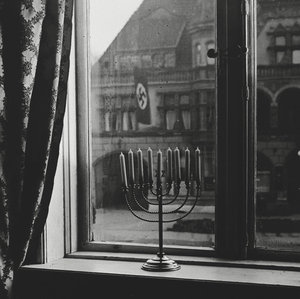
Menorah-SwastikaInsiders read today's headline and smile.

They know that this title is an insider's pun.

It's a play on the Talmudic presentation of Channuka, which begins (in Aramaic): Mai Channuka? - What is Channuka?

OK, so now that you, dear reader, are an insider, here's the first question for your table:

Mai Channuka?


Not "What was Channuka" but "What is Channuka"?

What is it about that Maccabean war, that flask of oil, that menorah, and that destroyed Temple that matters today?

That's for your table, not for me to spoon feed you.

But the photo above has a story that you might want to share.

This has been been published widely, including the NY Times, various blogs, and sites

The scene is Kiel, Germany (north of Hamburg).
 
The date: December 31, 1932. The 8th night of Channuka, 5693.

It is exactly 30 days before the most infamous act of Herr von Hindenburg and perhaps of the 20th Century.

That last night of Channuka
, Rabbi Dr. Akiva Posner lit the menorah and placed it in the window.

(Ask at your table:) Why in the window?

Publicizing the story is the entire reason for lighting the menorah.

(Ask at your table:) What if publicizing endangers you?

For sure, there is no need to put your family in danger.

Surely a year later, Jews of Kiel were not putting their menorahs in the window

But at this moment, they did.

Not only did they, but Mrs. Posner saw the tremendous symbolism of the juxtaposition, and snapped this photo.

On the back, she wrote:

    "Death to Judah" says the flag
    "Judah will live forever," answers the light.”


The Posners escaped the Vaterland and made it to the Holyland.

With their menorah.

For 51 weeks of the year, the menorah resides at Yad Vashemj.

But for the darkest eight nights of the year, the menorah returns to the family.

The Posner's great-grandson lights it with the entire extended family around.


Once again, for your table: Mai Channukah?


Happy C/han[n]uk[k]a/h (however you spell it)

and

Shabbat Shalom


PS - By the way, the saga continues....


PPS - Special video link for you if you click on the pic above.

 
Enjoyed this Table Talk? Vote with your fingers!  Like it, ,tweet it, forward it....


Friday, December 30, 2016

Are You In the Gutteral?

The goal of this blog is to add eightness to the Shabbat table talk ...  Please share.
Continuing to wish a speedy recovery to Tamar Adina bas Kayna Shulamis and to Ruth bat Sarah.
In honor of Tehila's seventh birthday.


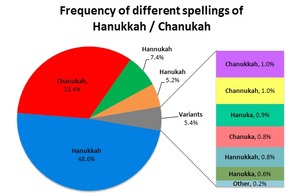
Hanukkah-Chanukah-frequencyPhilosophically-speaking, why should it be eight days?

Isn't the standard number in the Torah seven?

(Try asking this at your table - ask them how many sevens they can think of in the Torah. For that matter, how many sevens can they think of in nature? Notes on a major scale, etc. I've come up with nineteen so far - email me if you want my full list.)


To answer the philosophical question, here's a little philosophy for you, followed by a brief word from Jerusalem.

Last week, I asked if it matters (and why) how you say "Channuka".

One reader, William in Brookline, sent a beautiful answer.

He notices that the difference between the two pronunciations is a single Hebrew letter - "chet" v. "hey". Numerically, the difference only 3, which could be represented by the word "av" which means father....


"Using Google Translate, הנוכה ["Hanukah"] means, "seasonally"; חנוכה [Chanukah] means,
"dedication".  We have more than a seasonal holiday here: we dedicate ourselves to אבינו שבשמים [God], so if we add the אב to the seasonal festival, we have our Dedication."


If William will permit me to riff off of him a bit.... It is interesting that Channuka is related to the word for "education" — "chinuch". Eduation isn't just dedicating a child, it's preparing the child for life.

The idea of Chanuka is to re-dedicate yourself — that is, to prepare yourself.

Maybe you thought you were prepared?

But you're not. None of us were.

We were maybe prepared on the level of seven, but not on the level of eight.


The other day I was speaking with my 12-year-old nephew in Jerusalem.

He asked me, "If there was enough oil for one day, then the miracle was only seven days. The last day it burned up, so it wasn't a miracle!"

His answer: For most of the world, it's only a miracle when oil doesn't burn. But for a Jew, it's even a miracle when it does burn. Everything in nature is miraculous.

As long as you are waiting for that miraculous success, that miraculous recovery, that divine intervention in marriage or childbirth or winning the lottery, then you are still living in the world of seven.

When you start to realize the miracle of the quotidian, you are living in the eight.

That's why it matters how you say it. Because this world matters. The here-and-now matters. Beauty matters. If you pronounce something wrong, you are marring the cosmic harmony.

So the real magic of Channuka - the real preparation - happens tomorrow night, when you light those eight candles.

Take a good gander and think about re-dedicating yourself to living in this beautiful moment.


Channukah sameach and

Shabbat Shalom


Like this email? How about putting your gelt where your gab is: Like it, tweet it, or just forward it.


PS - Thanks to those who responded to last week's "word from our sponsor"....

Do
you have a favorite Table Talk? Maybe it was last summer's story about the greatest Olympic champion or Satisfact or Fiction. Maybe the Sandy Hook one did it for you. Perhaps it was We of the Storm. One of the most popular of all time was Late for the Train (2006). Some still remember the musical Chinese Food on Xmas.

Please consider an end-of-the-year tax-deductible contribution to support this weekly Table Talk. If you had paid a buck for your favorite one, would you have said, "Money well spent"? What of the fact that it comes to your inbox for free every Friday? Does that make worthless? (or priceless?)

This blog actually costs several nickels to produce, and we rely on readers like you to keep it going. There are the costs of the 10-year-old computers and the rest of the office overhead. There is staff time.

Yet this blog is provided as a free service by JSL in order to achieve our mission of fostering a paradigm-shift in Jewish education. You have the opportunity today to enjoy being being an active partner in this mission. At any level of contribution, you will be a partner.
http://jsli.org/donate/

Friday, December 23, 2016

Beauty and the Feast (Is it only skin deep?)

The goal of this blog is to beautify the Shabbat table talk ...  Please share.
Continuing to wish a speedy recovery to Tamar Adina bas Kayna Shulamis and to Ruth bat Sarah.
In honor of the yahrzeits of Bert Walker and Yeudel ben Avraham.

Yair-Emanuel-Painted-Metal-Menorah-Arches-Pomegranates-Birds_largeThe other day we were discussing Channuka preparations and I used the American pronunciation "Hannuka".

This was absolutely abrasive to the ears of our 6-year-old.

"Channuka," she instinctively said.

The obvious question for your table is: Does it really matter?

Or could I put it this way:

How is correct diction any different from all the other corrections we like to give our kids:

Say please and thank you, don't talk with your mouth full, sit up straight, don't interrupt, etc. etc. etc.???

If the word is "Chanukah", then say Chanukah. Does it really take that much effort?

Let's make it a discussion question for the table:

What does the correct pronunciation of "Channukah" have to do with Channukah?

(I.e., unlike all other holidays - by Passover - Pesach - it is not an issue in the same way).

In past years, I've sent you various ideas and themes about the holiday, such as "Chanukah Fire", "HH", and "What's Hannuka".


Please send me the ideas of your family and friends, and next week, I'll send you my opinion about why it does actually matter how you say it.

 
In the meantime,

Shabbat Shalom

and

Happy Hannukah!


Like this email? How about putting your gelt where your gab is: Like it, tweet it, or just forward it.


PS - Thanks to Amazon's quick shipping, it isn't too late to browse our recommended Channukah books and games including 101 Chanukah Activities.

PPS - Do you have a favorite Table Talk? Maybe it was last summer's story about the greatest Olympic champion or Satisfact or Fiction. Maybe the Sandy Hook one did it for you. Perhaps it was We of the Storm. One of the most popular of all time was Late for the Train (2006). Some still remember the musical Chinese Food on Xmas.

Please consider an end-of-the-year contribution to support this weekly Table Talk. If you had paid a buck for your favorite one, would you have said, "Money well spent"? What of the fact that it comes to your inbox for free every Friday? Does that make worthless? (or priceless?)

This blog actually costs several nickels to produce, and we rely on readers like you to keep it going. There are the costs of the 10-year-old computers and the rest of the office overhead. There is staff time.

Yet this blog is provided as a free service by JSL in order to achieve our mission of fostering a paradigm-shift in Jewish education. You have the opportunity today to enjoy being being an active partner in this mission. At any level of contribution, you will be a partner.
(If you are already a JSL partner, thank you.)
http://jsli.org/donate/

Friday, December 11, 2015

Worth the Effort?

The goal of this blog is to minimize the effort and maximize the reward at your Shabbat table.... Please print and share.
 

flickeringOur daughter Goldy asked an interesting Channuka question the other day.

"Why is it that you're supposed to have enough oil (or wax) to burn for at least half an hour, but if they go out before that, you don't need to relight them?"

Good question.

So what was Goldy's answer?

"It's to teach us that when it comes to spirituality, it's the effort that counts. You cannot control the outcome, but you have to make the effort. That's all that matters in Shamayim."

One of the other kids at the table said, "Too bad they don't grade you in school based on your effort!"

It seems to me there is a great Table Talk in Goldy's Dvar Torah.

Think of how many things in life are measured by the outcome, not the effort.

It's hard to think of anything that is measured by the effort.

When is the reward ever according to the effort?


Happy Hannuka and Shabbat Shalom.


PS - Although Hannuka is here, it is never too late to click here.


Like this post? How about voting with your finger: Like it, tweet it, or just forward it.

Friday, December 04, 2015

My Channuka

The goal of this blog is to bring controversy and clarity to the Shabbat table.... Please print and share.

Warning - long post this week. Apologies to those with short attention spans. If you want to skip the scholarly part, scroll down to "My Channuka" or you could just read last year's or the 2011 Channuka miracle, or the George Washington story.

menorahThe Talmud's famous chapter, "Mai Channuka? - What is Channuka?" is most famous for what it leaves out.
Here is the passage in full:


What is Channuka? When the Greeks entered the Holy Sanctuary they defiled all the oil that was there. And when the dynasty of the Hasmoneans grew strong and defeated the Greeks, they searched and found only one flask of oil with the stamp of the Kohen Gadol (High Priest) that had been set aside; and there was only enough oil to burn for one day. A miracle occurred and they lit [the Menorah] from this oil for eight days. The following year the Sages established these days for praise and thanksgiving. (Shabbat 21b)

It only tells about the miracle of the oil. There is no mention of Hellenism, religious persecution, civil war.

This omission has led to many opinions out there about the history and meaning of Channuka.

Somebody wrote i
n the Wikipedia article, "According to the Talmud, unadulterated and undefiled pure olive oil with the seal of the Kohen Gadol (high priest) was needed for the menorah in the Temple, which was required to burn throughout the night every night". As you can see above, the Talmud doesn't actually say that.


According to about.com's "Judaism Expert", it had something to do with an otherwise unknown eight-day purification ritual involving oil.

According to myjewishlearning.com, "This event was observed in an eight-day celebration, which was patterned on Sukkot, the autumn festival of huts."

I would like to address the latter view, because it is so widely believed and taken by many to be fact.

It comes from a question historians have. The non-Rabbinic sources we have that mention Channuka seem to tell a different story than the Talmud.

For instance, Josephus mentions the fact that we celebrate for eight days, and that we call it the Festival of Lights, but he claims not to know why it is called that.

The apocryphal books of Maccabbees make no mention of the miracle of the oil.

Due to these omissions, and due to some other evidence, some historians have speculated that Channuka started as a belated Sukkot and the rabbis later invented the story of the miracle. One problem with this theory is that Josephus doesn't mention it. So it is no stronger an argument than his omission of the story of the oil.

Let's look at the 3 other pre-Talmudic sources that mention Channuka:


1 Maccabbees is written by an eyewitness, the best record we have of what happened. He mentions “blameless priests, such as had delight in the Law”, implying that there were guilty priests around who did not relish the Law. Yet he does not mention the idol allegedly set up in the Temple. He says, “They celebrated the dedication of the altar eight days, and they offered sacrifices with joy, and sacrifices of salvation, and of praise.” Notice no mention of the menorah nor why eight days. Yet we do see the juxtaposition of “celebrated” “dedication and “eight days”.

2 Maccabbees is an abridged version of the above by Jason of Sirene, ca. 100 BCE (not an eyewitness), who wrote in Greek. He also mentions the altar, but not the menorah. “And they kept eight days with joy, like the feast of the tabernacles, remembering that not long before they had kept the feast of the tabernacles when they were in the mountains, and in dens like wild beasts.” This is the source for some historians to read this as causative – Eight days of Hannuka because of Sukkot – but the text doesn’t actually say this!

Mishna - written by Rabbi Yehudah haNasi and colleagues ca. 200 CE. The common scholarly view is that Channuka is absent from Mishna (as a separate holiday like Purim which has its own tractate) because Rabbi Yehudah was anti–Hasmonean. This may explain also why Talmud focuses on miracle and not on the war. Except that it's not entirely absent from the Mishna, so this isn't a very strong argument.

This disparate sources yield no easy answer, and we should see that it’s impossible to say anything for sure – much of what is written in scholarship is over-confident, not solidly supported by evidence.

My Channuka

Based on all of these sources, I have a slightly different approach.

One has to understand that the Maccabeean war is halachically problematic. It was largely a civil war, Jew against Jew. Who authorized the Maccabees to wage it?

The Maccabees were, in the eyes of their Jewish enemies and the Assyrian overlords, a band of terrorists. I'm not so sure that the rabbis of the time (Pharisees) would not have felt the same, even though they surely sympathized with the cause (the religious persecution was quite brutal - Judaism was outlawed and religious Jews were heavily persecuted).

So there would have been good reason for the Pharisees and later the Mishna and Talmud to minimize it. It may be compared to Israel’s war of independence in 1948 – this is a very uncomfortable halachic position for right-wing rabbis. Do you celebrate Israel Independence Day? If you celebrate do you say Hallel? If you say Hallel do you say it with a bracha?

Yet they had to deal with the fact that there was this miracle of the oil.

What does the oil prove? That the victory in war was Heaven-sent! But if you believe that the war was forbidden to wage in the first place, how do you process that?

Answer: You certainly don’t publicize it.

Then why did they institute a festival at all?

It seems to me that the Hasmoneans did it first. They made themselves kings and created Channuka to celebrate and give Divine approbation to their victory. Maybe the rabbis at the time were passive — they didn’t want to openly support it but neither could they deny the Jews our victory.

And the holiday stuck.

Centuries later, in writing the Talmud, the rabbis have a holiday that cannot be ignored (because they believe in the miracle), so they confine the discussion to the oil and ignore the halachically-problematic war.

This hypothesis explains Josephus, the Mishna and the Talmud, and can perhaps also explain why the author of 1 Maccabees does not mention the Menorah nor give a reason for the eight days. Perhaps he himself was a Pharisee and is ignoring the miracle for a similar reason that the Talmud ignores the political events and the Mishna ignores both. He lived at the time of the political events and could not ignore them, but he could ignore the religious implications. The authors of the Mishna and Talmud were the opposite - they lived centuries later and could ignore the uncomfortable political events and focus on only on the religious part.

So what's today's take-away from all of this?

I think that we should follow the Talmud and focus on the Menorah, but it is important understand the nature of that event.

It is not true that they needed to wait for eight days. That's fiction.

It is not true that they needed special oil. That's fiction.

What is true is that they wanted to use special oil. Why? Because they were rededicating the Temple for crying out loud, after it had been turned into a pagan shrine! They wanted the rededication to be as beautiful as possible.

That, in my mind, is the main theme of Channuka. We should not be satisified merely to do the right thing in life. We should strive to do the right thing in the most beautiful way possible.

There's a term for that - hiddur mitzvah - the beautification of a mitzvah.

Hellenism (i.e., Western Culture) puts a huge premium on external beauty.

Some religions completely deny the external and put 100% premium on the internal.

Channuka is about combining the two. The internal matters most, but use the external to beautify it.

For example, let's say you decide to give a beggar a dollar. That's good, but better to give him a crisp clean dollar than an old worn out bill. And better to give with a smile than a frown. Same amount of money!

Judaism is about both faith and action. But not any ol' action. It should be beautiful.

Question for your table — what are other ways to do hiddur mitzvah?


Shabbat Shalom and Happy Channuka.


PS - Although Hannuka is almost here it's not too late to click here.


Like this email? How about voting with your finger: Like it, tweet it, or just forward it.

Friday, December 19, 2014

What's Hannuka?

The goal of this blog is to disrupt your Hannuka routine. Please print and share. 
 
how-do-you-spell-hanukkahLast week I asked a group in San Francisco the following question, which would be a great opener for your table:

Is science inherently good?

One woman said it certainly is! Look, for instance, at how many people have been helped by modern medicine.

You can probably guess my response.

Can't science be - hasn't science been - used for great evil?

So in my judgment, that means it isn't inherently good. It's neutral, like any tool, and can be used for good or evil.

Now you know what Channuka is.

We tend to get wrapped up in our media's trumpeting of certain values — science, technology, athletics, histrionics, and so on. We are brainwashed into feeling that these things are inherently good.

Channuka is our annual values reset, to remember that context is everything.

(If you doh't believe me, watch this: http://tinyurl.com/tedopticalillusions)

So how do you get the "right" context for your perceptions?

Today's the 3rd day of Channuka; tonight the fourth night. For the five remaining nights, here are five questions to stump your table.


Q1: Which parts of Hannuka are the actual mitzvah, and which parts are custom?
The only mitzvah is to light one light per person per night. All additional lights, songs, games, etc. are bonus-points. "The rest is commentary" as the saying goes.

Q2: Why one per person? What’s the connection between the light and a person?
It says in Proverbs 20:29 “The lamp of God is the soul of a person”. Rabbi Eliyahu Kramer of Vilnius (the Vilna Gaon) explains that the soul – neshama – has the same root letters as oil – shemen. Just like oil is contained in the wick and rises up, the soul is contained in the body and rises. The flame of the candle is like the light that a person brings into the world when learning Torah or doing a mitzvah. This model gives you the essence of Hannukah; the rest is commentary.

Q3: What’s the best way to “do” Hannuka?
If you want to use the holiday to change yourself, to become a different person, the main thing is to light the candle(s) and use them for meditation or conversation for a half-hour or so. For that precious time, focus on presence not presents. Stop running around, cooking etc for that half-hour and find a way to get yourself and anyone with you involved in the moment and to think about how your Torah and mizvot (a little more or a little better) makes you a brighter light in the darkness of these times. Everything else about Channuka is commentary.

Q4: What language must a Torah scroll be written in? And what's the Channuka connection?
Everyone thinks that the answer is Hebrew. According to the Talmud, a Torah scroll would be kosher if written in Hebrew or Greek – i.e., Greek letters spelling Hebrew words. In other words, we believe that the aesthetics of Hellenism can be made holy. Think about it: Greeks exposed unwanted babies, Jews upheld the sanctity of life.

Be cautious when embracing the arts and sciences — gotta lead with your ethical conscience. Make "pursuing good" your essence and "pursuing beauty" your commentary.
 
Q5: How are you supposed to spell (C)han(n)uk(k)a(h) anyway?
Your guess is as good as mine.

The rest – the latkes, doughnuts, dreidel and all that – is, as we say, commentary...."Now go and study...."


Hannuka Sameach


Oy! You forgot a gift for someone? No problem: give them a subscription to the Amazing Nature for Teachers program - AmazingNature4Teachers.com. Great for a teacher, great for a parent, great for anyone who enjoys a daily dose of inspiration.
 

PS - https://www.youtube.com/watch?v=3bykPvsPymI

Like this blog? How about putting your gelt where your gab is: Like it, tweet it, or just forward it.

Friday, December 12, 2014

The Art of Channuka

The goal of this blog is to make you into your local Hannuka Hero. Please read carefully and click, click, click (or tap, tap, tap).
Happy Birthday Calla - May you live in continued inspiration til 120!


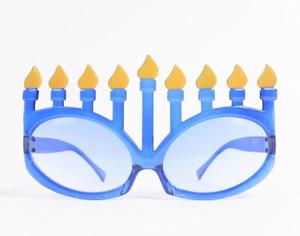
menorah glassesThis week's blog contains my Channuka gift to you.

It comes wrapped between two questions for your table.

The first question is about gift-giving itself.

What do gifts have to do with Channuka?

I mean did you ever just stop and think: "What's the connection?" - ??

I used to think there was no connection, that Channuka gifts come from Xmas-envy.

I was wrong.

But rather than spill the beans, let's make this the first question for your table:

Why do so many people like to give gifts specifically during Channuka?

Now, as you surely know from our cool Channuka Countdown Timer, you're running out one of the few things in life that is truly irreplaceable: time.

I can't give you time.

But I can save you time.

Need a beautiful menorah? Click here.
How about candles? Try these.
How about pre-filled oil candles? These are great.
Dreidels? Look no further.
Chocolate coins? Thought of that too.
Kids books and activities? Got 'em.


(Please remember that using our links is an easy way to support JSL's mission as Amazon contributes about 5% of the purchase.)


Now that pretty much takes care of the physical side of Channuka.

How about the spiritual?

Where are you going to find a good transliteration of the Menorah bracha/blessing and Ma-oz Tsur song?

How about the song "I Have a Little Dreidel" in English and Yiddish with guitar chords?

How about a Podcast of my class, "Channuka and the Secret of the 36"?

Help JSL with an end-of-the-year tax-deductible donation and receive all of these as our thank-you gift.

Let's now wrap up this email with the second question for your table:

What's the ideal Channuka gift?


Shabbat Shalom and Happy Hannuka

PS - Still looking for a meaningful and useful gift for a teacher in your life? How about a parent who is struggling to inspire her children? Send them a subscription to the Amazing Nature for Teachers program @ AmazingNature4Teachers.com.

PPS - A fancy Chicago chocolatier is now producing hand-crafted gelt for grownups.

PPPS - In case you were wondering, the Menorah Glasses really do exist. As does the dreidel headbopper.


PPPPS -


Like this blog? How about putting your mouse where your mouth is: Like it, tweet it, or just forward it to someone who might enjoy it.

Thursday, November 28, 2013

The Channuka-Thanksgiving Myth

The purpose of this blog is to help you turn Thanksgiving into thanksgiving. Please share at the table and forward to everyone you know.... If you are still scrambling for Channuka gifts, you might look at our suggestions.


Stephen-Colbert-Report-Thanksgiving-HannukahQuestion for your table:

Why so much to-do about the intersection of Channuka and Thanksgiving today?

One email going around claims that "it has never happened before...and it will never happen again."


Others have claimed that there is no connection between Channuka and Thanksgiving.


In fact, they're both wrong.

As always, we will try to dispel myths and to tell you the full truth.

First, Thanksgiving wasn't always in November.

The first official American Thanksgiving was celebrated in December.

It was proclaimed by President Henry Laurens as his first official act as President of the Continental Congress of the United States of America.

George Washington was the first president under the Constitution, and he too issued a Thanksgiving Proclamation, but he wasn't the first (unlike this Wikipedia article).

Washington began his first term in 1789. Who do you think ran the country before that?

When the United States of America was born on July 4, 1776, John Hancock was at the helm. Then Laurens began his term on November 1, 1777.

He was a veteran, a farmer and a wealthy slave trader. He was also a free-thinking .

His first act as President was to declare a national Day of Thanksgiving on December 18, 1777.

According to the Proclamation, Thanksgiving should be a solemn day: "Servile labor and such recreations (although at other times innocent) may be unbecoming the purpose of this appointment [and should] be omitted on so solemn an occasion.”

(Presidents like to issue proclamations, by the way. Back then, in times of war, they even declared days of "humiliation, fasting and prayer".)

Laurens was succeed by John Jay, Samuel Huntington, Thomas McKean and finally Maryland's own John Hanson.

200px-John_Hanson_Portrait_1770 Hanson proclaimed that December 13, 1781 should be a national Day of Thanksgiving.

Guess what, that was the 2nd night of Channuka.

Happened again in the 1800s.

And to those who say it won't happen again for 70,000 years?

That depends - will Thanksgiving always be on the 4th Thursday in November? I doubt it.

But there is a much more interesting connection between Channuka and Thanksgiving than merely the date.


On Channuka, there is a custom of saying Hallel - the song of praise, which emphasizes the Hebrew word HODU.

To understand this deeply, try to imagine you are the first European to visit America.

Of course, you think you're in India.

It's an amazing New World! Strange people, strange foliage, strange animals.

And you see this gobbly chicken-like bird.

What do you call it?

Remember, you think you're in India, so you naturally call it "Indian chicken."

Are you with me so far?

So French explorers dubbed this new bird poulet d'Inde (Indian chicken) later shortened to dinde (pronounced "dand").

English settlers called the bird turkey because they thought it looked like another type of fowl that was imported from Turkey.

Jewish explorers sided with the French and called it tarnegol hodu which means "hindu chicken" and was later shortened it to simply hodu.

What's interesting for us is that the Hebrew word HODU is prominent in Hallel (mentioned above) because it also happens to mean "give thanks."

So from a Jewish perspective, you could say it's very appropriate to eat hodu on "hodu"-day.

But does that make Thanksgiving Jewish?

Look up the word "Jewish".

It means from the tribe of Judah.

Look up the word Judah.

It means, you guessed it: "thankful".

Therefore, being "Jewish" means cultivating a thanksgiving mindset every single day.

(I can hear it already - "Gee honey, I'm watching so much football because the rabbi told me to....)

Wait a second (I know you're thinking this)... Did he say "Jewish explorers"??

He did.

In fact - and this is a juicy one for your table - when Columbus famously came to the New World, who among his crew was the very first to spot land? Obviously, it must have been the man working in the upper mast on the front ship, right? And we know who this was: Roderigo De Triana, a Jewish sailor.

So for your table: How Jewish is Thanksgiving?

One last thought:

Jews on this side of the pond should consider ourselves lucky to live in a country that has a national day of Thanksgiving.

Think about it.

I will just leave you with one question for your table and my own answer.

If Channuka and Thanksgiving are both about thanksgiving, what's the difference?

It might be interesting to pose that to the table before reading them the rabbi's answer.

The rabbi says:

Thanksgiving has traditionally - since the Pilgrims - been about gratitude for our material blessings.

Channuka has always been about gratitude for our spiritual blessings, and our membership in a Tribe that takes a lickin' and keeps on tickin'. Then and now.


Happy Hannuka

Happy Thanksgiving

Shabbat Shalom

PS - Audio class on cultivating gratitude by the inimitable R. Rietti

PPS - Some of the above is quoted from the Amazing Jewish Fact-a-Day Calendar for iPhone, iPad, Android, Kindle etc. Isn't it about time you forwarded a nugget like this to all your friends?

iPhone/iPad app

Android (Google) app

Android/Kindle (Amazon) version


Friday, November 22, 2013

Embarrassing

Hannuka is next week.... here is the web's best list of the best Hannuka books, toys and gifts.


 embarrassed-300x300This week: a question for your table and an anti-question.

The question: What would you do if you realized that you had harmed someone?

(I hope the answers you get will be at the very least "I'd apologize.")

Now for the anti-question (meaning - don't answer it out loud!):

Have you ever embarrassed someone?

How about in public?The rabbis say that embarrassing someone in public is just about the worst thing you could do to someone. (Talmud Baba Metzia 59a).

Worse than murder!

It's so bad we should rather die a painful death than to do it!

It's so bad that if one does it and fails to get the victim's forgiveness, one "loses one's share in the World to Come" (ibid.).

Oy.

Here's a true story told in the Art of Amazement (p. 174):

Rabbi Moshe Feinstein, one of the greatest of twentieth century sages, always attracted a crowd when he went outside his home in New York. Once, a particularly eager student rushed to help the Rav get into his car, and in doing so, slammed the door shut on Rav Moshe’s finger. Yet the Rav did not cry out—indeed, he did not react at all and the other occupants of the car did not realize what had happened until the car had driven several blocks and Rav Moshe opened the door to relieve his finger.

While a doctor treated the wound, an astonished student asked how it could be that Rav Moshe uttered no expression
of pain when the door was closed on his hand. Rav Moshe was reportedly taken aback with the question: “What? And embarrass that young man in public? God forbid!”


Can you name some common situations when this happens?

How about:
  • Embarrassing a child in front of other children
  • Embarrassing a spouse in front of children
  • A teacher embarrassing a student in class
  • Teasing someone when it ends up embarrassing them
So what's the remedy?

As you know by now, Channuka begins next week. If you'd like to hear one of my two Channuka classes (mp3 download), shoot me an email.

But I'd like to leave you with a pre-Channuka challenge. See if you can go 8 days in a row without embarrassing anyone.

It sounds easy, but it ain't.

Anyone who succeeds, let me know the dates you were embarrassment-free (honor system) and I'll send you a special Channuka present.

(Please share this challenge with any kids in your life so I can send them a special Hannuka present too!)


Shabbat Shalom and Happy Channuka


"The mouth is like a loaded gun. Before one shoots, he can aim the gun harmlessly at a target. However, once he fires the bullet, he loses control, and the bullet will hit anything in its path." - Rabbi Moshe Aharon Stern

PS - Please follow me on Twitter, or tweet this week's blog, or like it, or just send it to someone you love...


Friday, December 14, 2012

Beautiful People

The purpose of this email is to help you turn your dinner table into a Shabbat table. Please print & share.

Trivia question for your Shabbat table:

What's the darkest day of the year?

Winter solstice, no?

No!!! Sorry Charlie, buzzer.

I didn't ask what's the shortest day of the year.

I asked what's the darkest day of the year.

The answer is: the new moon closest to the winter solstice.

For if the winter solstice happens to coincide with a bright moon, it will be a brighter 24 hour period than the most recent new moon.

The new moon happens to be today.

And every year, Channuka, the festival of lights, happens exactly at this darkest time. That's why it jumps around a lot, following the moon and not the sun.

In the darkest time of the year, light a candle.

In a world that cares about who won the ball game, be the rare one who can enjoy the game without losing a minute of sleep over it.

In a world rewarding beauty and honoring net-worth, be the one-in-a-million who honors kindness, hard work and wisdom.

In a world spending $160 billion on "hope in a jar", be the crazy one who gives 20 percent to charity.

In a world chasing randomness, be the leader who projects faithfulness.

In a world directed by gossip, be the oddball who runs from lashon hara (even the really juicy stuff,)

In a world of science-worship, get in on the broader and deeper meaning of "Torah" without sacrificing the truth or joy of nature.

If you are already a candle in the darkness, then you are one of the truly beautiful people.

And this song is for you (or this version, or this one).


Shabbat Shalom & Happy Hannuka

Friday, December 07, 2012

Thanks for Saying Thanks!

The purpose of this blog is to help you turn Friday night chat into conversation. Please print & share.

If you have not seen the Guitar Dreidel, the Texas Dreidel, the 101 Things to Do for Channuka, or the stylish Rambam Menorah, your Channuka is certainly not going to be complete!


You might also like to know that Apple now allows you to gift an app — such as the Amazing Jewish Fact-a-Day Calendar. It's an easy system, you pay the 99¢ and Apple either sends the recipient an email for you or gives you a digital card that you can either print or email yourself. For all the iphone/ipad/ipod users in your network of family and friends, wouldn't some of them enjoy an app that puts a nugget of amazing Jewish wisdom on their screen every day? Can you think of a better last-minute Channuka gift? 


Tonight's questions for your Shabbat table are inspired by leadership teacher Peter Bregman.

Bregman thinks that every personal email deserves a reply.

His full argument will take you about a minute or two to read, here on the Harvard Business Review.

Bregman challenges us:
Consider what saying "thank you" represents.
On a basic level, it communicates that you received the email. While there's a lot of advice that discourages writing "thank you" emails because they contribute to email overload, I disagree. I answer every real email I receive because I want to avoid the recipient's "Did Peter get my email and what's he thinking?" angst. It takes three seconds to respond "thanks" and it completes the transaction initiated by the sender.
Ultimately, saying thanks for even a brief helpful email is a moral duty: "Acknowledging each other is our basic responsibility as human beings living in community with other human beings."

Question #1 for your table: Do you agree?

(perhaps I'll know when I see what kind of replies, if any, I receive to this email ;-)

Question #2: If every act of kindness needs a thank you, and saying thank you is an act of kindness, where does it end?

Question #3: Where off-line might this be a point well taken?


Shabbat Shalom and Happy Hannuka.

(Yes, that's right, I spelt it with a simple "H" even though when I pronounce it that way it drives my kids batty.)

PS - we've added two short Hannuka videos that will make you smile (I hope), on both home pages:

http://jsli.org
http://bestjewishkidsbooks.com

(if you need help downloading these videos, send me an email and I'll teach you the trick)

Friday, December 16, 2011

Distracted Living

I have a confession to make.

Please forgive me in advance for shocking you.

I don't have a smart phone. We don't even have high-speed internet at home. Just a slow dial-up connection to check email.

My car has a cassette player and I'm still going through the hundreds of Torah tapes in our collection. My commute is so short that I usually only get 5 minutes or so at a time, and I love that it always saves the place I was at before, even days or months later.

Throw in the lack of a TV and I guess most people think we're living in the stone age.

So the other day my wife suggested that she could be so much more.... productive if she had a smart phone. She could look stuff up. She could shop online.

"You don't know what it would do to you," I said. "It will take over your life."

She didn't believe me.


I realize that most of the people reading this blog think it's normal for kids to have their own phones, not to mention free access to the Internet, TV etc. So what benefit is there to fighting the tide?

Well, the answer is, if you have kids, you have exactly one chance to raise them. No, they don't have to have a TV in their room. No, they don't have to be on Facebook during homework time. Be their parent.

If you don't have kids, but know someone who could benefit from this message, please forward it to them.

If you have a husband, consider this: many, many men have told me that it annoys them deeply when they come home and their wife is on the smart phone or dumb phone and hardly notices that he's home. When you see your husband for the first time at the beginning and end of the day, don't be on the phone. If you're in the middle of a conversation with Barrack H. Obama, you say, "Excuse me Mr. President, but my husband just came in, gotta go." Let your husband know that he is more important to you than anyone else in the world. Think about it.

(PS - guys, this goes both ways)

If you are a parent, don't make your children feel that they have to compete with your phone. Don't even bother answering it between 5-8 pm. That's what answering machines are for!

Be your spouse's spouse and your child's parent and let them know that they are more important to you than everyone else in the world. Actions speak louder than words.

Think about it.

Question for your table: Are you so addicted to your device that the above sounds preposterous to you? Here's a litmus test: for 24 hours, from sunset tonight until sunset on Saturday, don't check your email. Not even a peek.

Can you do it? Prove it.


Shabbat Shalom and Happy Hannuka


PS - Another way to treat the "distracted living" problem is Hannuka. Here are a couple classes you can download to help your family's Hannuka be a spiritual experience and not lost in the materialism of the "holiday season":
Hannuka of Presence

Hannuka and the Secret of the 36

 We have added a bunch of great Hannuka stuff (books, menorahs, candles, toys) to bestjewishkidsbooks.com - if you use these links for your shopping, it helps support JSL's nonprofit educational mission.

Further reading:
http://www.cnn.com/2011/LIVING/06/14/phone.addicted.parent/
http://news.stanford.edu/news/2009/august24/multitask-research-study-082409.html

Friday, December 03, 2010

Channuka Fire

As you read this, the worst forest fire in modern times is raging in the Carmel Mountains in the Land of Israel. 40 people have been killed and thousands evacuated from their homes in Haifa. Today's Table Talk is dedicated to the firefighters from Israel and neighboring countries who are grappling with this epic blaze, and to everyone living there who haven't had a drop of rain since the spring.

+++++++

I walk into the house on the first night of Channuka and declare joyfully, "Happy Hannuka". Yosephi (1st grade) looks up from his coloring project and says, "Hannuka, what's Hannuka? I've never heard of Hannuka. It's Channuka!"

Sounds like the makings for a dispute....

Question for your table: How many famous disputants can you name from history?

Let's see, there's

* Socrates and Protagoras
* Lincoln and Douglas
* Bert and Ernie
* Siskel and Ebert

Hmmm.... is this a decline or is it just me?

In the Talmud, the most famous pair are Hillel and Shammai, and their academies, "Beit Hillel" and "Beit Shammai".

Among all of their disagreements, the most colorful Hillel-Shammai dispute is about Channuka. Beit Hillel (who wins the argument most of the time) state that the Channuka menorah should be lit with one additional candle each night, until on the last night there are 8 candles. Sound familiar?

Can you guess what Beit Shammai say?

Start with 8 candles on the first night, then 7 and so on until you have only one on the last night.

Question #2 -
What are the advantages to going like Beit Shammai? What are the advantages to following Beith Hillel?

This video from Charlie Harary in my opinion is a Beit-Shammai video:


While this video from yours, truly is a Beit Hillel video:


Happy Hannuka and Shabbat Shalom


PS - worldjewishdaily.com has featured my iphone app on the home page - check it out here (you can also read all about the fire there).


PPS - Need a last-minute holiday gift? My iPhone/iPad app can now be gifted - click here: The Amazing Jewish Fact-a-Day Calendar.

Friday, November 19, 2010

Picture of a Fall

Dedicated to my mom, Chaya bas Yehudis, a speedy and complete recovery from her fall. Go figure - the one chapter in the entire Torah when someone is wounded on their hip and walks with a limp, and that's when it happens to her. Fortunately, like Jacob after wresting the angel, she is only temporarily lame, and on the mend.

Did you ever see a painting that was so compelling, you just wanted to step into it?

Once-friendly once-green giants saying farewell,
their grande finale competition
flamingly yellow, pumpkinly orange, shockingly red
their paint splatters crunch
in a proverbial way
and crisp oxygen revives your crusty brain
but the the gloves, for the moment, lie in the winter box.

Here's the question for your table - What's more beautiful, spring or fall?

(Sorry.... just trying to distract you from being driven mad by your inlaws....;-) Send in your favorite fall impressions and appreciations, I'll post them next week and we'll make a random drawing of all submissions for a special Hannuka present.)

Speaking of Hannuka....

If you have a local Jewish bookstore or shop, PLEASE patronize it. But if you don't, use these links to get the goods:

Dairy Chocolate Gelt - http://tinyurl.com/Dairy-Chocolate-Gelt
Parve Chocolate Gelt - http://tinyurl.com/Parve-Chocolate-Gelt
Big Adult Channuka book - http://tinyurl.com/Big-Adult-Channuka-Book
Book for toddlers - http://tinyurl.com/CHA-Book-for-Toddlers
Book for kids - http://tinyurl.com/CH-Book-for-Kids
Book for adults - http://tinyurl.com/CH-Book-for-Adults
Stickers - http://tinyurl.com/CH-stickers
100 dreidels - http://tinyurl.com/100-Dreidels
Silly Bandz - http://tinyurl.com/CH-Silly-Bandz
Noah’s Ark Menorah - http://tinyurl.com/Noah-s-Ark-Menorah
Safe-T Oil Menorah - http://tinyurl.com/Safe-T-Oil-Menorah
Sterling Menorah - http://tinyurl.com/Sterling-Menorah
Artscroll Channuka Page - http://tinyurl.com/Artscroll-Channuka-page
Channuka Blessings Puzzle - http://tinyurl.com/hannukablessingspuzzle

Here is a link to my previous missive on the Jewish take on Thanksgiving.


Happy Thanksgiving, Chappy Channuka and.....

Shabbat Shalom

PS, have you seen my amazing new iPhone/iPad app? (it can now be given as a gift, even if you don't have an iphone)

PPS - Have long been a fan of Dennis Prager; here's a good one from him:

Friday, December 11, 2009

Sorry, Charlie

In honor of the birthday of Daniel R., a friend indeed.

What is the hardest phrase to say in the English language?

"I'm wrong."

What's the second hardest phrase to say in the English language?

"I'm sorry."

Question 1 - Why is it so hard to say these two phrases?
Question 2 - How important is it to say these two phrases?
Question 3 - How can a person become better at saying these two phrases?


Shabbat Shalom and Happy Hannuka!


“I am right, you are not. But for your freedom to be wrong I will fight to death.” - Churchill

Friday, December 26, 2008

Hannuka for the Rest of Us

Guess what? I just made my 4th foray into the youtube world. Please check it out here (and leave a rating!).

In case you are not able to view the vid, here’s a rough transcript:


Take a look at this picture:
Is this what Hannuka has become?

How do you have a Hannuka that is more in tune with the ancient, pre-Xmas wisdom of the holiday?

The secret is on the last night, the eighth night.

This year, on Sunday night, get yourself a menorah and those eight candles lit.

While they are burning in the darkness of the night, take a few minutes to meditate on the candles.

What the 8 candles represent is that totally spiritual person that is inside of you trying to get out.

On Sunday night, meditate on those candles and find that person inside of you who wants to have a totally meaningful life. That person inside of you who wants to change the world.

Then you can enter 2009 inspired with the simplicity and joy of a child, and the wisdom of the ancients.

Have a Happy Hannuka!

and Shabbat Shalom.


PS – here is an inspiring article on Hannuka in a concentration camp.
- here are some jazzy new Hannuka songs.
- feeling the winter blues? Here’s Tom Lehrer to bring you some Hannuka sunshine:


Tis the season.... If you enjoy this weekly message, please support it. For as little 25¢ a week, you can become a partner in our educational mission. Make your tax-deductible contribution to the address below or go online to the website below and click on the “donate” button.

Friday, December 19, 2008

Genuinity

In memory of Yeudel ben Avraham, z'l, on his first yahrzeit. “He was a quiet person but he did not live his life in a quiet way.”
To dedicate a future Table Talk, send an email.

+ + + national Hannuka class via conference call – see below for details + + +


3 questions for your table, followed by some Hannuka fun.

I don’t know about you, but I’m flabbergasted.

Say what you want about human nature. There are crooks out there. But this is staggering.

Isn’t it?

No, it’s not surprising that he tried to pull of the biggest heist in history. It’s not even surprising that he ripped off friends and family, and wonderful charitable organizations (although it is extremely upsetting.)

That’s the kind of thing they make movies about.

What is staggering is that he thought he could get away with it.

Or did he?

Question 1 for your table – Why do you think Madoff did it?

Question 2 - Did you ever know someone who turned out to be not at all how they portrayed themselves?

Question 3 – Did you ever know someone who turned out much better than you had thought they were?


+ + + +


You probably heard by now that Hannuka starts Sunday night.

My class, “The Jewish Xmas?” is available for a free streaming or download at torahmedia.com – the goal is to make Hannuka an adult holiday again. Please let me know what you think!

There will be a phone-in class Sunday night on “The Hannuka Secret to Happiness”.
If there is sufficient demand, we can run a separate session for each coast; otherwise, it will be 9:00 Eastern / 6 pm Western.

Email me if you’d like to join.


This animated menorah is...well, for kids.
This animated shorrer is...well.... (it’s Madoff in an interview from the past talking about the problem of too much regulation)


Shabbat Shalom

Friday, December 05, 2008

Happy Dreams

Dedicated to the memory of all the Mumbai victims.
To dedicate a future Table Talk, send an email.

Please print this message for your Friday night dinner table.


Happy Dreams

What’s the secret to happiness?

Would you like me to tell you?

I mean the real secret, not some paltry aphorism.

And not some rabbi’s opinion.

The real, bona fide secret.

If you’re interested, how interested are you?

We show our interest in things by assigning them value.

How much would you be willing to pay for the real secret of happiness?

Would you be willing to pay $1? (I hope so!)

How about $100? (Probably, right?)

How about $1,000? (“Wait a minute, that’s real money!”)

What if we throw in a money-back guarantee – if you try the secret and it doesn’t work, you lose nothing. But if works, you have to pay. How much would you be willing to spend?

We’re talking real happiness here, the real McCoy.

The happiness itself is free, but the secret is going to cost you. Before I tell it to you, I want to know how much you value it. Really.

If you are interested in learning the secret, send me your bid by December 19, to secret (at) jsli.org.

The 20 highest bidders will be invited to join an invitation-only conference-call seminar on the first night of Hannuka: “Hannuka and the Secret of the Darkness”.

All bids that meet the reserve will receive a recording of last year’s Hannuka class: “Hannuka and the Secret of the 36”.

(PS – This is a silent Chinese auction - we'll let you know if you are outbid. We’re talking about a charitable, tax-deductible donation to a worthy educational cause).

You say you value happiness – put your money where your mouth is.

In the meantime, here’s a thought and a question for your table:

We all hope for happier times. Some of us even dream of happier times. What is your happiest dream?


Shabbat Shalom


To help rebuild the Chabad House of Mumbai:
https://www.mychabad.org/templates/relief/donate.asp

Someone sent me this inspiring post-Mumbai vid:


Speaking schedule:
December 25 – Baltimore (Etz Chaim) - “A Spiritual Interpretation of the Meltdown”
January 6-8 - Los Angeles – details TBA