Showing posts with label Jewish thanksgiving. Show all posts

Thursday, November 26, 2020

How Do You Do Hodu?

 The purpose of this blog is to make sure there's hodu at every table... Please share...

Happy birthday shout-out to Teri in Portland!
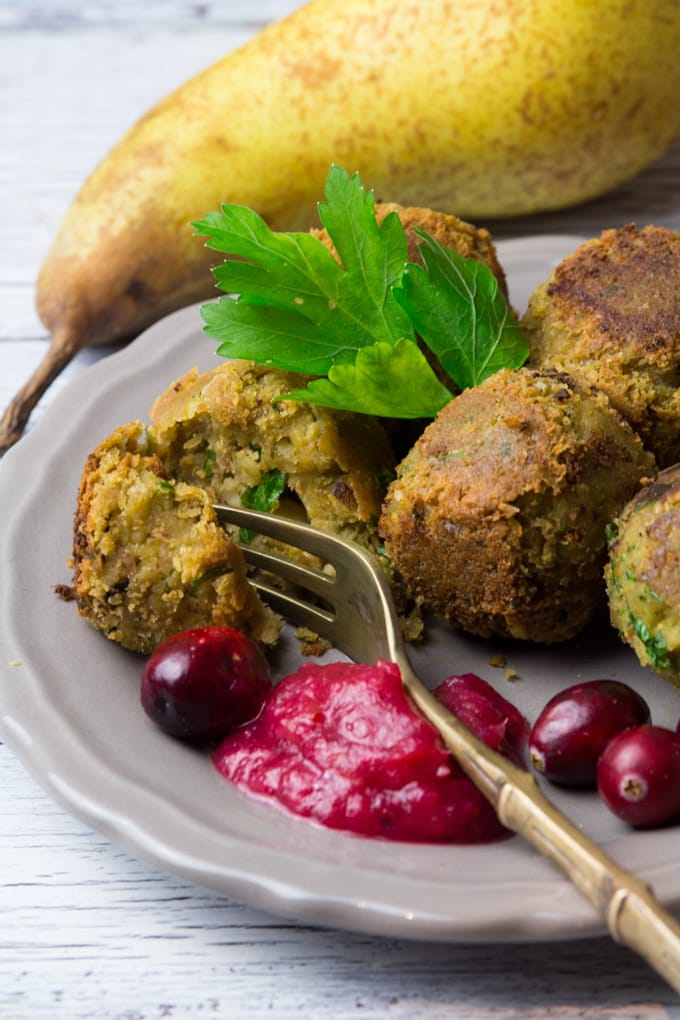
Festive-Vegan-Falafel-with-Cranberry-Pear-DipQuestion for your Thanksgiving table – someone asked me today – "Do you think the tenor of Thanksgiving has changed, now that Columbus has become so controversial?"

As long-term readers of this email know, this is that special week in November when we pull out, dust off, revamp and update our annual Hodu message.


Here are a few questions to stump everyone at the table.

Try this one first: 
Why turkey?

Serious question: Why do Americans eat turkey on Thanksgiving?

(I.e., like it's their religious duty, like matzah on Pesach.)


If anyone says, "They ate turkey so we have to eat turkey," you can politely let them know they are wrong on 2 accounts.

First of all, would it really be so bad to have a Thanksgiving pizza? Or Thanksgiving hamburgers? Or a red beans and rice Thanksgiving? How about a Chinese Thanksgiving? Curry Thanksgiving, anyone? Do vegetarians do Thanksgiving? 

(I know I'm not the first to ask this question, but it seems far from resolved.)
Second, they probably didn't eat much turkey.

At that original Thanksgiving in 1621, they apparently ate mostly venison.
I know, shocking, right?

Let's go back in time.

Imagine you are on the boat with Columbus.

(Maybe you're even a Jewish refugee from the Spanish Inquisition.)

PS - If you'd like to know about the Jews who sailed with Columbus, send me an email.

Of course, you and your geographically-challenged buddies think you're in Asia.

It's a strange world! Strange people, fauna and flora.

And you see this funky chicken.

The Wampanoag Indians call it neyhom.

What do you, O Spanish sailor, call it?

Remember, it looks vaguely like a chicken and you think you're in India, so naturally you call it "Indian chicken."

Are you with me so far?

French explorers agree that it looks like a chicken and they call poulet d'Inde (Indian chicken), later shortened to dinde (pronounced "dand").

English settlers think it looks more like a Turkey pheasant than a chicken, so they call the bird turkey.

Jewish explorers side with the French and call it tarnegol hodu — "Hindu chicken" — later shortened to hodu.

What's interesting for us is that the Hebrew word HODU also just happens to mean "give thanks" (in the imperative mood for all the grammarphiles out there).


So back to our main question for your table: What food should you eat on Hodu Day?

(Hodu, of course.)

Now try asking somebody Jewish at the table this stumper:

You're Jewish, right? Can you explain what "Jewish" means?

Forget the religious or cultural meaning; we want to know the etymology of "Jewish".

It means something like, "a state of being thankful". (Happens to be from this week's Parsha by the way.)

Ergo, if you're living up to the name "Jewish" then you are....

....living in a state of being thankful.

Let that sink in before asking the next question: How often?

(Once a year? Once a month? Once a week? Once a day?)

That could be a lot of hodu to stuff yourself with.

Final question for the table: How do you do hodu?

Happy Hodu-Day and

(which for some is the same as saying...)


Shabbat Shalom


PPS - When you shop using Amazon Smile, you can designate Jewish Spiritual Literacy as your charity, and they will gift a percentage of your purchase to JSLI - for the same cost to you.

To learn about other JSL projects, click here.

Enjoyed this Table Talk? Vote with your fingers!  Like ittweet it, forward it....


Thursday, November 23, 2017

5 Thanksgiving Questions

The purpose of this BLOG is to appreciate the Friday night dinner table. Please print and share (+ like it, tweet it, forward).
Thank-you-word-cloudHere are a five questions for your thanksgiving table:

Q1. Why is it that every year, someone asks me, "Do you guys do Thanksgiving?"

What I think they mean is, "Do you guys eat turkey on the 4th Thursday of November?"

Well no, we don't. But just saying "No," sounds sour, even dour — not to do Thanksgiving? That's more austere than not doing the 4th of July.

I don't want to be a spoil-sport, so I asnwer the question that I wish they were asking: "Do you guys ever pause as a family to eat a special meal and talk about what you're thankful for?"

And the truthful answer to that is of course, "Yes, every Friday night!"

Q2. Is there any way to answer that without (a) giving a speech and (b) sounding smart-alecky (c) just saying "no"?

Because I actually mean it. We really do eat a special meal every Friday night and talk about (among other things) what we're grateful for.

Oops, I said "grateful" not "thankful".

Q3 - Is there a difference?

Q4 - Why turkey? They ate turkey so we have to eat turkey?

Would it be so bad to have a Thanksgiving pizza? Or Thanksgiving hamburgers? Or a red beans and rice Thanksgiving? How about a Chinese Thanksgiving? Or in the spirit of the times, an African Thanksgiving?

This is a serious question: Why do Americans eat turkey on Thanksgiving like Jews eating matzah on Pesach?

The answer goes like this....

First of all, they probably didn't eat much turkey. At that original Thanksgiving in 1621, they apparently ate mostly venison.

Imagine you are on the boat with Columbus.

(Maybe you're even a Jewish refugee
from the Spanish Inquisition.)

Of course, you and all your geographically-challenged buddies think you're in Asia.

It's a strange world! Strange people, fauna and flora.

And you see this funky chicken.

The Wampanoag Indians call it neyhom.


What do you, O Spanish sailor, call it?

Remember, it looks vaguely like a chicken and you think you're in India, so you call it "Indian chicken."

Are you with me so far?

French explorers agree that it looks like a chicken and they call poulet d'Inde (Indian chicken), later shortened to dinde (pronounced "dand").

English settlers think it looks more like a Turkey pheasant than a chicken, so they call the bird turkey.

Jewish explorers side with the French and call it tarnegol hodu — "Hindu chicken" — later shortened to hodu.

What's interesting for us is that the Hebrew word HODU also just happens to mean "give thanks."

So back to our question: What food should you eat on hodu-day? Hodu, of course.

Now ask somebody Jewish: You're Jewish? Can you explain what "Jewish" means?

I don't mean the religious or cultural meaning; I mean the etymological meaning of "Jewish".

Look it up. It means "a state of being thankful".

If you're living up to the name "Jewish" then you are living in a state of being thankful.

I assume that means every day. Make that every moment.

That's a lot of hodu to stuff yourself with.

Question for the table: How do you do it? Every day, every moment?

Say the rabbis: every moment is too hard, but once a day is not enough.

Try this compromise: try to pause 10 times a
day and say, "Wow, thank you."

Q5 - Could it be that simple?


Shabbat Shalom


PS - I'm sure you're still counting down the days to Channuka.... Have you seen our recommended books and toys for kids of all ages?
PPS - Yes, once again this week this message contains a new easter egg....


Enjoyed this Table Talk? Vote with your fingers! Like it, tweet it, forward it....


Friday, November 25, 2016

Proof That You Do Have a Soul (and the Real Reason to Eat Turkey)

The goal of this blog is a thanksgiving weekend. Please share.

Waking upThe question to start off your table talk tonight:

Why does it have to be turkey?

I mean really —

They ate turkey so we have to eat turkey?

Would it be so bad to have a Thanksgiving pizza? Or Thanksgiving hamburgers? Or a red beans and rice Thanksgiving?

Why do Americans eat turkey like Jews eating matzah on Pesach?

Imagine you are on the boat with Columbus.

(Maybe you're even a Jewish refugee
from the Spanish Inquisition.)

Of course, you and all your geographically-challenged buddies think you're in Asia.

It's a strange world! The people, the fauna and flora.

And you see this funky chicken. What do you call it?

Remember, you think you're in the East Indies, so you call it "Indian chicken."

Are you with me so far?

French explorers agree that it looks like a chicken and they call poulet d'Inde (Indian chicken), later shortened to dinde (pronounced "dand").

English settlers think it looks more like a Turkey pheasant than a chicken, so they call the bird turkey.

Jewish explorers side with the French and call it tarnegol hodu — "Hindu chicken" — later shortened to hodu.

What's interesting for us is that the Hebrew word HODU also just happens to mean "give thanks."

So back to our question: What food should you eat on hodu-day? Hodu, of course.

Now ask somebody Jewish: You're Jewish? Can you explain what "Jewish" means?

I don't mean the religious or cultural meaning; I mean the etymological meaning of "Jewish".

Look it up. It means "a state of being thankful".

If you're living up to the name "Jewish" then you are living in a state of being thankful.

I assume that means every day. Make that every moment.

That's a lot of hodu.

Question for the table: How do you do it?

Say the rabbis: every moment is too hard, but once a day is not enough. Try this compromise: try to pause 100 times a day to say thank you.

Does that sound like trying to do 100 push-ups? A great idea, but too much effort?

+ + + +


The solution is the promised proof that you have a soul.

Remember the discussion last week about having a soul v. being a soul?

This week, counter-point:

Take a look at the daily siddur.

Most of it is various expressions of gratitude.

The very first line of the siddur begins like this:

"I'm grateful before you O Living King, for returning my soul to me..."

What can this possibly mean, if soul is what I am?

It would make more sense to say, "I'm grateful for your returning me to my body."

The confusion lies in our definition of "me".

Who am I who is speaking? Who am I who is thinking? Who am I who is experiencing?

I am not a soul. Nor am I a body.

I am a soul-body fusion. The bodily part of me is real and matters. It doesn't need the soul part of me to live, it can live as animal. It can live unconsciously.

But when consciousness returns, say in the morning, that kind of living is so much greater than being asleep.

And when consciousness is elevated, that kind of living is so much greater than being "asleep".

And the simplest way to elevate consciousness is to pause throughout your day and say, "Wow, thank you."

Or maybe it's not so simple. What do you think?


Shabbat Shalom


PS - I'm sure you're still counting down the days to Channuka.... Have you seen our recommended books and toys for kids of all ages?
PPS - Yes, once again this week this message contains a new easter egg....
When you forgive, you in no way change the past - but you sure do change the future.
Read more at: http://www.brainyquote.com/quotes/topics/topic_forgiveness.html
When you forgive, you in no way change the past - but you sure do change the future.
Read more at: http://www.brainyquote.com/quotes/topics/topic_forgivene

dfdfd

 
Like this message? How about putting your gelt where your gab is: Like it, tweet it, or just forward it.

Thursday, November 27, 2014

The Art of the Silent Thank-You

thank-youLongterm readers of this email/blog know that I have written almost every year about the numerous Jewish connections to Thanksgiving.

Brush up on the connection to Columbus and turkey with my 2012 message.

(
Last year T'giving happened to occur on Channuka so I wrote "The Channuka-Thanksgiving Myth".)

For this year, let's begin with this question for your table:

Question 1: What is the etymology of "Jewish"?


Answer: "Jewish" comes from "Judah" which comes from "Yehuda" which means "be thankful".

The essence of Jewishness is thankfulness.

Every day.

Isn't it wonderful that there is a country — not just any country, but the world's richest, most cuturally influential country and moreover home to half the Jewish People — that has made a national holiday of being thankful?

I'm thankful for that, how about you?


Question #2 for the table: How can you show gratitude to someone without saying or writing a single word?

(Hint - refer to the graphic above!)


Happy Thanksgiving and

Shabbat Shalom


PS - Have you thanked your children's current or past teachers lately? Show your gratitude by sending them a subscription to the Amazing Nature for Teachers program - AmazingNature4Teachers.com. Or using our searchable index to find a meaningful Hannuka present for your favorite teachers - BestJewishKidsBooks.com includes a section for adults.

PPS - You will enjoy this extremely creative use of those leftover Thanksgiving vegetables:


Like this blog? How about putting your mouse where your mouth is: Like it, tweet it, or just forward it to someone who might enjoy it.

Thursday, November 28, 2013

The Channuka-Thanksgiving Myth

The purpose of this blog is to help you turn Thanksgiving into thanksgiving. Please share at the table and forward to everyone you know.... If you are still scrambling for Channuka gifts, you might look at our suggestions.


Stephen-Colbert-Report-Thanksgiving-HannukahQuestion for your table:

Why so much to-do about the intersection of Channuka and Thanksgiving today?

One email going around claims that "it has never happened before...and it will never happen again."


Others have claimed that there is no connection between Channuka and Thanksgiving.


In fact, they're both wrong.

As always, we will try to dispel myths and to tell you the full truth.

First, Thanksgiving wasn't always in November.

The first official American Thanksgiving was celebrated in December.

It was proclaimed by President Henry Laurens as his first official act as President of the Continental Congress of the United States of America.

George Washington was the first president under the Constitution, and he too issued a Thanksgiving Proclamation, but he wasn't the first (unlike this Wikipedia article).

Washington began his first term in 1789. Who do you think ran the country before that?

When the United States of America was born on July 4, 1776, John Hancock was at the helm. Then Laurens began his term on November 1, 1777.

He was a veteran, a farmer and a wealthy slave trader. He was also a free-thinking .

His first act as President was to declare a national Day of Thanksgiving on December 18, 1777.

According to the Proclamation, Thanksgiving should be a solemn day: "Servile labor and such recreations (although at other times innocent) may be unbecoming the purpose of this appointment [and should] be omitted on so solemn an occasion.”

(Presidents like to issue proclamations, by the way. Back then, in times of war, they even declared days of "humiliation, fasting and prayer".)

Laurens was succeed by John Jay, Samuel Huntington, Thomas McKean and finally Maryland's own John Hanson.

200px-John_Hanson_Portrait_1770 Hanson proclaimed that December 13, 1781 should be a national Day of Thanksgiving.

Guess what, that was the 2nd night of Channuka.

Happened again in the 1800s.

And to those who say it won't happen again for 70,000 years?

That depends - will Thanksgiving always be on the 4th Thursday in November? I doubt it.

But there is a much more interesting connection between Channuka and Thanksgiving than merely the date.


On Channuka, there is a custom of saying Hallel - the song of praise, which emphasizes the Hebrew word HODU.

To understand this deeply, try to imagine you are the first European to visit America.

Of course, you think you're in India.

It's an amazing New World! Strange people, strange foliage, strange animals.

And you see this gobbly chicken-like bird.

What do you call it?

Remember, you think you're in India, so you naturally call it "Indian chicken."

Are you with me so far?

So French explorers dubbed this new bird poulet d'Inde (Indian chicken) later shortened to dinde (pronounced "dand").

English settlers called the bird turkey because they thought it looked like another type of fowl that was imported from Turkey.

Jewish explorers sided with the French and called it tarnegol hodu which means "hindu chicken" and was later shortened it to simply hodu.

What's interesting for us is that the Hebrew word HODU is prominent in Hallel (mentioned above) because it also happens to mean "give thanks."

So from a Jewish perspective, you could say it's very appropriate to eat hodu on "hodu"-day.

But does that make Thanksgiving Jewish?

Look up the word "Jewish".

It means from the tribe of Judah.

Look up the word Judah.

It means, you guessed it: "thankful".

Therefore, being "Jewish" means cultivating a thanksgiving mindset every single day.

(I can hear it already - "Gee honey, I'm watching so much football because the rabbi told me to....)

Wait a second (I know you're thinking this)... Did he say "Jewish explorers"??

He did.

In fact - and this is a juicy one for your table - when Columbus famously came to the New World, who among his crew was the very first to spot land? Obviously, it must have been the man working in the upper mast on the front ship, right? And we know who this was: Roderigo De Triana, a Jewish sailor.

So for your table: How Jewish is Thanksgiving?

One last thought:

Jews on this side of the pond should consider ourselves lucky to live in a country that has a national day of Thanksgiving.

Think about it.

I will just leave you with one question for your table and my own answer.

If Channuka and Thanksgiving are both about thanksgiving, what's the difference?

It might be interesting to pose that to the table before reading them the rabbi's answer.

The rabbi says:

Thanksgiving has traditionally - since the Pilgrims - been about gratitude for our material blessings.

Channuka has always been about gratitude for our spiritual blessings, and our membership in a Tribe that takes a lickin' and keeps on tickin'. Then and now.


Happy Hannuka

Happy Thanksgiving

Shabbat Shalom

PS - Audio class on cultivating gratitude by the inimitable R. Rietti

PPS - Some of the above is quoted from the Amazing Jewish Fact-a-Day Calendar for iPhone, iPad, Android, Kindle etc. Isn't it about time you forwarded a nugget like this to all your friends?

iPhone/iPad app

Android (Google) app

Android/Kindle (Amazon) version


Thursday, November 22, 2012

How Jewish is Thanksgiving?

Imagine you are the first European to visit America.

Of course, you think you're in India.

It's an amazing New World! Strange people, strange foliage, strange animals.

And you see this funky chicken. What do you call it?

Remember, you think you're in India, so you naturally call it "Indian chicken."

Are you with me so far?

So French explorers dubbed this new bird poulet d'Inde (Indian chicken) later shortened to dinde (pronounced "dand").

English settlers called the bird turkey because they thought it looked like another type of fowl that was imported from Turkey.

Jewish explorers sided with the French and called it tarnegol hodu which means "hindu chicken" and was later shortened it to simply hodu.

What's interesting for us is that the Hebrew word HODU also happens to mean "give thanks."

So from a Jewish perspective, you could say it's very appropriate to eat hodu on "hodu"-day.

But does that make Thanksgiving Jewish?

Look up the word "Jewish".

It means from the tribe of Judah.

Look up the word Judah.

It means, you guessed it: "thankful".

Therefore, being "Jewish" means cultivating a thanksgiving mindset every single day.

(I can hear it already - "Gee honey, I'm watching so much football because the rabbi told me to....)

Wait a second (I know you're thinking this)... Did he say "Jewish
explorers"??

I did.

In fact - and this is a juicy one for your table - when Columbus
famously came to the New World, who among his crew was the very first
to spot land? Obviously, it must have been the man working in the
upper mast on the front ship, right? And we know who this was:
Roderigo De Triana, a Jewish sailor.

So for your table: How Jewish is Thanksgiving? 
 
(Overheard from the mouth of a child, "They don't have a mitzvah to honor their parents, so they have mother's day and father's day, but for us every day is mother's day and father's day. They don't have a mitzvah to be thankful every day, so they have Thanksgiving, but for us every day is thanksgiving.)

Below: Two links on cultivating gratitude...

Article on gratitude by the renowned Rabbi Pliskin
Audio on gratitude by the inimitable Rabbi Rietti

This nugget of wisdom is a sample from the Amazing Jewish Fact-a-Day Calendar for iphone, ipad, Android or Kindle:

iPhone/iPad
Android (Google)
Android/Kindle (Amazon)


Happy Thanksgiving.