Showing posts with label Amalek. Show all posts

Friday, March 14, 2014

Who's to Blame? (one girl's view)

The goal of this blog is to turn the dinner table into a "mitzvah-table"... Please print and share.
In honor of our dear daughter Emuna (our California girl) who turned 12 this week and became a Bat Mitzvah.
Balloon1This week is a special Shabbat called “Shabbat Zachor”.

Zachor means “remember”.

Why is it called that? What does it mean?

“Remember Shabbat"? "Shabbat of Remember"?

The Torah says (Deut. 25:17-19):

Remember what Amalek did to you on the way, when you were going out of Egypt.

This is one of the 613 mitzvot — to remember what Amalek did to us.

What is it that we are remembering? Why is it important to remember this?

That they ran into you on the way and they cut you off, all the weak ones after you.
 

“After you” means stragglers. There was one group of people among the Bnai Yisrael (Children of Israel) who were straggling behind everyone else. What does it mean they were straggling?

There are two meanings for the word “straggling”. It can either mean physically straggling­, physically left behind.

Or, it can mean spiritually straggling – lacking in godliness or awareness of God (yirat Shamayim).

Here it makes sense that it means both, that part of Bnai Yisrael were both (a) lacking in Yiras Shamaim and (b) physically left behind.

Moreover, the Midrash says that the reason Amalek was able to attack them is because the protective clouds - the הכבוד ענני - weren’t protecting them. In fact, it says that the clouds “spit” them out. Why weren’t the clouds protecting them? The rest of that verse explains:

And you were tired, and wiped out, and he did not fear God.

Who is this HE that did not fear God? Is it talking about Amalek? Or the Bnai Yisrael...?

Rashi says “he” means Amalek because of the vowel under the “yud”, a “kumutz”, which makes it a verb “he did not fear Hashem”. We usually refer to Amalek as “he” and to Bnai Yisrael as “they”. To make it an adjective, you would have to change the “yud” to a “sh’va.”

Chizkuni says “he” means Bnai Yisrael. Bnai Yisrael didn’t have Yiras Shamaim so it was their fault that Amalek attacked.

On the one hand, Rashi makes sense. It was Amalek because after they saw Bnai Yisrael cross the סוף ים-the sea and all the nissim-miracles they saw Hashem do, they still didn’t fear Him?

But, on the other hand, Chizkuni makes sense. It was Bnai Yisrael, or at least some of Bnai Yisrael, because if they were straggling behind, then obviously they were “straggling” in Yiras Shamaim. They wouldn’t have been “spit out” if they weren’t lacking.

So it was the stragglers’ own fault that they were straggling. But was it their fault that Amalek attacked?

It seems to me that it was because of the rest of Bnai Yisrael that Amalek attacked, because they weren’t helping the straggling ones. They should have helped them, physically and spiritually.

We learn from here that if there is anyone who is straggling, we should reach out to any chance we get to raise them up and hopefully prevent Amalek from ever attacking us again.

This Shabbat – and every day – we should remember that it is our own responsibility to prevent Amalek from attacking, by making sure we take care of our own stragglers.

 - Emuna Seinfeld


Shabbat Shalom and Happy Purim!

PS - My purim class mp3
PPS - Enjoyed this email? Like it, tweet it, or just share it with someone who might enjoy it.




Thursday, March 08, 2012

If You Eat Hamantashen, are You a Cannibal?

Did you ever eat a hamantashen?

To remind you, here’s a mouthwatering photo:


Why are they shaped like that, and what does hamantashen mean, anyhow?

When I was a kid, we used to call them “Haman’s hat”. But that’s because we didn’t spreken Yiddish. Then I went to Israel where they call them “Oznay Haman” - Haman’s ears.

So I thought that tashen meant ears.

(Do Israelis imagine themselves as cannibals when they munch on their hamantashen?)

In fact, if you look in your Yiddish dictionary or talk to your Bubbe, you will learn that a tasch is a purse or bag.

There you have it. Hamantashen = Haman-bags.

Maybe they’re called “bags” because they are folded over with fruit inside, and “Haman” because they do look like Haman’s hat.

Or maybe he carried a triangular handbag.

Or maybe he did have triangular ears.

At this stage of my investigation I stumbled upon hard evidence that the ear theory is correct:


So what are supposed to do – defeat our enemies by mocking them? Sounds like a Monty Python line:

“We spit on you, you silly Persian. Your mother was a hamster and your father smelled of elderberries. Now go away or we will taunt you a second time!” (say with French accent)

Sometimes they make it so easy, by making themselves into clowns:

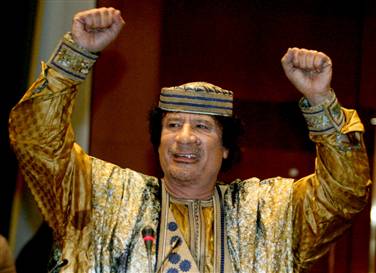
Gaddafi

Sometimes we should also laugh at ourselves.... Here's an oldy-but-goody:

A rabbi approaches a guest in the Shul and says, "I want to give you an Aliyah. What is your Hebrew name?"
 The man says "Sara bat Moshe."
 The rabbi says "No I need your name."
 The man repeats "It is Sara bat Moshe."
 The rabbi asks "How can that be your name?"
 The man answers "I've been having serious financial problems so everything is in my wife's name.”

Badum-dum.

Question for your table: How many rabbis does it take to change a lightbulb?

Remember, every Haman has his hour, and his downfall.

Happy Purim, and Shabbat Shalom

PS - Here's a recipe for low-call, no-gluten, no-cane-sugar hamantaschen.

PPS - If you don't have my iphone/android app, you're missing out on today's amazing Jewish fact! But you can read it online here.

PPPS - Here's a link to my newest Purim class: Click here.

In that class, I play a video. Here's the great video....


(Hebrew version)

Here's one more cute Purim-friendly video.

Friday, March 18, 2011

We're All Settlers

In memory of the Fogels.

In case you were distracted by civil war in Libya, the disasters in Japan and your own life in general, there was a great tragedy last Shabbat in Israel. An entire family, parents and small children, were murdered in their sleep.

The community of Itamar is of course a "settlement".

But what does that mean?

From the perspective of Hamas, every Israeli community, including Tel Aviv, is a "settlement".

From the perspective of every anti-Semite, every Jew worldwide is a "settler".

Question #1 + 2 for your table: Do you ever feel like a settler in your life? Is this good or bad?

I just came from a funeral home. Even though I don't have a shul - or perhaps because I don't have a shul - they sometimes ask me to run a funeral for someone who didn't have a connection to any of Baltimore's many synagogues.

In this case, I happen to have known the deceased. She was a shining person whom one remembers first and foremost for her smile. One of her grandsons told me today that this trait was not newly acquired - that even as a child, people called her "the girl with the million-dollar smile."

Questions #3 + 4:

How would you like to be remembered like that?

What are you going to do about it?


Shabbat Shalom and Happy Purim

PS - in honor and memory of the slain Fogel family, 20,000 people signed up on Facebook to light Shabbat candles tonight. Click here to join.

PPS - here is a video in memory of the Fogels...


PPPS - here is a moving Jerusalem Post memorial.

PPPPS here is a poem written by a friend of ours who happens to be a neighbor of the Fogels:

Just down the road
a family was murdered
just down the road
a knife was jammed into a baby's heart
just down the road
3 beautiful children became orphans and bereaved brothers and sisters
just down the road
lots of people who hate me and my nation sleep quietly at night

I know, it's not new news
my Bubie saw her parents murdered in front of her, and became in seconds a
seven year old mother for her two younger brothers
I know, nothings new
almost all of my husband's family turned into ashes in the holocaust
and now I know - Amalek is still sticking around

But-
just up the road, wonderful families are setting down roots in the land of
Israel
just up the road, live humble, honest and faithful men and women
just up the road, there are people who believe in the eternity and strength
of Am Israel

the road is lengthy and winding, but its direction is clear and certain
on this road i cry and fear, pray and believe, wish and hope,
and deeply thank G-d, for giving me the privilege to take this road on, a
few steps forward.

written in pain
erev Purim 5771