Showing posts with label seder. Show all posts

Friday, March 23, 2018

Rule #2: The Four Weapons

The purpose of this blog is to inspire you to click some links, and then do some numerology Shabbat table. Please print and use and share (+ like it, tweet it, forward).
Mazal tov to 3 bnei mitzvah in SF: Chaim Shragge, Luke BloomKing and Spencer Mosson! May you go from strength to strength.
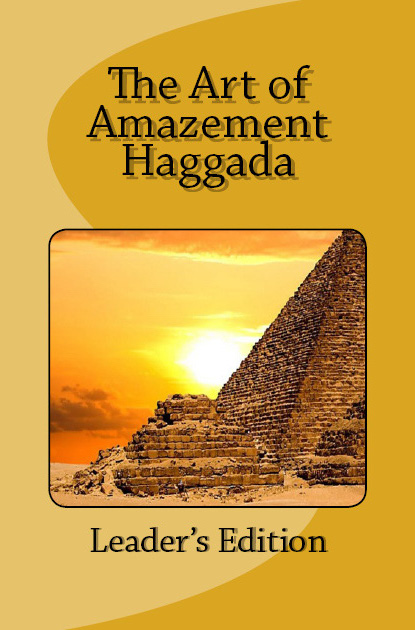
AofAHaggada2017By now everyone knows how many days until Passover, right?

But we're not panicking, right?
Here are four weapons to arm you for an amazing Passover:

A. If you are within shouting distance of San Francisco next Monday, please join me for a special evening - social and intellectual - including a class, "When Elijah Knocks". Reply for details.

B. Get a free copy of our "10 Tips and Tricks for Making an Amazing Seder"  - shoot me an email.

C. #2 is an excerpt from the Art of Amazement Haggada - order one now.

D. As I try to send every year, here is the updated list of great Seder gifts, props and paraphernalia (had to spell-check that):


1. Let's start with food:
Round (hand-made) maztah
Whole wheat square matzah
Yehuda Matzos
Matzo Meal (yes that's how they spell it)


2. Seder-related props, toys, games:
Start with a Pharaoh Hat and staff (or the tall one).
Make sure you stock props for the 10 Plagues
(This is new, haven't tested it yet - the Rite Lite Can of Plagues)
(Martha Stewart's interesting idea of a bag of plagues for each person.)
(Whaddya think -  edible plagues?)
The Passover Bingo cards will keep them engaged at the table.
Any energetic teens at the table? Try a set of Juggling Matzah Balls

AKLIB - All Kids Love Israeli Bazooka gum
Get the Passover Memory Game


3. Other great Seder prizes:


Puzzles - This year, I'm going to try these as thanks-for-participating Seder gifts for all ages - the Passover connection is that the Seder - like life - is a puzzle, and if it isn't challenging, it isn't satisfying. According to the effort is the reward does't mean we reward you for your effort, it means that the deep enjoyment of the activity is proportional to the effort. 
 
4. Books:

Artscroll Youth Haggada - great illustrations for all ages
The Un-Haggadah - keep the Seder conversation flowing
Escape From Seville - Riveting - great for teens and young adults
Seder in Herlin - early teens
Seder Night Miracle (out of print, hard to find but worth it if you can)
Touch of Passover - board book
What Do You See on Pesach? - board book
If You Give a Frog a Piece of Matzah - kids

The Mouse in the Matzah Factory - kids
Only Nine Chairs: A Tall Tale for Passover

Zaidy's Great Idea - audio CD
Toward a Meaningful Mood - Turning Your Dark Moments into Light


And here's the question for your table tonight: 
Ever notice how the number 4 keeps popping up in the Seder (and in this post)? Why is that?
 

Shabbat Shalom


and

Happy Pesach!


Enjoyed this Table Talk? Vote with your fingers! Like it, tweet it, forward it....

Friday, March 27, 2015

The Down-Home Matzah Ball Blues

The goal of this blog is to help make this Shabbat "gadol" - truly great. Please print and share.

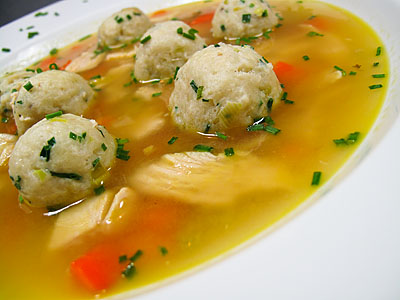
matzo_soup Serious question: how are you going to make next Friday night different from all other nights?
If you're leading a Seder, you might want to start with my 2-page Art of Leading an Amazing Seder and get a copy of the Art of Amazement Haggada.

(If you already have one and want to know what's trending in Haggadas, shoot me an email.)

When you look at my 2-pager, you'll see a list of 10 Tips and Tricks.

Tip #5:
  1. Prepare two gifts for each participant. One is a small inexpensive gift: a toy, silly glasses, etc. The second is a more meaningful gift: preferably a book. (See www.bestjewishkidsbooks.com for suggestions of both types.) Gifts are especially important for young children. Give the small ones at random times, such as when a child answers a question or reads a line from the Haggada. Tell them that you have a bigger gift for anyone who stays awake until the end of the Seder....
Tip #6:
  1. Other props to prepare, for the Ten Plagues — again, we've compiled a quick list for you here.

Now, here's a question to stump everyone at the Passover Seder. I asked this one a few years ago, maybe it's a good time to dust it off:

What did ancient people call Egypt?

Romans called it "Egypt" - from the native name for Memphis.

What did Egyptians call it?

Kemet - "Blackland".

But what's most interesting, and the main question this week for your table is:

What does the Torah call it and why?

Answer: We call it Mitzrayim: "land of boundaries" or "place of limitations"

Think about what it means to leave a place called mitzrayim.

Think about how important it is to re-enact that every year.


Look at these two short, entertaining vids. The first one nicely reminds us why we're doing this:
  The second one will get you pumped up to make it great:


Shabbat Shalom and Happy Pesach.

PS - For the JSL Passover Kit, including a printable PDF of the Art of Amazement Haggada, click here.
PPS - This blog will soon be busy leaving Mitzrayim… see you in 3 weeks.

Friday, April 11, 2014

Yes, but is it awe-spicious?

The goal of this blog is to add color to your Friday night dinner table. Please print and share.


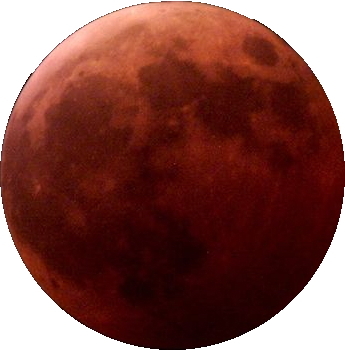
lunar3SOMETHING cool is going to happen next Monday night.
Maybe even while you are eating your Afikomen.

At midnight, the moon might turn blood-red.

(Lunar eclipses are rare but not that rare. But they are "that rare" on Seder night. There will be one next year - visible only in the Pacific Ocean, and then not again for many years.)

Here's what's cool - we know that the moon will be eclipsed, and we know where the eclipse will be visible.

But the color is unpredictable:

"The umbra may take on a range of colors from light coppery-red to almost total black. The light illuminating an eclipsed moon is coming from thousands of sunsets and sunrises around the Earth. During some eclipses, these sunsets and sunrises are clear, and much light passes through; during others, clouds may block the light, causing a dark eclipse. On rare occasions, the light reaching the moon is exactly the color of blood, but there is no way of predicting this in advance" (space.com).

Fascinating, Jim.

So this mini science lesson leads to a question for your table that I'm willing to bet NOBODY reading this can answer:

What's the connection between a lunar eclipse and Pesach?

The answer lies in that obscure line in the Haggada from prophetic book of Yoel (Joel):

"Blood, and fire, and pillars of smoke" (Yoel 3:3).

It's all very nice and on the theme of the 10 Plagues. And you probably read it every year and pay little attention.

Maybe you even skip it?

But what few know is that the very next line of the book of Yoel says:

"The sun shall be turned into darkness, and the moon into blood..."

The prophet is telling us that a solar and lunar eclipse are a good omen for those who say "Next year in Jerusalem".

This Monday night, after you finally find and finish your afikomen, after your four cups of wine, and a fifth for Eliyahu HaNavi (Elijah the Prophet), you'll find yourself at that famous line, "l'shana ha'ba b'Yerushalayim" - next year in Jerusalem.

Perhaps it will be close to true midnight, when the moon will be at full eclipse (1:07 am in Baltimore, 1:10 am in San Francisco and Seattle, 12:53 am in L.A.).

Wherever you are on the globe, take a look at the moon.

And think about it.


Shabbat Shalom

Wishing you and yours a chametz-free, happy Pesach

PS - if you or someone you know does not have a first or second seder to attend, anywhere in the world, please let me know.

PPS -


PPS - These just in:
a. Dark glasses for Plague of Darkness $5.43 for a 12-pack
b. Lego skeletons for Death of First Born or cheaper skeletons - 12-pack
c. Martha Stewart's interesting idea of a bag of plagues for each person.
d. Whaddya think -  edible plagues?
e. The new 2014 edition of the Art of Amazement Haggada.
f. bestjewishkidsbooks.com has even more links to last-minute Pesach books and gifts, even matzah.

Friday, March 15, 2013

That Kid-Cat-Dog-Stick Shtick

The purpose of this blog is to give you an excuse to change the subject at your Shabbat dinner table. Please print and share.  

This week's topic is a Passover enigma.

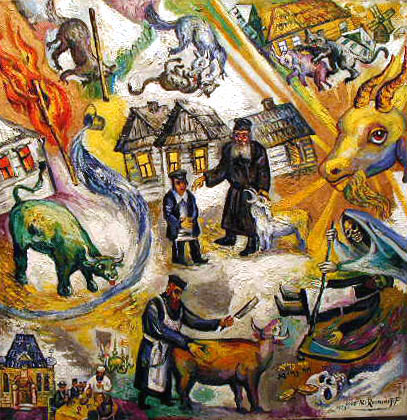
You may recall that the Passover Haggada ends with the fun but peculiar song, “Chad Gadya” – An Only Kid.

This colorful song features a kid (i.e., a baby goat) purchased by “my father” for the price of two zuz, evidently an ancient coin.

No sooner does he buy the kid, it is eaten by “the cat”, which is in turn bitten by “the dog”, which itself suffers being beaten by “the stick”. The stick doesn’t get off lightly for its beating; it is burnt by “the fire”, which is naturally doused by “the water”.

What happens to the water seems quite natural: it gets lapped up by “the ox”, which leads to the fatal slaughtering of the ox by “the butcher”. The butcher faces none other than the Angel of Death, and in case you thought that this dastardly fellow was invincible, he is ultimately vanquished at the conclusion of the song by the Holy One, Blessed be He.

So what's it all about?

Try asking that at the table, listen patiently, then read on.

The symbolic meaning of this sequence of people, animals and objects remained obscure until the Vilna Gaon (Rabbi Elijah of Vilna, late 1700s) presented the following interpretation.

Each verse alludes to one person or event in Jewish history:

The kid is the birthright mentioned in Genesis 25. This is the right to take the baton that had been passed from Abraham to Isaac, to continue Abraham’s mission to build a world full of lovingkindness and monotheism and devoid of idolatry, child sacrifice and other evils.

My father is Jacob who bought the birthright from his twin brother Esau, who had been born first and thus had the natural right to the birthright.

The two zuzim are the bread and stew Jacob paid Esau for the birthright.

The cat represents the envy of Jacob’s sons toward their brother Joseph’s, leading them to sell him into slavery in Egypt.

The dog  is Egypt, where Joseph landed, and where eventually the entire clan of Jacob and the subsequent Israelite nation lived, were enslaved and were redeemed.

The stick is the famous staff of Moses, used to call forth various plagues and part the waters of the Sea for the Israelites to cross.

The fire represents the thirst for idolatry among Israelites that proved to be a persistent bane for over 800 years, from the year they left Egypt until the destruction of the First Temple in the Fifth Century BCE.

The water represents the Fourth Century BCE sages who eradicated idolatry.

The ox is Rome (Esau’s descendent) who destroyed the 2nd Temple in 70 CE.

The butcher is the “Messiah Son of Joseph” (Mashiach Ben-Yoseph) who will restore full Jewish sovereignty in the Land of Israel.

The Angel of Death needs no introduction; in this song he represents the death of Messiah Ben-Yoseph.

The Holy One of course also needs no introduction; here He arrives with Messiah Ben-David.

The repetition in each stanza underscores the ebb and flow of Jewish history – sometimes we’re down, but then we rise up. While most of the song looks backwards, it ends with an optimistic view toward the future, a fitting conclusion to the Seder.

Adapted from the new Art of Amazement Haggada  

Leader's Edition (i.e., for someone leading a Seder)
Standard binding: www.createspace.com/4198678
Spiral binding: click here

Freedom Edition (i.e., for everyone else)
Standard binding: www.createspace.com/4208226
Spiral binding - coming soon! 

Shabbat Shalom

PS - Passover begins Monday March 25.

PPS - Want to make your Table Talk rabbi happy? Like it, tweet it, or just forward it to someone who might enjoy it.

Oh, yeah, one other thing - please remember, don't forget, when looking for 10-Plagues toys, other Passover books, even matzah, start your search here: http://bestjewishkidsbooks.com

Your rabbi will be proud of you.

Friday, March 08, 2013

HaHa! Haggada

The purpose of this email is to prod your family and friends toward some meaningful banter at the Shabbat meals. Please print and share.

CreateSpaceBookCoverFrontToday's question for your table is: What was the best Seder you ever attended? What made it so?
At last count, there were 1,733 different haggadahs and 202 "haggadas" for sale on Amazon.

Aren't they all basically the same?

Ever hear about a "new" haggada that turned out to be the same old thing as every other haggada out there, just with new artwork?

Today we — yes, that's the editorial "we" —  have a treat for you.

Fifteen years in the making, the Art of Amazement Haggada is now in print.

Some may recall that it was available for download last year.

But who has room for a stack of 8x11 pages on their Seder table?

Who can afford the ink?

The new edition is a small size and you have the option of getting it with a spiral binding, so it will lie flat.

How cool is that?

OK, that's the boring stuff.

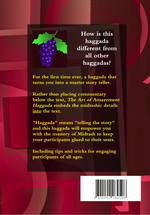
How is this haggada different from all other haggadas?

All other haggadas have the standard text with some commentary at the bottom or in the margins.
This haggada imbeds the midrashic color right into the text.'

All other haggadas are one-size-fits-all.
This haggada is designed for the person leading the Seder, to turn you into a master storyteller.

All other haggadas focus on the rules of running a Seder.
This haggada assumes you know how to arrange the Seder Plate (and if you don't remember, you'll know where to look it up), and instead offers tips and tricks for keeping kids and adults engaged and involved in the Seder.

All other haggadas give you a feeling of inadequacy or disconnect when you get to passages you don't understand or relate to.
This haggada gently suggests that you skip certain sections if you find them difficult to relate to.

All other haggadas (or most other haggadas) offer the interpretations of a single point of view.
This haggada gives you the unembellished classic midrash. For instance, did you know that when the river turned to blood, so did every bottle of water in the homes of the Egyptians. So what did they drink?

Regardless of your level of religiosity, this haggada offers the liveliest, most engaging Pesach storytelling. That's what it's all about.

Spiral-bound version is available today here: http://tinyurl.com/AmazementHaggadaSpiral

That's right... You can order it today and select the cheapest shipping and it will still arrive in time for Pesach.

Regular binding should be available on Amazon in a few days.

haggada_cover_backSorry if this sounds like a sales pitch. If you know me, you know this was a labor of love.

Don't forget, I already gave you a great question for your table:

What was the best Seder you ever attended? What made it so?


Shabbat Shalom

PS - Passover begins in 2 weeks and change, on Monday March 25.

PPS - To my friends in the Bay Area: hope to see you Monday or Tuesday next week.

PPPS - Want to make your Table Talk rabbi happy? Like it, tweet it, or just forward it to someone who might enjoy it.


Oh, yeah, one other thing - please remember, don't forget, when looking for 10-Plagues toys, other Passover books, even matzah, start your search here:
http://bestjewishkidsbooks.com

Your rabbi will be proud of you.

Thursday, April 05, 2012

Running Out of Time

Dedicated to Steve Goldstein, a great friend of many who knew the true meaning of freedom. May his memory be a blessing.

Our new spring bulletin: Click here

Downloadable Haggada: Click here

Full 2012 Pesach Kit: Click here

The great Google-Exodus spoof (2.2 million views): Click here

(FYI, two people today contacted me asking if they know anyone looking for a place at a Seder. If you know of any such person, including yourself, there are families in every community who would like to host you - please contact me ASAP.)

I suppose you'd like a question for your table.... How is this Seder this year going to be different from all other Seders of past years?

Shabbat Shalom and Chag Sameach - Happy Passover!

Friday, April 15, 2011

Is Life a Game?

BBC NEWS
Chinese gamer sentenced to life


A Shanghai online gamer has been given a suspended death sentence for
killing a fellow gamer. Qiu Chengwei stabbed Zhu Caoyuan in the chest when he found out he had sold his virtual sword for 7,200 Yuan (£473). The sword, which Mr Qiu had lent to Mr Zhu, was won in the popular online game Legend of Mir 3. Attempts to take the dispute to the police failed because there is currently no law in China to protect virtual property.

(If you care to read the details of this macabre story, click here.)

Question for your table: What does this story have to do with Passover?

There are probably many answers to the question. You could talk about values, you could talk about the rule of law and the Torah.

I'd like to suggest focusing on a different angle - virtual reality.

Many of us relate to the Passover story like a fantasy. It's a great story, but did it ever happen? And according to these details? And even if it did, why is it so important to tell the story once a year?

Question #2 - have you ever experienced a Pesach story-telling which was so engaging, you got so into it, that you forgot you were sitting in someone's dining room?

That's the goal, even if you are at someone's Seder who is not so engaging, even if you are all alone, to get yourself so into the details of the story, that you empathize with all the characters (even the drowning Egyptians).

To do so let's be frank, requires a bit of preparation. If you haven't got some new books and gadgets, it's still not too late for 2-day shipping, go to bestjewishkidsbooks.com and search for "Passover" or "Pesach".

If you have all the gear you need, don't forget to carve out an hour or two on Sunday to read through the Haggada, think about how you're going to make the Seder a vivid virtual reality, whether you be leader or follower.

Shabbat Shalom and wishing you a connected, happy Pesach

PS - if you had trouble downloading my free 2011 Pesach kit, send me an email and I'll send it directly, it's not a large file.

PPS - posted this video last year, it's so good, worth watching every year to get you in the mood.


PPS - here's a new one for this year:

Friday, April 08, 2011

Tis the Season

Uh-oh, Passover is in less than 2 weeks!

Just in time, today we have an important announcement that may help you have a better Pesach, followed by a question for your table.

We have just launched a website for adults seeking ways to engage children in Passover and other Jewish topics.

It's called bestjewishkidsbooks.com

It is not a store, we are not selling anything. It is a portal, with links to amazon et al.

Please visit it, bookmark it and then: send me your feedback.

You can search by age or subject.

Every item has been selected by me and my 12-year-old daughter, Goldy. We added her personal review to most of the items. (Notice that there are some non-book items, such as toys and gadgets to enliven the Passover Seder.)

Hmm... You could do your own research, or you could let us do the legwork for you. Which do you prefer?

OK, so here are the questions for your table.

1. What's the reason why a highlight of the Passover Seder is the 4 Questions?
2. By the way, how many 4's can you count at the Seder (I can think of 4...)


Shabbat Shalom

PS - My free editable Art of Amazement Haggada has been updated again this year, it is part of a downloadable Kit with kid activities and adult-level materials too. Find it all here: jsli.org/passover

Thursday, March 25, 2010

Black to the Future

Looking for a new question to stump everyone with at your Passover seder?

Here's the question:

What did ancient Egyptians call their country?

Jews called it "Mitzrayim" - i.e., the land of boundaries, limitations (hence, we re-enact leaving Mitrayim)

Romans called it "Egypt" - which was derived from the local name for Memphis.

What did Egyptians call it?

A: Kemet - the "black land" - perhaps because the Nile-enriched soil was so lusciously dark. Or perhaps for some other reason?

Now, if you or anyone you know are looking for fresh inspiration for Pesach this year...

Look at these two short, entertaining vids. The first one nicely reminds us why we're doing this. The second one will get you pumped up to make it great.


Shabbat Shalom and Happy Passover.

PS - If you would like my free Passover Kit, including a modifiable Art of Amazement Haggada in .doc format, send an email and I'll try to get it to you by Sunday morning.

PPS - This blog will be busy leaving Mitzrayim… see you in 2 weeks.