Showing posts with label Vayechi. Show all posts

Friday, December 29, 2023

Gezundheit!

Table Talk from the desk of Rabbi Alexander Seinfeld
December 29-30, 2023 • 18 Teves 5784 • Vayechi (Gen 47-50). 
The purpose of this blog is for healthy conversation at the Shabbat table ... please forward/print/share.

In memory of Pinchas ben Meir HaLevy z'l whose yahrzeit is tonight.

+ + + + +

A couple times a year we invite you to a partnership with JSLI (new or renewed) - our low-cost, high-impact programs (click here for a snapshot) are a great tax-deductible investment.

Even this weekly email costs money to produce
Suggestion - give according to perceived value: is it worth 10¢ a week? Your donation supports more than just this email - it puts you on the cutting edge of Jewish educational innovation.

There is every way to contribute: Check/ credit Card / Paypal ... Venmo, Zelle, stock transfer, etc.

Our work is made possible by partners like you - thank you!


+ + + + +
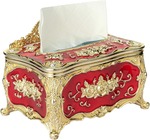


tissuebox-fancy
Here's an opening question for your table: Did you ever wonder why we bless someone who sneezes? What's up with that?

It appears to be a universal custom: see Gezundheit in 80 languages / Berlitz.com.

After everyone ponders that question, you might want to share this interesting midrash about the origin of gezundheit.

Once upon a time, sneezing was a bad, bad omen.

People didn't get sick before they died. They just sneezed and died. 

So sneezing was burned into our collective psyche as a potential sign of imminent death.

Along comes Jacob (Yaakov), the ultimate Patriarch. He wants to buck the trend. He wants to end his life not with a blessing from others but with a blessing to others. He wants to give his children a final testament. He wants to be able to say goodbye with dignity.

Being that he's a prophet - he and God were, you know, "like this."

So he asks for a change in the natural order - that there should be the possibility of some warning - like sickness - prior to death, to give him the chance to say a proper goodbye. 

And perhaps to prepare mentally for death?

Once he is granted that request, that new way of dying becomes part of the natural order. 

Illness became a blessing and death became dignified.

One more question for your table: If you could choose the circumstances of your own death (hopefully not for a long, long time!), how would you want it to be? 


Shabbat Shalom,


Alexander Seinfeld


Enjoyed this Table Talk? Vote with your fingers! Like ittweet it,  email it....
  

As always, this message can be read online at http://rabbiseinfeld.blogspot.com.

aleph wing logo-nobox tight

The mission of Jewish Spiritual Literacy, Inc. (JSLI) is to foster a paradigm shift in spiritual and moral education to enable every human being to access and enjoy the incredible database of 3,000 years of Jewish wisdom.

Friday, December 21, 2018

Repair a Helion

The purpose of this blog is to brighten the Shabbat table. Please share.


Healing sunAs some people are heading to sunnier or snowier climates, here's an original riddle for your table tonight:

What's the sunniest time of year?

Hint: since it's a riddle, you know the answer is not going to be at the summer solstice.

Another hint: The correct answer also does not depend on which hemisphere you're in.

Still stumped?

Here's another hint, in the form of a know-thy-planet question:

Why is it colder in the winter and warmer in the summer?

(It always amazes me how many adults can't answer this.)

Before you answer, think about the fact that today it's summertime in Sidney right now.

Hmm....

OK, since most people are by now totally stumped, here is the answer....

The Earth orbits the sun in an elipse, not a circle.

earth's orbitThat means that at times we are closer to the sun (perihelion) and at times farther from the sun (apihelion).

The difference between our perihelion and apihelion is about three million miles.

It happens to be that now, in the alleged start of the winter in the northern hemisphere, we are reaching perihelion. That means we are millions of miles closer to the sun now than we are in June.

These are facts.

So as a planet, now begins the sunniest time of the year - peaking at about January 4.

If the riddle fooled you, it was perhaps because you were thinking locally, not globally?

By the way, here's another fact about our orbit that may be somewhat disconcerting: it isn't constant. This year's exact perihelion is on January 3 at 12:19 am (NY time). Next year it will be on January 5.

Another fact to entertain your table: we're moving faster at perihelion than aphelion. That means that our winters are shorter than our summers.

And another interesting idea - these changes in our orbit plus fluctuations in the sun's output do affect our weather but probably not global warming.

The amount of sunlight reaching the earth varies for other reasons, including sunspots and this eliptical business. The eliptical orbit itself causes a variation over the year of about 100W per square meter.


Final question for your table: What's more amazing, the ways of the heavens and the earth, or the human minds who can measure and predict it with great precision and appreciate it?


Shabbat Shalom
 
(and Happy Solstice)

PS - Yes, as usual, the pic above contains a surprise link.

 
Enjoyed this Table Talk? Go ahead and Like, Tweet, or forward it....


Friday, December 29, 2017

Deadline or Dead Line?

The purpose of this blog is to meet deadline at the Friday night dinner table.
Mazal tov to our daughter Devorah becoming bat mitzvah this week.

 
Melting clock There is an ancient Jewish custom to bless our children Friday night. Girls get the blessing, "May God make you like Sarah, Rivka (Rebecca), Rachel and Leah. Fair enough, those are four of the greatest.

But boys get the blessing, "May God make you like Ephraim and Menashe."

Not like Avraham, Yizchak, or Yaakov. Not like Yoseph or Moshe or Aharon nor even like King David.

Rather, be like Ephraim and Menashe, the two sons of Yoseph, who were famous for ______?

Try using that as your first question for the table this week.

If everyone responds with a bewildered stare, you can say, "You're all right! Ephraim and Menashe didn't do anything worthy of inclusion in the Torah!"

So what's the point of the blessing? Because unlike so many who came before and after them, they lived with zero envy, despite their inequality.

Second question for your table: Do girls in general need such a blessing as much as boys?

Our daughter Devorah is the kind of girl who does not need it. She is way beyond petty envy or rivalry. She is genuinely happy for the success of others - even her sister.

We are proud her for this and many other qualities she has developed in herself, and in honor of her becoming Bat Mitzvah this week, here is her original Dvar Torah.

+ + + + + + + + + + + +

This week's parsha, Vayechi, is mainly about Yaakov Avinu’s (Jacob's) death in Mitrayaim (Egypt) and burial in Eretz Yisrael (Israel).

The parsha says:

“Va'yickuru y'may Yisroel lamos v’yickra l'veino l'Yosef vayomar lo sim na yadcha tachas yrechi usisu imadee chesed v’emes: al na tik'b'rni b'Mitzraim.”

When Yaakov realized his end was near he called for his son Yosef and said, “Swear to me that you will do me a kindness and truth, and do not bury me in Egypt; bury me in Eretz Yisroel with my fathers...."

It’s strange the way Yaakov says chesed v’emes —  “kindness and truth”. Why does he say it like that?

Rashi says we should read Yaakov’s words as if he says, “Chesed shel Emes” — Kindness of truth, because that's a well-known expression that means to bury somebody.

In other words, Rashi is saying that it makes more sense for Yaakov to say “kindness of truth,” than “kindness and truth.”

But that’s not what Yaakov says. He says “chesed v’emes” – kindness and truth. If he means 'kindness of truth", why doesn't he say it? If "kindness and truth" doesn’t make sense, then why does he say it? Why not just say “chesed” — do me a kindness?

What is he adding when he says “and truth”?

Rashi then quotes a Midrash that gives three reasons Yaakov insisted on being buried in Eretz Yisroel and not in Mitzraim. The reasons have to do with both the merit of being buried in the Holy Land and the detriment of his body remaining in Egypt.

But why does it really matter? Why does he care so much about what will happen after he has died?

The Ohr HaChaim provides a mashal (parable):

Once there was a king, he decided to appoint people to make a piece of jewelry out of diamonds, so he appointed the people to do the task. Each person got its own amount of diamonds and time limit. Finally the day came, and all the people came with their “piece of art.” but it wasn’t really a piece of art so the king was not so happy, he saw that nobody put time and effort on this task that he assigned, it either wasn’t finished, or the pieces were was just not nice looking, it was just looking like junk. So the king was furious about this, and ordered for them all to be killed!

The nimshal (the meaning of the parable) is:

God is the king, and we are the people who are making a piece of jewelry. And our jewelry is each day of one’s life. Each day is another step up to be closer to God.  But we have a deadline when we move on to the next world. After that, we can’t get any closer to God.

A tzaddik like Yaakov works to be closer to Hashem in everything he does. Even in his burial, which is after he’s dead! So that is what he means by asking Yoseph to act with truth and not with mere kindness. Yaakov is trying to be truthful about every detail – even about where he is buried. It is not just a favor he is asking his son. He is not just asking for respect. He is asking for something based on truth and holiness.

We should learn from this that even in our daily lives, we should be careful with the details and make every day a jewel. We should always choose what’s best for us, meaning what is true. And that's why we need Torah. To bring us closer to truth, before our deadline.


+ + + + + + + + + + + +


Shabbat Shalom


PS - Interested in a last-minute tax deduction for 2017? Consider supporting this email and JSL's overall mission, by clicking here.
 
Enjoyed this Table Talk? Vote with your fingers! Like it, tweet it, forward it....


Friday, December 28, 2012

How to Live Forever

Ask this question at your table - How can you live forever?

You may be surprised at the answers you get.

Some take a scientific approach to this age-old question. I'm not opposed to that.

But I'm going to suggest a non-scientific answer and I'm betting you'll agree with me.

But first, a word from our sponsor.

It's that time of year again, end of the tax calendar: Your last chance to make a 2012 donation. So all of your favorite charities are sending those last-ditch emails.

Let's try for something more appealing here (pardon the pun): just a question.

This is not a question for your table. This is a question for you.

What's this weekly blog actually worth to you? A nickel? Two bits? A dollar?

Think about it for a moment.

Think about your favorite table talks. Maybe the Sandy Hook one last week did it for you. Perhaps it was We of the Storm. One of the most popular of all time was Late for the Train (2006). Some still remember the musical Chinese Food on Xmas, dedicated to the yahrzeit of Bert Walker that falls at this time of year.

If you had paid a buck for your favorite one, would you have said, "Money well spent"?

Now what does it say that it comes to your inbox for free every Friday? Does that make worthless or priceless?

This blog actually costs several nickels to produce, and we rely on readers like you to keep it going. There are the costs of the 7-year-old computers and the rest of the office overhead. There is staff time.

Yet this blog is provided as a free service by JSL in order to achieve our mission of increasing the level of Jewish spiritual literacy worldwide. You have the opportunity today to enjoy being being an active partner in this mission. At any level of contribution, you will be a partner. (If you are already a JSL partner, thank you.)

Once you estimate the average value of the weekly blog, please multiply by 50 and show your appreciation by making a tax-deductible contribution. For online and snail-mail instructions click here (and read about the thank-you gift you'll receive).

(If you cannot become a partner today, then at least enjoy the fact that when you read this blog, you are enabling someone else to give to you!)

With that out of the way, the promised answer....

To remind you, the question was, How can you live forever

Try asking this at your table before reading my three answers.

My first answer is very simple and perhaps too obvious. When I give to you - anything, whether a physical gift, time, or just a smile - some of me is now part of you.

Maybe you'll give to others, so that some of me now gets further redistributed.

But you may or may not give to others. So to maximize my immortality, I need to give to as many people as I can.

You already knew this answer, didn't you? Maybe this answer is reminding you to be a bigger giver, but so far, you haven't heard anything new.

My second answer: acquire wisdom. Whatever wisdom you acquire in this life stays with you in the next world (Talmud).

My third answer is deeper: Someone who learns to live in the moment turns every moment into eternity.

"Living forever" is therefore possible right here, right now.

It takes practice, spiritual practice. Some kind of meditative practice.

(If you would like to learn this kind of meditative practice in the comfort of your own home, shoot me an email. Perhaps we can create an online program.)

The fourth answer is deeper still.

(Wait, didn't he say there were 3 answers? This is a blog, not a math class.)

Jewish wisdom teaches that we all live forever. Nothing to worry about. But the quality of that forever - the experience you will have after you leave this world - will be a sum of three things:
  • the wisdom you acquired
  • the giving that you gave
  • the meditative level that you achieved.
We need to strive for all three. Yet most of us excel at one or two, and find at least one much harder. Now you know what to work on.


Shabbat Shalom 

PS - If you didn't do so already, please click here and enable us to send you that thank-you gift.


As always, if you enjoyed this message, please forward the link to others who may enjoy it.

Friday, January 06, 2012

Memory

We lost a friend and neighbor this week, Steve Goldstein.

After two brain surgeries and chemo, the cancer won.

He was a guy who collected broken lawnmowers. By the end of this eulogy, I hope you'll appreciate why.

Steve was one of those rare guys who was both sensible and 100 percent genuine. He never did things to be "politically correct". That meant that if he said something, you knew he meant it.

No one else in our neighborhood would mow the lawn shirtless. But if it's hot out, that's the most sensible thing to do, right?

Steve also helped everyone, and I mean everyone, with any kind of problem with their home.

Your pilot light went out and you can't figure out how to turn it on? Ask Steve.
You have a loose shingle on the roof? Steve would notice it before you and be up on his ladder fixing it before you could blink.
You need help cutting a board for a DIY project? Borrow a tool? And so on.

Most men like to have their "cave" as John Gray calls it, a place to retreat and do whatever men like to do, smoke cigars or whatever.

Steve built the greatest man-cave in his back yard, a 50x30x20 (that's feet) shed.

That's where he did his projects, that's where he stored his "stuff".

A woman's nightmare. But every man reading this will nod his head in understanding.

As I said, he collected broken lawnmowers. Maybe that would be a good question for your table - "Why do you think the guy collected broken lawnmowers?"

The answer, of course, is because he enjoyed fixing them and then giving them away to his neighbors.

That's the kind of guy he was.

But he was also a reverential guy. In his youth, he had the good fortune of spending a few years in a New York yeshiva. Somehow he ended up there even though he was born and raised in Pensacola. And that experience fostered in him an indelible respect for Torah and Torah scholars. None of his other life experiences could erase that. Not his service in Vietnam, not his years on the road as a salesman, to places that one might think are the diametric opposite of a yeshiva experience.

Almost to the end he attended Baltimore's most famous weekly class, the "Thursday night class". I saw him walking home Thursday night. Here's how the interaction would go:

"How was the class?"
"Good. It was a good class. I didn't understand half of it, but the half I understood was good."

Often after helping a neighbor such as us, we'd feel so much gratitude that we would try to pay him something. He wouldn't hear of it. "I'll tell you what, have us over for a Shabbos meal."

And so we did. Many times. After his brain surgeries, with giant stitches on his skull, the kids thought he looked a little scary, like Frankenstein's monster. But they all loved him, they could tell there was something special about him, about his intelligent frankness.

The decline was swift. As recently as Thanksgiving he had his wits. But by Channuka he was having trouble finding familiar things.


Our street will never be the same. Condolences to Abby, his wife of 25 years, and the rest of the family.


To end on an "up" note - one of the eulogists at the funeral mentioned that he hadn't known Steve as well as he would have liked, and now it's too late.

Question for your table - Is there anyone in your life whom you'd like to know better before it's too late? Is there anyone you'd like to do an act of kindness (chesed) for, before it's too late? Here's a zinger - How do you want people to remember you at their Friday night dinner tables?


Shabbat Shalom


PS - to see today's "Amazing Jewish Fact" - on Reincarnation - click here.

Friday, December 17, 2010

Legacy

Happy Birthday to our daughter Devorah who turned 5 this week (on the Hebrew calendar).

Two questions for your table:

1. What's the single most effective way to motivate yourself, to get yourself to focus?
2. What's the single most effective way to motivate children?

I'll answer the second one first, with a story.

As you probably know, we got a bit of snow yesterday here in Bal-more.

Newly and proudly five-year-old Devorah is always the first child home from school.

She races in yesterday and blurts out, "Where's the snow shovel?" After a somewhat lengthy process of getting her fitted with boots, gloves and pink snow pants, she saunters outside and begins shoveling the walkway. No one asked her to do this. Her orange kiddy snow shovel is about 1/4 the size of a regular shovel. Try to picture this. After she finishes the walk, she lays down in the one inch of fresh powder to make an angel (takes one to make one?).

Where did she get this from?

Now, for question #1...

Sit down and write out - don't just think it or say it, actually write it out - what you hope they will say at your funeral.

Dream big. Pretend you were living at your fullest potential, and give yourself a long life (120 years, let's say).

Try presenting this challenge at your dinner table. People who are living for a meaningful life purpose are happier and more successful than everyone else around them.

If you find that exercise too morbid for the dinner table, try asking everyone to comment on these two quotes:

"If I have a why, I can suffer almost any how." - Nietzsche
"Better to go to a house of mourning than a house of feasting." - King Solomon

True or false?

Shabbat Shalom


PS - did you know that the JSL website has a list of recommended books for all types of readers? Click here: http://jsli.org/recommended-readings/

PPS - I'm sure I mentioned my new iphone/ipod/ipad app, right? Now you can get it for a friend, even if you don't have an iphone/ipod/ipad...Here's the link: http://tinyurl.com/amazingcalendarlink

The goal of this blog is to give you a conversation-starter for your Friday night dinner table. Please print and share.