Friday, February 20, 2026

Skin Deep?


Shabbat Table Talk from the desk of Rabbi Alexander Seinfeld
February 20-21, 2026 • 4 Adar 5786 • Terumah (Exod 25-27).

SkinOne of the best engagement activities I ever did as a classroom teacher was also one of the simplest.

You have three bowls of water: ice-cold, room temperature, and hot.

First, if put your hand into the ice water for thirty seconds then immediately into the lukewarm, how would you predict it will feel?

Everyone knows that it's going to feel much warmer.

Now repeat starting with the hot water. What's your prediction? 

That's easy.

Here's the charm: predict what will happen if you simultaneously start with one hand in the cold and the other in the hot?

After everyone makes their prediction, let them try it.

It's a bizarre feeling that we're totally not expecting.

The physiology lesson is that (a) hot and cold are actually relative, not absolute, sensations and (b) we don't actually experience hot and cold (or any other sensation) in our skin or other senses. We experience them in our brains. 

Question for the table: does this mean that if you're feeling too warm or cold you just need to change your mind? What about other feelings?


Shabbat Shalom

PS - What's the technical name for the bodily system of the skin? [integumentary]
PPS - Do you know how many days until 
Purim and Pesach?


Appreciated this Table Talk? Like ittweet it, email it...  

Friday, February 13, 2026

What's Jewish About the Super Bowl?

-


Shabbat Table Talk from the desk of Rabbi Alexander Seinfeld
February 13-14, 2026 • 27 Shevat 5786 • Mishpatim (Exod 21-24).
Dedicated to Moshe Yitzchak ben Shoshana - may he have a speedy and complete convalescence.

BigBowl5Yesterday I taught a Fourth Grade class for a teacher on medical leave. He had suggested, "These boys like to talk about football, so if you can make a football reference, you'll for sure get their attention."

As luck would have it, on Sunday I'd been invited to speak at a watch party during Halftime.

So I asked the boys, "Would you be interested to hear about the "5 Things We Can Learn From the Super Bowl?"

Their rebbe was right - most of them eagerly nodded their heads.

A few looked skeptical - and rightly so; why should we pretend to learn anything from the Super Bowl?

This could be the first question for your table.

But in Pirkei Avos we learn that the epitome of wisdom is not how much you know, rather the attitude that everyone has something to teach you. There are no accidents - if someone has to go to the hospital, that's a clear message. But for those who hear the ambulance pass by, that's also a message.

Second question: can you think of any meaningful lessons from the Super Bowl?

Super Bowl Lesson #1 - What's the Nature of Teamwork?

Both Boston ("New England") and Seattle obviously were doing something right to become the two best teams in the country. I was interested to learn that they have very different approaches to building their team spirit.

In Boston, it's basically "nullify yourself to the greater good" of winning. It reminds me of the mentality of ancient Sparta, very warrior-like, and very successful.

In Seattle, their team-building strategy is completely different. It's "I love you, bro." In the Torah we call that "Love your neighbor."

Don't know about you, but I was happy to see the love-your-neighbor team prevail!


Super Bowl Lesson #2 - Which Players Matter Most?

I arrived at the party during the last minute on the clock of the 2nd Quarter. Seattle was leading 6-0 and they went for a field goal. It's remarkable to me that there is an entire team of guys whose only job is to kick a field goal or to defend against one. The entire game they sit on the bench, waiting for their chance. It could be that they never get a chance. Or, it could be that their field goal is crucial to winning the game. 

Many people feel like their role in life is minor and insignificant, but the truth is that everyone matters, not just the quarterback and wide receiver who get most of the attention. If you're on the team, you're on the team and you matter, and you'll also get a ring.


Super Bowl Lesson #3 - What's Called Progress?

The basic rule of football is that you get four attempts to move the ball ten yards before losing possession. But ten yards means 10.0 yards, not 9.99 yards. So the referees are often out there with a measuring tape - every inch counts. 

Anyone trying to do something hard has experienced times where it feels like you're not making any progress. Whether you're building a business, or learning a language, or raising a child - it can feel like you're not going anywhere. But we can be inspired by the rules of football, every inch counts. Slow progress is progress!


Super Bowl Lesson #4 - What Matters?

Most people focus on the strategies of the plays and the leadership of the coaches and the quarterback, and they pay little attention to the linemen. But if you watch what's happening, the essence of football is two lines of men trying to push each other out of the way. These guys are probably the strongest guys in the world. They're not body-builders, indeed they often have bellies. But they are massively strong. 

So too you and I - we tend to focus on high-level goals and ambitions and don't realize how important physical strength is to the Torah's ideal for a person. Most of the things we want to do, including mitzvot, require physical strength.. We have a free gift of strength until about age 30, after which it starts to decline, slowly at first and then more and more rapidly - unless we do something about it. It's not about form, it's about function. Which is good news for anyone who wants to stay strong - because it doesn't take much time.


Super Bowl Lesson #5 - Who's Watching? 

They say that the Super Bowl is the most watched sporting event on Planet Earth. Certainly it's the most watched event in the US. This is also a lesson for us. The Torah tells us that the purpose of a the Jewish People is to be a "kingdom of ministers" - what's that all about? Preaching? No - it means that we are meant to teach the world how to live ethical and holy lives by example. That's our chief job as Jews, and therefore, just like the Super Bowl, if you're Jewish, the whole world is watching. Don't ever forget it.


Shabbat Shalom

PS — Do you know how many days until Purim and Pesach?

Appreciated this Table Talk? Like ittweet it, email it...  


Thursday, February 05, 2026

Ten Suggestions?

-


Shabbat Table Talk from the desk of Rabbi Alexander Seinfeld
February 6-7, 2026 • 20 Shevat 5786 • Yithro (Exod 18-20).

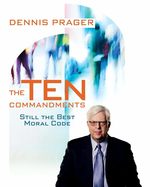
10commandsPragerThis should be an easy question for your table:

Can you name the 10 Commandments?

Bonus: In correct order?

It's interesting but no random accident that they have become such an icon of Western culture and wherever Christianity has spread.

Albeit not without controversy. For instance, in 2018, Communist Party authorities in Henan Province forced a church there to remove one of the commandments, creating the world's first 9 Commandments.

Then there's the Los Lunas Decalogue Stone - ever heard of that (not to be confused with the Bat Creek Inscription)?

For many have argued (including Winston Churchill and Dennis Prager - click the above image) that the 10 Commandments are the foundation of Western Civilization. 

Let's perhaps put this thesis to the test.

Chances are that not everyone at your table will be able to name all ten in the correct order, so let's help them out.

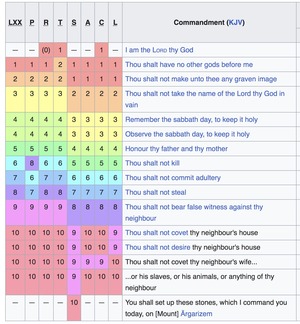
10commands 2First of all, as you can see in this screenshot from the Wikipedia page, there are major controversies over just what are the exact ten.

According to Jewish tradition, they are:

 1. Be a monotheist.
 2. Don't be a polytheist, pantheist, animist, scientist, atheist, or any alternative to monotheism.
 3. Don't misuse the Divine name.
 4. Keep and remember the Shabbat.
 5. Honor your parents.
 6. Don't murder.
 7. Don't commit adultery.
 8. Don't steal.
 9. Don't lie.
 10. Don't yearn to have something that isn't yours and isn't for sale.


So now that we have the What, what about the Why?

As Prager would say, 
Who can explain them in a way that makes sense to the modern eye and ear? 

Prager can.

But is Prager right that they create the moral foundation of Western Civilization? Or are they only a vestige of Medieval religious fanaticism?

Or, to put the question in more practical terms, could one create a totally moral society based on only nine of the ten commandments as proposed by Chinese Communist Party hacks?

Be circumspect in your answer, for how you answer the question could impact the future of Western Civilization!


Shabbat Shalom

PS — Do you know how many days until Purim and Pesach?

Appreciated this Table Talk? Like ittweet it, email it...  

This message may also be read online at Blogspot and Times of Israel (with an even cooler graphic).


Thursday, January 29, 2026

Will the Real Shabbat Please Stand Up?


Shabbat Table Talk from the desk of Rabbi Alexander Seinfeld
Jan 30-31, 2026 • 13 Shevat 5786 • B'shalach (Exod 13-17).

imageLet's start this week's Table Talk with a trivia-istic question for the table:

What did the Quakers call the names of the week and why?

The answer: "First Day," "Second Day," and so on.

But why?

Before we answer, here's a second question to stump the table:


How do we know Saturday is Shabbat?

To explain the question:

Months have a clear astronomical sign. A new month = a new moon, quite simple.

Similarly, a Jewish year is always going to start on a new moon. By tradition, we start it on the new moon closest to the vernal equinox. 


But there is no similar way to determine the start of a week.

Therefore, when Christians moved their Sabbath to Sunday and Muslims moved theirs to Friday, they weren't breaking any rules.

So when and how did our Jewish week come out Sunday-Saturday? 

By the way, of the thousand reasons to go to Israel, one is to experience Yom Rishon - the first day of the week on Sunday.

Sound familiar? That's what the Quakers did.


The Quakers did so because they didn't like calling the days by the idolatrous names:

Sunday = Sun's day
Monday = Moon's day
Tuesday = Mars's day
Wednesday = 
Mercury's day
Thursday = 
Jupiter's day
Friday = Venus's
 day
Saturday = Saturn's day


(They did the same for the names of the months. And so do we - sort of.)

You might say, Well, no one worships those idols anymore, so they're just names.

I suppose you could ask that at your table, too: Are they just names? Or should a self-respecting monotheist try to avoid honoring them?

Can you think of any place names today that might raise the same objection?

How about Santa Cruz? Sacramento? Corpus-Christi?

In any event we still have a question to answer: How do we know that what we call Shabbat is the true 7th Day?

The answer is actually in this week's portion (parashah) - the mahn (manna) fell for only six days, and on the sixth day they received a double portion. That was the objective proof and became their rhythm for forty years.

We Jews have had our ups and downs, our expulsions and exiles, but have never stopped celebrating the Seventh Day.

Bottom-line question for your table: Does it really matter?


Shabbat Shalom


PS — Do you know how many days until Tu B'Shvat and Purim?

Appreciated this Table Talk? Like ittweet it...


Thursday, January 22, 2026

While You Were Sleeping...


Shabbat Table Talk from the desk of Rabbi Alexander Seinfeld
Jan 23-24, 2026 • 6 Shevat 5786 • Bo (Exod 10-13).

In memory of Bertram Walker z''l, whose 40th Yarzheit was recently observed.

Do you know how many days until Tu B'Shvat and Purim?


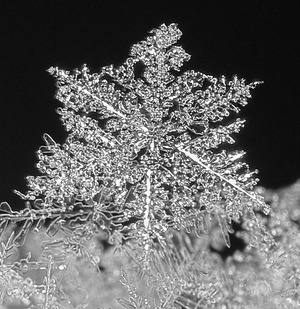
Snowflake_cropp

In case you missed last week's snow crystal message....

Or perhaps you read it but missed clicking on the pic (they're always clickable)...

The link was to this remarkable little book, Ken Libbrecht's Field Guide to Snowflakes

Libbrecht is the Cal Tech physics professor who may possibly not be the world's foremost snowflake expert, but anyone who can say, "I'm a 
Cal Tech physics professor and I study snow crystals" should probably be taken seriously.


Based literally on his credentials and the cover, I bought his book this week. I didn't even bother reading the jacket text, which promises:
The next time the forecast calls for snow, you can be prepared with this fun, informative pocket-sized guide to the amazing world of snowflakes. This guide will not only explain the science behind these one-of-a-kind natural masterpieces, but showcases their delicate beauty through amazing microphotography of real snow crystals. You ll also learn about the most common types of snowflakes, their structures and patterns, when the most beautiful crystals are likely to fall, and how you can best observe and even photograph them.
How, you ask, does a professor in Pasadena, California, become the world's greatest snowflake expert?

For one, he grew up in Fargo, North Dakota.

For two, he makes them from scratch in his lab.

For three, as he tells in his book, he apparently knows the way to LAX, because his little book is full of gorgeous photos of snowflakes that he personally found in places like Ontario and Vermont.

He also provides a chart of the 35 major snow crystal (proper name for a snowflake) types and pictures and short explanations of how each type is formed. 

He also has tips on collecting and photographing snowflakes that anyone can try.

Now, what if you live in a place like Pasadena but don't know the way to LAX? What if you have no access to snow?

Yet another reason for making Aliyah

USPS06STA016sm
BTW, fun fact: Remember these snowflake stamps from 2006?

Those ain't drawings.

They're photos that Prof. Libbrecht personally took. 

(Not in his lab.)

(And if you click on it, it will take you to another Libbrecht book that won several awards.)

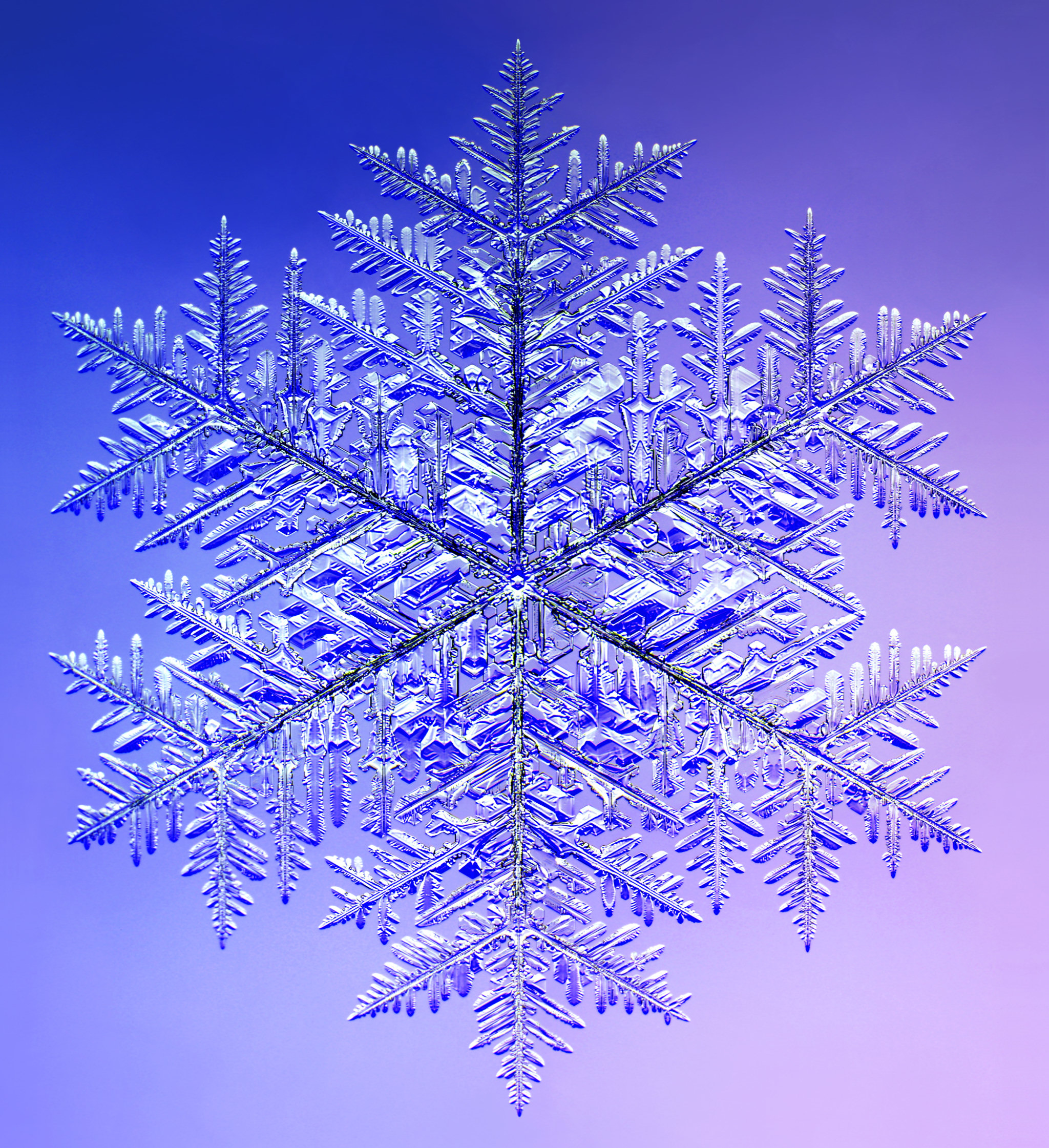
He also holds an official Guinness World Record for the largest snowflake ever documented - 10mm! Check out this beauty!

(BTW, lest anyone think he's a flaky guy, he also studies the sun, gravitational waves, and other heavy-duty physics stuff.)

The beauty and uniqueness of snowflakes, combined with their fragility, prompted last week's question, Are you a snowflake?

This week, s
ince snowflakes are the stuff snowstorms are made of, we'll ask: In what two ways are current events like a snowstorm?

And for a bonus round, here's a trivia question which perhaps alludes to a third answer to the snowstorm question: What color is snow? (hint: not white)


Shabbat Shalom


Appreciated this Table Talk? Like ittweet it, email it....{VR_SOCIAL_SHARING}

As always, the image above is click-able and this message can be read online.

Thursday, January 15, 2026

Are You Like a Snowflake?


Shabbat Table Talk from the desk of Rabbi Alexander Seinfeld
Jan 16-17, 2026 • 28 Teves 5786 • Va'eira (Exod 6-9).

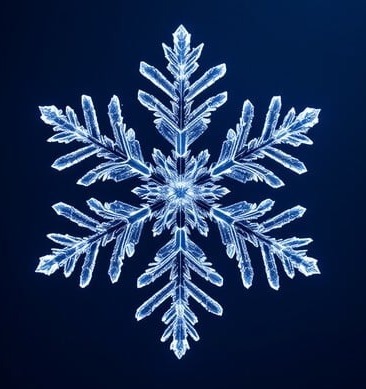
snow crystal

The title is meant to be a riff on last week's "Are You a Big Joe"...


Try this one at your table: 

Take a wild guess - how many snowflakes are falling somewhere in the world right now?

The answer is mind-boggling: About a million billion snowflakes fall each second, averaged over a typical year. That's enough snow to make one snowman for every person on earth every ten minutes.

OK, try this one: How many water droplets does it take to make a single snowflake, and how long does it take for it to form?

A: About 100,000 water droplets in a process that takes roughly 30-45 minutes.


The process starts when a single droplet freezes on a tiny (microscopic) spec of dust. 

(Clouds form the same way, just at warmer temperatures.)

I gave this week's message the title, "Are You Like a Snowflake" not because no two snowflakes are identical - I'm absolutely certain you are unique.

Rather, what I had in mind is the way that snowflakes grow. A tiny drop of water - which in our tradition represents Torah wisdom - latches on to what appears to be an insignificant spec of dust, and given the right nurturing can grow into something stunningly beautiful.

Is that you?

What's the catch?


Shabbat Shalom

Appreciated this Table Talk? Like ittweet it, email it....

Thursday, January 08, 2026

Are YOU a Big Joe?

Shabbat Table Talk from the desk of Rabbi Alexander Seinfeld
Jan 9-10, 2026 • 21 Teves 5786 • Shemoth (Exod 1-5).
Happy Birthday shoutout to Marc in MV!


BigJoe

This uplifting story has been going around. The author, Joe Lena, asked for it to go around.

"I'm Big Joe. 58. Long-haul trucker.

Been driving 18-wheelers for 34 years. Sleep in my cab. Eat at truck stops. Talk on CB radio to stay awake.
 

Lonely job. But someone's gotta move America's stuff.
 

Two years ago, I'm driving through Nebraska. 2 am. See a car pulled over. Hazards on.
 

Woman standing outside. Looking scared.
 

I pulled over. She backed away when she saw me. I'm 6'4", 280 pounds, covered in tattoos. I get it.
 

"Ma'am, I'm not stopping to hurt you. I'm stopping to help. What's wrong?"
 

Her car died. Phone dead. She'd been there three hours. Nobody stopped.
 

"Where you headed?"
 

"Hospital. Omaha. My daughter's in emergency surgery. I have to get there."
 

No hesitation. "Get in. I'll take you."
 

"In your truck?"
 

"Safest vehicle on this highway."
 

She hesitated. Then got in.
 

Drove her 60 miles out of my way. Got her there in time. She hugged me hard.
 

"Nobody stops anymore," she cried. "Thank you for seeing me."
 

Got back on the road. Couldn't stop thinking about it.
 

Got on the CB. Told other truckers. "We see everything out here. We should do something."
 

Started a code. "Code Angel" we call it. When truckers see someone broken down, stranded, in trouble, we stop.

We help.


Word spread. Truckers across the country joined.


Last year, we helped 1,200 people. Dead batteries. Out of gas. Medical emergencies. Domestic violence victims escaping. Runaways needing safe transport to shelters.


We've got a network now. Truckers, CB radio, truck stops. Someone needs help? We mobilize.


Saved six lives last year. People broken down in dangerous spots. Diabetics in crisis. A kidnapping victim we spotted and reported.


But here's my favorite story.


Last month, I'm at a truck stop. Young kid approaches me. Maybe 19. Scared.


"Are you Big Joe?"


"Yeah."


"You know how to ride in a truck?"


His eyes filled. "You'd help me?"


"That's what we do."


I didn't go to San Francisco. But I got him to a trucker who was. She took him the rest of the way.


He made it. Safe.


Now there's 4,000 truckers in Code Angel. We've got an app. Dispatchers. Resources.


News called us "Guardian Angels of the Highway."


But we're just truckers. Doing what's right.


That woman in Nebraska? Her daughter survived surgery. She sends me Christmas cards every year.


The kid I helped? He's in college now. Studying social work. Says he wants to help invisible people like truckers helped him.


I'm Big Joe. I drive a truck. Sleep in parking lots. Smell like diesel.


But I learned something.


The loneliest roads are where people need help most. And the scariest-looking people are sometimes the ones who stop.


So tomorrow, if you break down, if you're stranded, if you're running from something bad,


Look for the trucks. We're watching. We're listening.


We might look rough. But we'll get you home.


Because the highway doesn't have to be lonely.


Not when 4,000 truckers refuse to drive past people in trouble."

- Joe Lena


Question for your table: For many years, many Jewish communities have had local "angel" groups called Hatzalah and Chaverim, as well as countless gemachim. So why are Code Angels newsworthy?

More important: Do you believe in guardian angels?

Shabbat Shalom

Appreciated this Table Talk? Like it, tweet it, email it....